
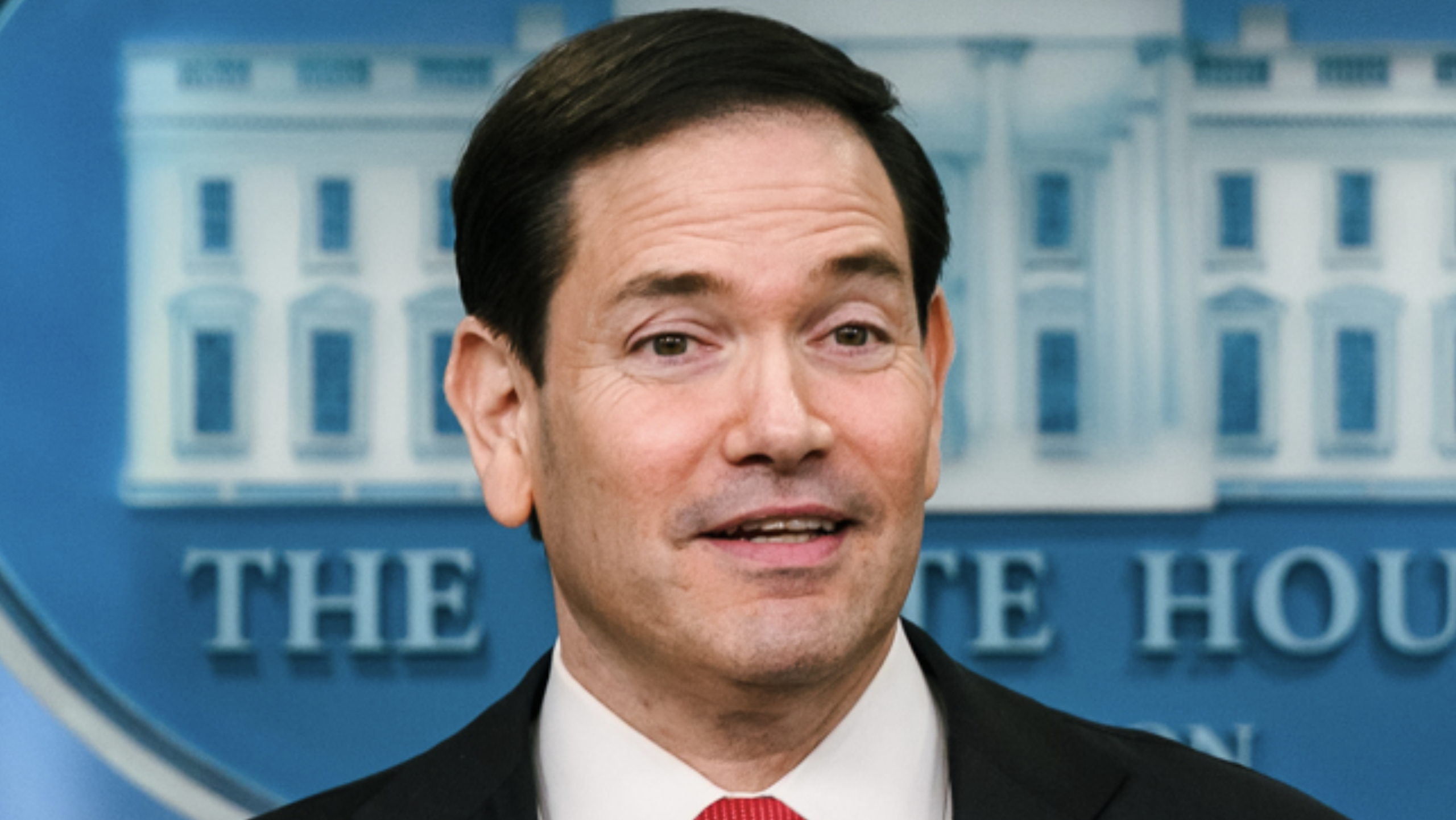
Secretary of State Marco Rubio did not mince words about Cuba during a White House cabinet meeting on Wednesday, May 27, delivering a scathing assessment of the island’s communist government while President Donald Trump suggested the United States may ultimately need to take direct action against Havana — remarks that together painted a picture of an administration that views Cuba as an unfinished problem with a potentially military solution.
The exchange began when Trump turned to Rubio for an update on Cuba and Venezuela, two countries where the administration has already demonstrated its willingness to use force. Rubio obliged with a characteristically blunt summary of the situation in Havana.
“Cuba’s in a lot of trouble because unfortunately for them it’s run by a bunch of incompetent communists and being communist is bad,” Rubio said. “Being an incompetent communist is like the worst.”
The remarks drew on Rubio’s decades-long hawkish posture toward Cuba, informed in part by his family’s Cuban heritage. As Secretary of State, he has continued to treat Havana as one of Washington’s most urgent — if sometimes overshadowed — foreign policy concerns. On Wednesday, he framed Cuba’s dysfunction in both ideological and structural terms.
Rubio identified a company called GAEA as having seized control of roughly 70 percent of Cuba’s economy, describing it as an entity that generates significant revenue while returning nothing to the Cuban population. “None of the money in that company goes to help the Cuban people, none of it,” he said. The company’s entrenchment within the Cuban economic system, in Rubio’s telling, means that any meaningful improvement in living conditions for ordinary Cubans would require confronting GAEA’s dominance directly.
Despite the harsh diagnosis, Rubio stopped short of declaring immediate action. “We’ll be talking to them. We’ll be working on it,” he said. But he left no ambiguity about the urgency he attaches to the issue, invoking the island’s proximity to the United States as a national security imperative. “It’s 90 miles from our shores and having a failed state 90 miles from our shores is a threat to the national security of the United States,” he said.
Trump has previously signaled even more directly that Cuba could become a target for U.S. intervention once the administration concludes its current engagements. In prior public remarks, Trump has suggested that after wrapping up in Iran, the United States would probably have to address Cuba — framing it as a logical next step in his administration’s broader hemispheric strategy rather than a distant hypothetical.
Those comments, combined with Rubio’s language about a “failed state” on America’s doorstep, suggest that Cuba occupies a distinct place in the administration’s foreign policy queue — not as a country where diplomacy alone will suffice, but as a situation that may demand more forceful resolution.
The administration has already demonstrated its willingness to act decisively and rapidly in the region. Trump said at Wednesday’s meeting that the U.S. “took over Venezuela in one day,” a reference to the swift military and diplomatic campaign that neutralized that government and installed a new management framework for its oil sector. Whether Cuba is viewed through a similar lens — as a country to be restructured through American-led force — was not made explicit, but the rhetorical groundwork for such a position was clearly being laid.
Cuba has been under U.S. sanctions for more than six decades. The Trump administration in its first term tightened those restrictions significantly, and the current administration has shown no appetite for relaxing economic pressure on Havana. The question of what comes after sanctions — if Cuba continues to deteriorate without change — is one the administration appears to be actively considering.
Rubio’s framing of Cuba’s government as not merely ideologically wrong but managerially incompetent is significant in that context. It suggests the case for action would rest not only on ideological opposition to communism but on a pragmatic argument that the current Cuban state is incapable of stabilizing itself, thereby creating the kind of vacuum that Washington has historically moved to fill.
Trump closed his brief commentary on the region by returning to the energy angle, noting that with Venezuela now effectively within the American orbit, U.S. access to global oil supplies has expanded dramatically. He made no direct reference to Cuba’s energy resources, but the administration’s pattern of combining strategic interests with economic ones was evident throughout the meeting.
Whether Cuba rises to the top of the administration’s agenda in the near term — or waits until the Iran situation reaches a conclusion — remains to be seen. But between Rubio’s “incompetent communists” broadside and Trump’s prior statements about the likelihood of U.S. action, the message from the White House on Wednesday was difficult to misread.