
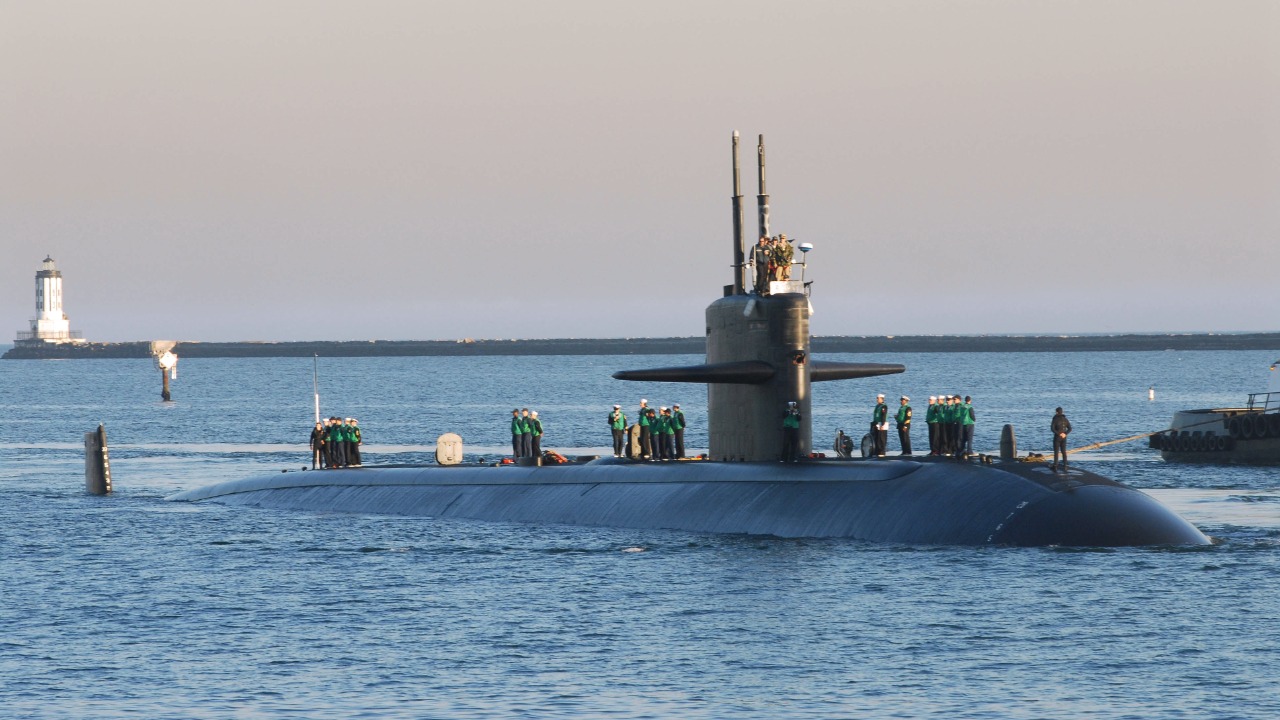
The Los Angeles-class attack submarine has spent decades in the quietest corners of global conflict, shaping outcomes without ever appearing in the frame. Designed to track adversary fleets and strike inland, it has become a battle-tested undersea combatant. Even as newer submarines enter service, this Cold War workhorse continues to anchor U.S. undersea power and define modern hunter-killer capabilities.
Built initially to counter advanced Soviet designs and refined through post–Cold War missions, the Los Angeles-class has evolved from a single purpose sub hunter into a versatile platform for precision strike, intelligence gathering, and sea control. Its longevity is not an accident but the product of deliberate engineering choices, a potent weapons mix, and a nuclear powerplant that gives commanders options measured in months rather than days.
The Hunter-Killer Blueprint
At its core, the Los Angeles-class is a textbook example of an attack submarine, the type often described as a hunter-killer because it is built to find and destroy other submarines and surface ships. In naval doctrine, an attack submarine is optimized for offensive action, using stealth, speed, and sensors to ambush targets rather than simply defend carrier groups. The Los Angeles boats were conceived with that offensive mindset, giving the United States a platform that could slip under polar ice, trail adversary ballistic missile submarines, and hold enemy fleets at risk far from American shores.
The design that emerged, known formally as the 688-class, reflected a specific strategic problem: how to counter increasingly quiet Soviet submarines in the deep ocean. Engineers emphasized acoustic stealth and high sustained speed so that the boats could close with a contact, maintain trail, and still retain the initiative if a fight broke out. That hunter role has persisted even as missions have diversified, and it is why the Los Angeles-class remains central to how planners think about undersea warfare against Russia and other potential adversaries.
Speed, Stealth, and Nuclear Stamina
The performance envelope of the Los Angeles-class helps explain its staying power. Official figures describe a surfaced speed of 20 knots, which corresponds to 37 km per hour, and a submerged speed of Over 25 knots, or 46 km per hour, with some reporting that the true underwater maximum is significantly higher. This speed and endurance allow a commander to reposition rapidly while staying below thermal layers that conceal the submarine from sonar. In practical terms, it means a Los Angeles boat can sprint to a chokepoint, establish a barrier, and still have the energy reserves to chase down a contact once it appears.
Powering that performance is a single nuclear reactor that frees the hull from the constraints of conventional fuel. The class is described as being driven by one nuclear plant that lets each Los Angeles Class stay at sea for extended periods while using its advanced sensors to spot vessels across crowded littorals or open ocean. That endurance is not just about range, it is about persistence. A submarine that can remain on station for weeks without surfacing can wait out an adversary, maintain continuous surveillance, and be in position to act the moment political leaders give the order.
Weapons and Sensors: From Torpedo Duelist to Land-Strike Platform
The Los Angeles-class was armed from the outset to dominate undersea duels, and its weapons suite has only grown more versatile. In its attack role, the boat carries heavyweight MK-48 torpedoes that can engage both submarines and surface ships, part of a broader loadout that totals 48 weapons when fully loaded. Those torpedoes are complemented by Tomahawk land-attack cruise missiles, giving each Los Angeles SSN the ability to strike targets far inland without warning. That dual loadout turns the submarine into both a sea control asset and a strategic strike platform, capable of opening a campaign by knocking out air defenses or command nodes.
The internal arrangement reflects that flexibility. In order to fulfill its role as an attack sub, the class is described as carrying 25 torpedoes launched from four tubes, with these weapons integrated into sophisticated fire control, acquisition, and attack procedures. Later variants added vertical launch systems for Tomahawk missiles, separating torpedo and missile roles. On the sensor side, detailed breakdowns of the improved 688i variant describe extensive sensor suites tied into Structural and Powerplant upgrades, with Weapons arrangements that include Four 21 inch tubes sized at 533 m and support for 67 series torpedoes and mines. These systems enable the submarine to detect, classify, and engage targets ranging from diesel submarines to fortified land sites.
The mission set has expanded. These submarines carry torpedoes, cruise missiles, and mines, posing threats to submarines, surface ships, and land targets. That breadth of armament has made the Los Angeles-class a go to option for early strikes in regional conflicts, as well as a platform for covert insertion of special operations forces and intelligence collection against coastal infrastructure.
Cold War Origins, Post–Cold War Relevance
The Los Angeles-class story begins in the Cold War, but its relevance has outlasted the era that produced it. Analysts note that the design responded to advanced Soviet submarines and emphasized the Los Angeles-class’s role in potential global conflicts. Yet when the Soviet Union collapsed, the boats did not lose their purpose. Instead, they shifted into new roles, from intelligence gathering in littoral waters to precision strike in regional conflicts where sea based Tomahawk salvos became a familiar opening move.