
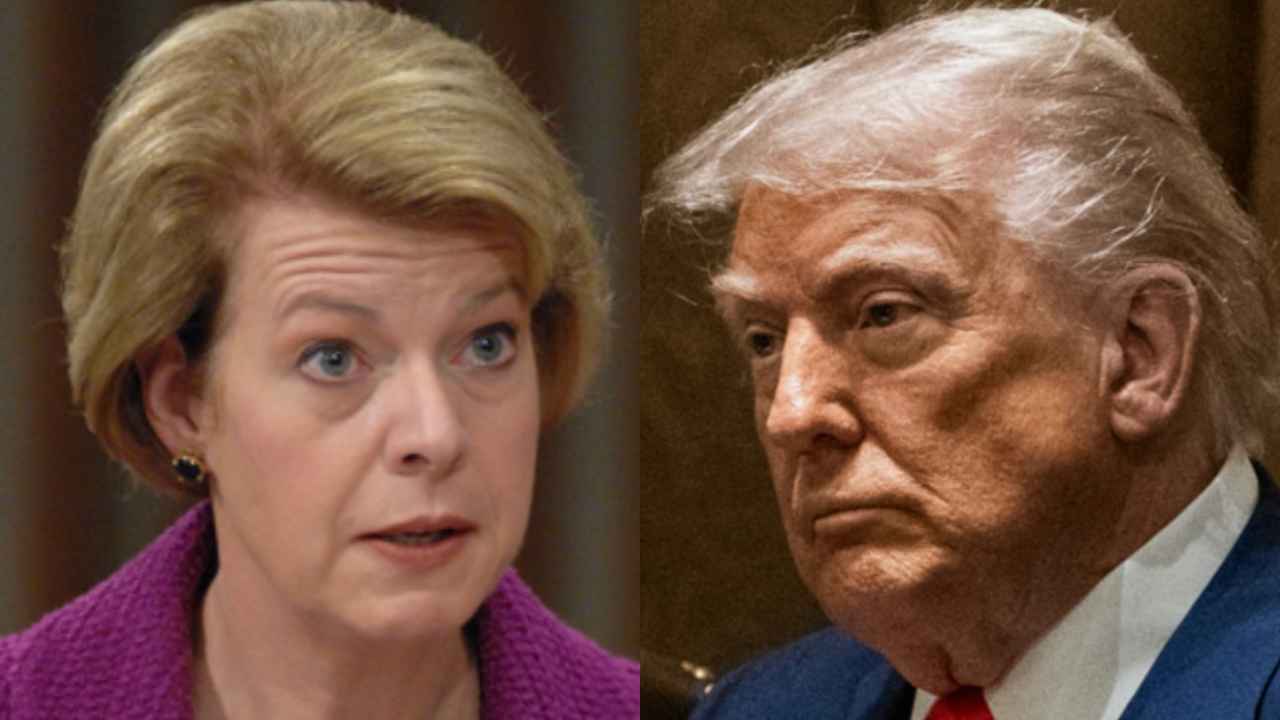
Sen. Tammy Baldwin (D-Wis.) criticized the growing financial cost of President Donald Trump’s war with Iran, citing Pentagon estimates showing more than $47 billion in U.S. military spending and arguing that the money could instead have been used to address rising health care, housing and child care costs for American families.
Speaking on the Senate floor Thursday, November 19, Baldwin said the conflict had imposed mounting costs on taxpayers and consumers while placing American service members at continued risk.
“This month, the American people sent a clear and unmistakable message: this illegal war has cost too much,” Baldwin said during remarks published by her official Senate office.
“It has cost taxpayers at least $47 billion. That is money that could have been spent lowering the cost of healthcare, housing, or childcare.”
“Instead, Donald Trump is burning through taxpayer dollars with no plan to end this conflict,” she added.
The senator’s comments came as lawmakers considered another attempt to end American military involvement in the conflict, which began in late February and was approaching its ninth month.
Baldwin argued that the war had created financial pressures extending beyond federal military expenditures, particularly through higher gasoline and diesel prices affecting households, farmers and businesses in Wisconsin.
Pentagon Estimates Iran War Has Cost More Than $47 Billion
The $47 billion figure cited by Baldwin is based on a Pentagon estimate provided to Congress in October, rather than a final accounting of all federal expenditures associated with the war.
According to an estimate from U.S. Central Command obtained by The Associated Press, the cost of American military operations associated with the Iran conflict had reached approximately $47.1 billion as of October 16.
The estimate represented an increase of approximately $3.5 billion from the $43.6 billion reported in early September, reflecting the continuing expense of military operations and the replacement of equipment and munitions.
The largest component of the estimate was approximately $29 billion for replacing munitions used during the conflict, including advanced missile interceptors employed to defend American forces and regional partners against Iranian attacks.
Approximately $11.9 billion was attributed to operational expenses, while another $6 billion was associated with equipment losses.
Those categories account for the overwhelming majority of the estimated total, although individual service-level figures and accounting methods can change as the Pentagon revises its assessments.
The October estimate also did not include all damage to American military installations in the Middle East, meaning the eventual cost of the conflict could exceed the reported amount.
The $47.1 billion figure therefore represents a reported military cost estimate at a particular point in time, not an audited final total or a calculation of the war’s full economic impact.
Baldwin cited the estimate to question the administration’s spending priorities, arguing that federal resources committed to the war could have supported domestic programs intended to reduce household expenses.
Her comparison reflected a political argument about alternative uses of federal funds. It did not establish that the estimated military expenditures could automatically be redirected to those programs without congressional action.
Wisconsin Residents Have Paid an Estimated $2 Billion More for Gasoline
Baldwin also pointed to the impact of rising energy prices on Wisconsin households, citing an estimate that residents had spent an additional $2 billion on gasoline since the beginning of the war.
The figure comes from an October 2026 fact sheet published by the Democratic minority staff of Congress’s Joint Economic Committee.
The committee’s analysis estimated that Wisconsin families had paid approximately $857 more for gasoline on average since the conflict began.
The estimate was based on calculations current through October 14, according to the committee’s published methodology notes.
The committee attributed the increase to higher gasoline prices following the outbreak of the Iran war, which disrupted energy markets and international shipping.
Those figures describe estimated additional spending by consumers, not money paid directly to the federal government or included in the Pentagon’s military spending estimate.
The distinction matters because the $47 billion military cost and the $2 billion Wisconsin gasoline estimate measure different financial effects and should not be treated as interchangeable categories of taxpayer expenditure.
During her Senate speech, Baldwin said American families were paying more for everyday necessities as a consequence of the prolonged conflict.
“This war has also cost American families more at the pump every single day, forcing families to spend an additional $850, on average, since February,” she said.
Her rounded $850 figure is consistent with the Joint Economic Committee minority staff’s published estimate of approximately $857 for Wisconsin families.
While the committee’s analysis attributes the increased gasoline spending to the war, energy prices are also influenced by global supply, refinery capacity, demand, transportation costs and other market conditions.
The committee’s calculation is therefore an estimate of the additional consumer costs associated with higher prices, rather than a direct measurement of every dollar attributable exclusively to military operations.
Baldwin Warns Higher Diesel Prices Are Affecting Farmers
Beyond gasoline costs, Baldwin warned that higher diesel prices were placing additional pressure on Wisconsin’s agricultural sector.
Farmers depend on diesel to operate tractors, combines, trucks and other equipment used for planting, harvesting and transporting agricultural products.
Increased fuel costs can raise the expense of agricultural production and transportation, potentially affecting farm profitability and food supply chains.
“Diesel prices have also hit record high, with some farmers shelling out nearly double what they paid just last year to power their combines and tractors and trucks,” Baldwin said.
The senator did not identify individual farms in the published text of her remarks, and the claim about farmers paying nearly twice as much was not accompanied by a separate farm-level expenditure analysis.
Her statement nevertheless reflected broader concerns about the effects of energy price increases on agricultural producers, particularly in states where farming and food processing are significant parts of the economy.
Wisconsin’s dairy, crop and livestock producers rely on fuel-intensive equipment and transportation networks, making changes in diesel prices an important component of operating expenses.
Baldwin argued that the administration’s continuation of the war had compounded those economic pressures at a time when many families and businesses were already struggling with higher costs.
Senator Connects War Spending to Domestic Affordability
Baldwin framed her criticism around the administration’s allocation of federal resources, arguing that the continued military campaign had diverted attention and funding from domestic affordability concerns.
She specifically identified health care, housing and child care as areas where additional federal investment could help American households.
Her remarks came two weeks after the November 3 midterm elections, in which Democrats secured control of both the House and Senate for the Congress scheduled to begin in January 2027.
Baldwin interpreted those election results as evidence that voters wanted Congress to prioritize reducing household expenses and ending the conflict.
“While I am confident that the next Democratic Congress will listen to the American people and end this war, time is of the essence,” she said.
“We can and must take the message voters sent us and act now to end this war.”
The senator argued that postponing congressional action would allow additional military spending to accumulate while service members remained deployed and households continued facing elevated costs.
“Families are burning through more of their savings to afford daily life, and taxpayers are footing a much bigger bill,” Baldwin said.
Her criticism contrasted with the Trump administration’s position that continued military pressure on Iran is necessary to protect American national security interests and prevent Tehran from threatening U.S. forces, regional allies and international shipping.
The administration has argued that its military operations have significantly weakened Iran’s capabilities and that maintaining pressure is necessary to achieve its strategic objectives.
The disagreement reflects competing assessments of whether the security benefits of continuing the campaign justify its financial costs and risks to American personnel.
War’s Human Costs Also Draw Baldwin’s Criticism
Although Baldwin emphasized the financial consequences of the conflict, she also cited the deaths and injuries of American military personnel as a central reason for ending the war.
During her November 19 speech, she said 23 American service members had died and hundreds had been injured in operations associated with the conflict.
The reported military death toll includes both hostile and nonhostile deaths associated with the war, rather than exclusively personnel killed directly by Iranian attacks.
Baldwin also noted that tens of thousands of American troops remained deployed across the Middle East as the conflict approached its ninth month.
She described the strain of extended deployments on military families, including missed birthdays, funerals and the births of children.
“This war has cost our servicemembers and their families unimaginable loss,” Baldwin said.
Her office said she had previously pressed Defense Secretary Pete Hegseth about the military’s preparedness and the consequences of the conflict for service members.
Baldwin argued that the combination of military casualties, federal spending and higher consumer prices strengthened the case for ending the operation.
Senate Rejects Latest Effort to End the Conflict
Following Baldwin’s November 19 remarks, the Senate rejected H. Con. Res. 93, a War Powers Resolution directing the president to remove American forces from hostilities against Iran unless Congress authorized their continued involvement, with an exception for certain defensive operations.
The measure failed by a vote of 51-48, according to the official Senate voting record.
Baldwin voted in favor of the resolution, while most Republican senators opposed it.
The vote marked another unsuccessful congressional effort to restrict the administration’s military operations and did not establish a new authorization for the war.
In a November 20 statement on X, Baldwin said she had voted for the 15th time to end the conflict and criticized Republicans for rejecting the measure.
The senator’s office has described the series of votes as part of her broader effort to end the war, challenge the administration’s handling of the conflict and secure accountability for its military and economic consequences.
With the latest resolution defeated, Baldwin’s concerns about military expenditures and consumer costs remain part of the congressional debate over the conflict’s continuation.
The Pentagon’s October estimate placed the military cost at more than $47 billion, while the Joint Economic Committee minority staff’s analysis estimated an additional $2 billion in gasoline spending by Wisconsin residents.
Those figures reflect different categories of economic impact, but both formed part of Baldwin’s argument that the financial burden of the war had become too great.
As Congress prepares for a change in control in January, the senator has urged lawmakers to act sooner, arguing that continued military operations will expose American personnel to further danger while adding to the costs borne by taxpayers and households.