
For the first time in the history of the International Space Station, a crewed mission has been cut short so that an ailing astronaut could be rushed back to Earth. Four spacefarers who expected to remain in orbit into next month instead found themselves strapped into a capsule and heading home in the middle of the night, their schedule rewritten by a medical emergency that officials still refuse to describe in detail.
The early return of NASA’s SpaceX Crew-11 has turned a routine rotation into a case study in how far space agencies will go to protect human life. I see in this episode not only a dramatic rescue, but a quiet stress test of the systems, hardware, and judgment that underpin modern crewed exploration.
The first medical evacuation from orbit
The core fact is stark. NASA has now carried out its first medical evacuation from the International Space Station, bringing four astronauts back to Earth ahead of plan because one of them developed what officials call a “serious medical condition.” The agency has confirmed that this was the first time a crew was ordered home early from the ISS for health reasons, a threshold that turns a private medical crisis into a milestone in the history of human spaceflight, as reflected in detailed NASA briefings.
Mission managers decided earlier this month that the safest course was to end the stay of the SpaceX Crew-11 astronauts on the station and bring them down for treatment and diagnostic testing on Earth. The decision, described as unprecedented for the ISS, followed internal assessments that the unidentified crew member’s condition could not be managed indefinitely in orbit, a judgment that was echoed in contemporaneous Crew-11 coverage.
Who was on board, and what went wrong
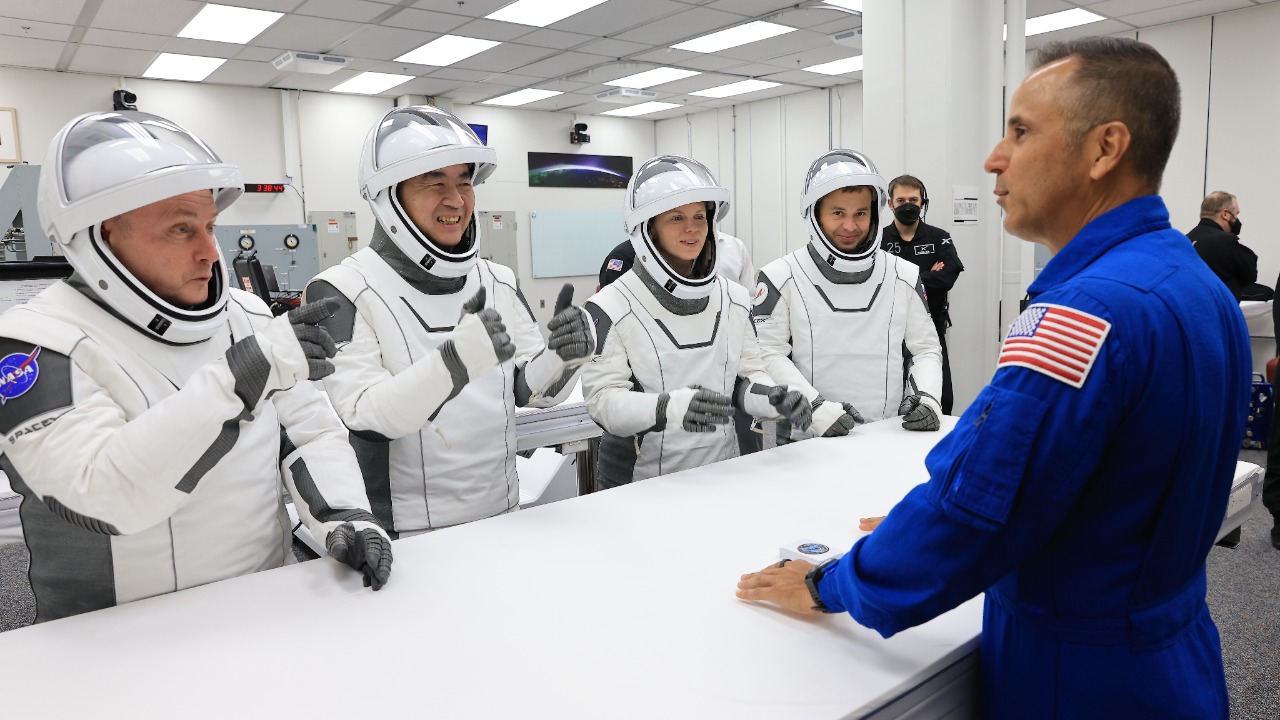
The returning crew was a cross section of the partnership that keeps the station running. NASA’s SpaceX Crew-11 consisted of Commander Zena Cardman, Pilot Mike Fincke, and Mission Specialists Kimiya Yui and Oleg Platonov, a team drawn from NASA, Japan, and Russia. When the hatch closed on the orbiting complex, cameras captured the moment as Cardman, Fincke, Yui, and Platonov began what was described as an early trip home prompted by an unidentified crew member’s “serious medical condition,” a sequence documented in official hatch footage.
NASA has not named the astronaut at the center of the emergency, but it has confirmed that Cardman and NASA’s Mike Fincke were joined on the return by Japan’s Kimiya Yui and Russia’s Oleg Platonov, and that the medical issue arose during their long‑duration stay, resulting in the early return. I find that choice of silence about the diagnosis, even as the agency spells out the operational impact, reflects a tension between public accountability and individual privacy that will only sharpen as more people live and work in orbit, a balance that is evident in reports describing how Cardman and NASA colleagues were brought home.
From medical alarm to undocking
The chain of events began with what NASA has called an “unexpected medical issue” affecting one of the four astronauts aboard the station. Officials at NASA and SpaceX reviewed the situation and concluded that returning the entire crew early was in their best interest, a choice that turned a planned months‑long mission into a compressed sprint back to Earth. The agency has been clear that it was the first time four astronauts were ordered home early from the International Space Station for health reasons, a point underscored in detailed explanations of why Four station residents had to leave.
Once the decision was made, the timeline moved quickly. NASA announced that it would return four astronauts home early in the first medical evacuation from the International Space Station, and that the Crew-11 mission would undock and head for a splashdown window that had been pulled forward by about a month. That planning, laid out in agency News updates, shows how the station’s operations can flex when human health is at stake.
The tense journey home aboard Dragon
When the time came to leave, four astronauts departed the International Space Stat in a SpaceX capsule that had been their lifeline to orbit. After undocking, they spent nearly 11 hours traveling home, strapped into a spacecraft that had to manage both the needs of a sick crew member and the unforgiving physics of reentry. I am struck by how routine the mechanics now seem, even as the stakes were anything but, a contrast captured in accounts of how Four people rode out the long fall from orbit.
The vehicle that carried them was SpaceX’s Dragon, a reusable capsule designed for crew transport that has become the workhorse of NASA’s commercial crew program. In this case, the Dragon spacecraft served as an ambulance as well as a taxi, its life support and avionics supporting a delicate descent that ended with a splashdown off the coast of San Diego at 3:41 am ET, or 0841 UTC, where recovery teams greeted the returning Crew-11 with the words “Welcome home, Crew-11!” before the ailing astronaut was taken to a local hospital, details that have been confirmed in mission recaps of the Dragon splashdown.
The journey itself was the culmination of days of planning on the ground. NASA and SpaceX publicly targeted the early return of the Crew-11 mission from the International Space Station, describing how a SpaceX capsule carrying a four‑member crew would undock, perform a series of burns, and then line up for reentry and recovery in the Pacific. That choreography, outlined in agency NASA posts, shows how the same systems that support routine crew rotations can be repurposed in a crisis.
What this evacuation means for future missions
For all its drama, the evacuation was not improvised. NASA’s Crew-11 mission had been planned for months, with detailed profiles for launch, docking, and a nominal return that would have kept the astronauts in orbit until mid February. The agency’s mission overview for Crew-11 describes a standard rotation flight to the ISS, supported by SpaceX’s Dragon spacecraft and integrated into the broader cadence of station operations, a reminder that even the most carefully scripted missions must now include contingency paths for medical return.
The hardware and procedures that made this possible are the product of years of investment. SpaceX’s Dragon capsule is built to support rapid reconfiguration for crewed flights, including emergency undockings, while NASA’s planning for the ISS has long included the option of using a docked vehicle as a lifeboat. In this case, the agency even prepared an unmanned “lifeboat” launch to preserve station access after the evacuation, a step described in mission News summaries that underscores how seriously it takes the risk of being left without a ride home.