

America’s newest Flight III destroyer has officially joined the Navy’s ranks, adding a powerful new guided missile warship to the surface fleet at a moment when demand for advanced air and missile defense is rising. The future USS Ted Stevens, a Flight III Arleigh Burke-class destroyer designated DDG 128, has completed delivery and transfer to the service and is now on the path to commissioning and operational deployment.
The ship’s arrival marks the third Flight III Arleigh Burke to move from the shipyard into Navy hands, underscoring how the class has shifted from prototype to production workhorse. With upgraded sensors, combat systems, and power generation, the destroyer is designed to anchor carrier strike groups, protect joint forces ashore, and extend American presence across contested seas.
From shipyard to fleet: Ted Stevens joins the Flight III lineup
The Navy’s acceptance of the future USS Ted Stevens represents the formal handoff from construction to operational preparation, a milestone that confirms the ship has met contractual and performance requirements. The service accepted delivery of the Flight III Arleigh Burke-class destroyer in PASCAGOULA, Mississippi, where the Navy noted that the transfer of DDG 128 marked the official move of the ship into the fleet’s inventory. That step followed the builder’s delivery from HII’s Ingalls Shipbuilding division, which highlighted that the destroyer brings advanced capabilities to the surface force and reflects years of work to integrate the latest Flight III systems.
With delivery complete, the ship is now preparing for commissioning into active service later in 2026, when it will be assigned to an operational formation and begin deployments. Reporting on the Navy’s receipt of the future USS Ted Stevens describes the destroyer as the third of the service’s new Flight III Arleigh Burke ships, following earlier Flight III units that have already entered the fleet and started to demonstrate the class’s upgraded combat power. The Navy’s broader Flight III program has been framed as a key part of fleet modernization, with the newest destroyer described as a tangible contribution to overall fleet capability as it moves toward operational status.
What makes a Flight III destroyer different
Flight III Arleigh Burke destroyers are built around a generational leap in sensors and combat systems, intended to keep pace with more complex air and missile threats. The Navy has emphasized that its Flight III Destroyer Brings Significant Combatant Capabilities, pointing to the integration of a new radar suite and associated power and cooling upgrades that allow the ship to detect, track, and engage more targets at longer ranges. In official descriptions of the class, the service highlights how the design supports both defense of carrier strike groups and independent operations, giving commanders a flexible platform that can operate in high-end conflict or routine presence missions.
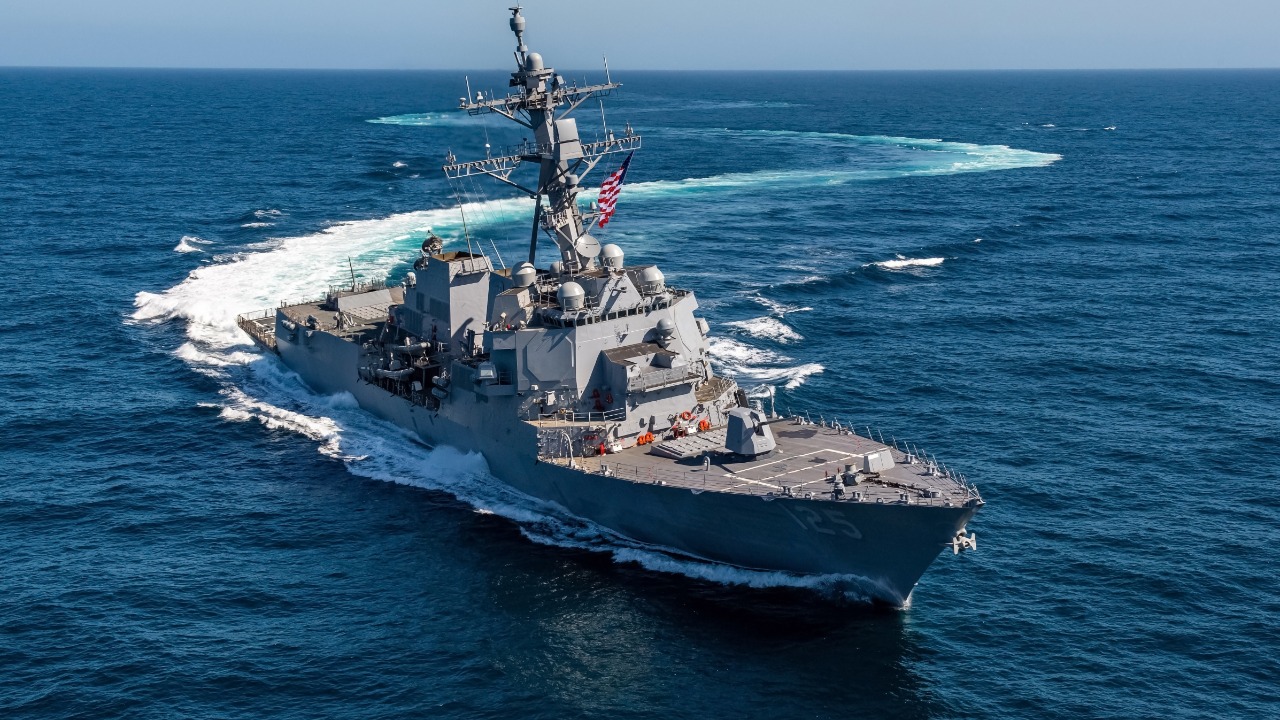
Those enhancements are not limited to electronics. The Flight III configuration includes structural and systems changes that support the larger radar array and increased electrical load, along with improvements to survivability and combat system integration. Navy commentary on the first Flight III destroyer, USS JACK H. LUCAS (DDG 125), underscores that the new variant is intended to serve as a cornerstone of the future surface force, with the ship’s performance in early operations cited as proof that the Flight III design can take on demanding missions at sea and project power ashore. As additional ships like the future USS Ted Stevens join the fleet, the Navy’s inventory of Flight III Arleigh Burke destroyers is expected to form a growing share of its front-line combatants.
Ted Stevens: a namesake with deep Navy ties
The destroyer’s name carries its own strategic message. The ship honors Ted Stevens, the longtime Alaska senator who was a strong supporter of the Navy and Marine Corps and who became the longest serving Republican Senator in history during his tenure. Coverage of the naming decision notes that the choice reflects both his legislative influence on defense policy and his close association with Alaska’s maritime and security interests, which range from Arctic access to Pacific fisheries and shipping lanes.
By assigning his name to a Flight III destroyer, the Navy is linking a modern, high-technology warship to a political figure who consistently backed naval power and Marine Corps readiness. Reporting on the delivery from Ingalls Shipbuilding stresses that the arrival of the ship, referred to simply as Ted Stevens, reflects the culmination of a program that pairs advanced capabilities with a legacy of public service. The connection to Alaska also underscores the geographic breadth of American maritime concerns, from the North Pacific to the Arctic approaches, where a ship like the future USS Ted Stevens could eventually operate as part of a carrier strike group or independent surface action group.
Inside the ship: sensors, weapons, and power
While many details of the destroyer’s configuration remain within standard Arleigh Burke parameters, the Flight III variant introduces a significantly upgraded radar and combat system architecture. The Ted Stevens (DDG 128) features upgraded radar capabilities that are described as central to the next generation of destroyers, enabling the ship to better detect and track advanced aerial and ballistic threats. These sensor improvements are paired with a modernized combat system that can process more data, coordinate engagements across multiple platforms, and support integrated air and missile defense missions in crowded and contested environments.
The ship’s weapons and power systems are designed to match those sensor advances. As a guided missile destroyer, USS Ted Stevens carries the familiar vertical launch cells, guns, and close-in defenses associated with the Arleigh Burke class, but the Flight III design incorporates enhanced power generation and cooling to support the more demanding electronics. Navy descriptions of the broader Flight III effort highlight how these ships are built to accommodate future upgrades, including potential new weapons or sensors that could be added as technology evolves. In that sense, the destroyer is not only a product of current requirements but also a platform engineered to stay relevant as the Navy’s concept of operations and threat assessments continue to change.
Why the third Flight III matters for the fleet
The arrival of the third Flight III destroyer is strategically significant because it signals that the Navy’s newest destroyer configuration is moving beyond initial entry and into sustained production. Earlier reporting on the program noted that the Navy accepted delivery of its third Flight III Arleigh Burke-class destroyer as part of a broader effort to boost fleet power with new surface combatants. The US Navy has taken delivery of multiple Flight III ships in rapid succession, and the addition of the future USS Ted Stevens is framed as another step in modernizing the surface fleet with ships that can handle more complex threats and integrate more deeply with joint and allied forces.
That momentum matters in a global environment where advanced missiles, drones, and aircraft are proliferating and where the Navy is expected to operate across the Atlantic, Pacific, and Arctic with limited numbers of high-end combatants. Official statements on the delivery of the future USS Ted Stevens describe it as a critical warship with advanced capabilities that will make a tangible contribution to fleet capability once it is commissioned and deployed. As the Navy continues to accept new Flight III Arleigh Burke destroyers and transition them from shipyard to sea, the service is steadily reshaping its surface force around ships like DDG 128 that are built from the keel up for modern air and missile defense, long-range sensing, and sustained operations alongside carrier strike groups and expeditionary formations.