
Public opinion in the United States is shifting toward a far more aggressive posture in the fight against narcotics, with growing numbers of Americans now open to using military force against drug traffickers. What was once a fringe idea associated with the most hard-line voices on immigration and border security is moving into the mainstream, reshaping debates over law enforcement, foreign policy, and civil liberties.
New polling shows majority backing for direct military action against suspected traffickers and for broader uses of force tied to security concerns, even as legal experts warn that some current tactics may violate international law. The result is a widening gap between the public’s appetite for decisive action and the unresolved questions about what those operations look like in practice, and whom they ultimately put at risk.
Majority backs military strikes on drug traffickers
The clearest sign of this shift is a survey finding that 62% of Americans support military action against suspected drug traffickers, a level of backing that would have been difficult to imagine during earlier phases of the “war on drugs.” The figure suggests that frustration with fentanyl overdoses, cartel violence, and perceived border chaos is now strong enough that a majority is willing to endorse using the armed forces, not just police and prosecutors, to target narcotics networks. That 62% support, recorded in Dec and tied explicitly to a survey of Americans, reflects a public mood that is increasingly comfortable blurring the line between domestic crime control and wartime operations.
Supporters of this approach often frame traffickers as paramilitary actors who control territory, deploy heavy weapons, and destabilize entire regions, arguing that conventional law enforcement tools are no longer sufficient. The survey’s finding that 62% of Americans favor military action against suspected drug traffickers has been cited by immigration hawks who want the United States to treat major cartels more like foreign terrorist organizations than criminal gangs, and it has surfaced in debates over whether to authorize cross-border raids or targeted strikes from U.S. soil. The same reporting that highlights this 62% figure also situates it within a broader security context, noting that Americans are watching Marines fire from positions as far away as Okinawa, a reminder that the military is already engaged in complex operations far from home, even as public attention turns to the southern border and narcotics routes at home and abroad, as reflected in the survey of Americans.
Broader security anxieties are driving the trend
The appetite for using force against traffickers does not exist in isolation, it is part of a wider pattern of rising support for a muscular security posture. On issues ranging from border enforcement to overseas commitments, Americans who disagree sharply on domestic politics are converging around the idea that the United States should be more willing to deploy its military power. Reporting on public attitudes toward defense policy notes that, on security matters, both sides of the partisan divide are showing signs of coming together, even as they remain polarized on social and economic questions.

Within that broader context, NATO favorability has climbed to its highest level in years, and a majority of respondents now say they are in favor of using military force in key scenarios tied to national defense. The same research that tracks this trend also underscores that a majority, identified explicitly as 62%, is prepared to back the use of force when framed as necessary for security, whether in Europe, the Pacific, or along the U.S. border. That convergence helps explain why proposals to use the armed forces against traffickers are gaining traction: they tap into a wider willingness to see the military as a primary problem solver, not just a last resort. The finding that NATO favorability has risen and that a majority, including 62%, is in favor of using military force is documented in a detailed look at American support for larger US military and NATO, which situates the drug war debate inside a broader reassessment of U.S. power.
Boat strikes and the legal red lines
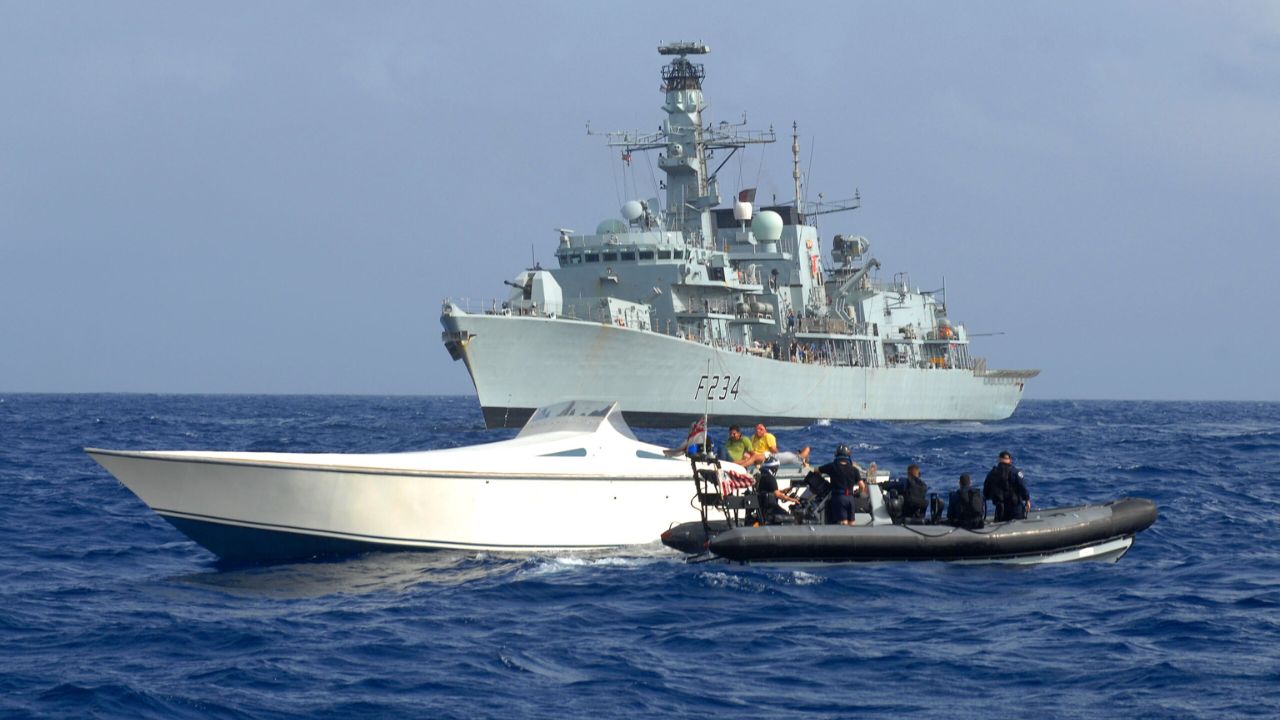
Even as public support for aggressive tactics grows, legal experts are sounding alarms about how some of those operations are already being carried out. One flashpoint is a series of U.S. boat strikes targeting alleged drug traffickers at sea, which critics describe as extrajudicial killings that sidestep both domestic due process and international humanitarian law. Specialists in maritime law and human rights argue that killing suspects on the water, far from any courtroom or transparent oversight, risks normalizing a form of summary execution that would be unthinkable on land.
Despite those warnings, a CBS News poll shows that about 53 percent of respondents expressed approval for the strikes against the alleged drug traffickers, a sign that the public’s desire for decisive action is outpacing its concern about legal niceties. That 53 percent figure, tied directly to a poll and to CBS and News, underscores how normalized lethal force has become in the public imagination when it is framed as a tool against narcotics and organized crime. Experts who call the boat strikes illegal killings warn that such operations could erode the rule of law in the US and around the world, especially if other countries adopt similar tactics against their own enemies. The tension between the 53 percent who back the strikes and the specialists who condemn them is laid out in reporting on how experts say US boat strikes are illegal killings, highlighting the collision between popular support and legal constraint.
From border politics to global precedent
The surge in backing for military action against traffickers is rooted in intensely local fears, especially in communities hit hard by fentanyl overdoses and cross-border violence, but its implications are global. When Americans endorse using the armed forces against suspected criminals, they are not only reshaping domestic policy, they are also setting precedents that other governments may cite to justify their own crackdowns. If the United States treats drug cartels as quasi-military targets, countries facing separatist movements, political dissidents, or even journalists could claim similar license to deploy lethal force without trial, citing Washington’s example as cover.
At the same time, the intertwining of border politics and foreign policy is narrowing the space for nuanced debate. Proposals that once would have been vetted primarily through legal and diplomatic channels are now filtered through the lens of partisan identity and security anxiety, with the 62% support for military action against suspected drug traffickers and the 53 percent approval for boat strikes serving as political talking points as much as policy data. That dynamic makes it harder to weigh alternatives such as expanded treatment, financial sanctions on cartels, or cooperative policing with partner governments, all of which lack the visceral appeal of a military strike. As Americans grow more comfortable with the idea of using force against traffickers, the challenge for policymakers will be to channel that sentiment into strategies that reduce harm without eroding the legal and moral boundaries that distinguish law enforcement from war.