
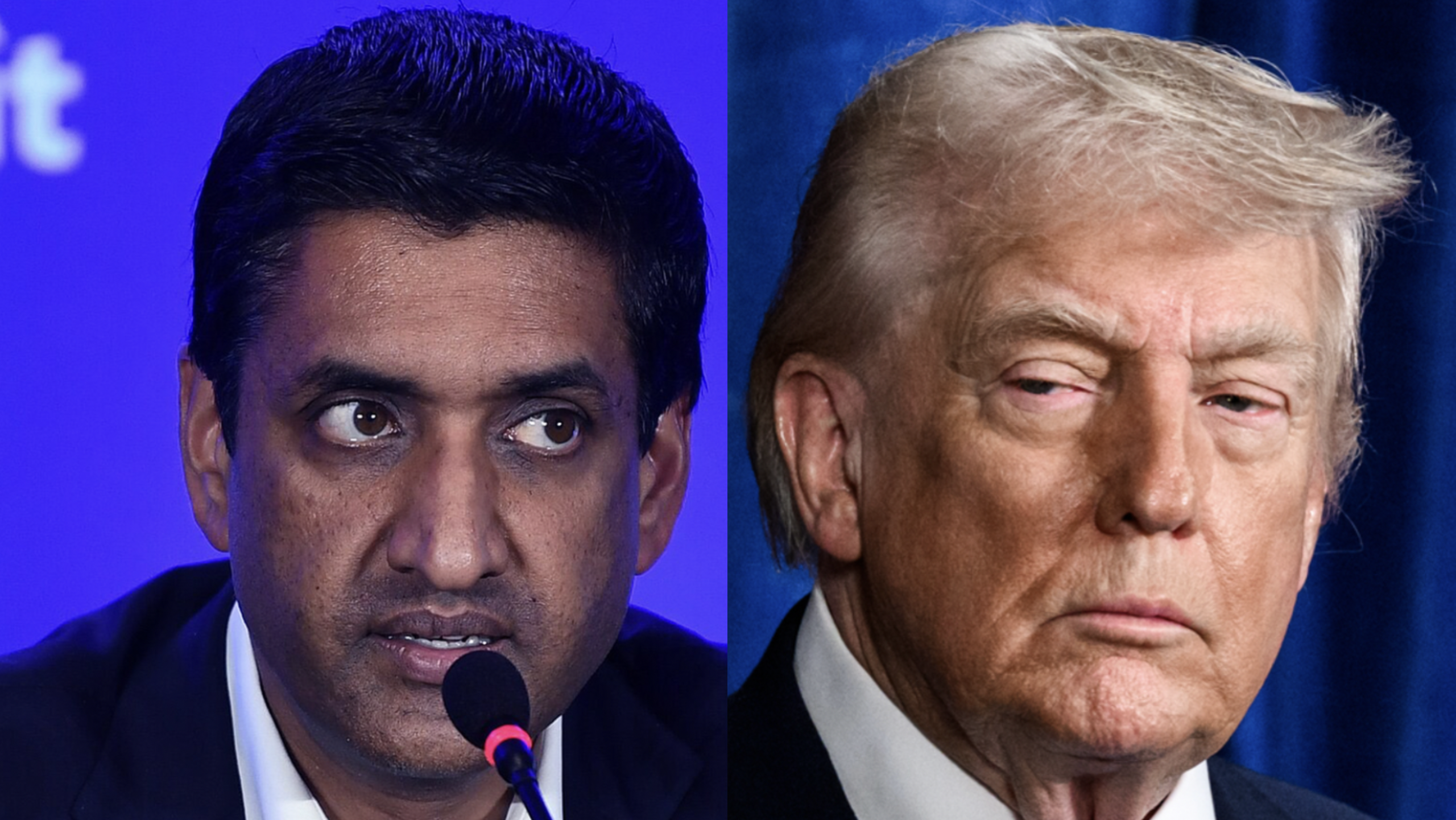
Rep. Ro Khanna (D-CA), one of Congress’s most vocal opponents of the U.S. military campaign against Iran, welcomed the ceasefire agreement announced Sunday that would reopen the Strait of Hormuz and halt hostilities between Washington and Tehran — but he did not let the moment pass without a pointed indictment of the war that made the deal necessary. In a post on X on the evening of June 14, 2026, Khanna declared the agreement “welcome news” while arguing that the Trump administration had achieved nothing the Obama administration had not already secured a decade earlier, at a fraction of the cost.
Khanna Welcomes the Deal — With Conditions
In his post, the California Democrat made clear he was supporting the agreement while refusing to credit the administration for the path taken to reach it. “The ceasefire agreement with Iran with the opening of the Strait of Hormuz is welcome news,” Khanna wrote. “Democrats should support it. I am glad it includes a provision for mutual respect of the US & Iran’s sovereignty so we do not launch a dumb war of choice again.”
His call for Democratic support was notable given the party’s sustained legislative opposition to the conflict from its earliest stages. Throughout the months-long campaign, Khanna had served as one of the most visible congressional voices arguing that the war was both unconstitutional and strategically reckless — making his endorsement of the ceasefire’s outcome a marker of bipartisan pragmatism, even as his broader critique of the administration remained unsparing.
“A Costly Lesson” — Khanna’s Verdict on the War
The bulk of Khanna’s post amounted to a verdict on the conflict itself. “The war was a costly lesson for the US,” he wrote. “As expected, Trump failed to bring about regime change.” The phrase “as expected” carried the weight of a man who had been predicting that outcome publicly since before the first strike was launched.
The war began on February 28, 2026, when the United States and Israel launched a military assault on Iran, with the Strait of Hormuz largely closed to shipping in the months that followed. From the outset, Khanna had argued that the administration had no coherent end goal and that Iran — a nation of 90 million people with significant military capabilities — could not be subdued through airpower alone.
The comparison Khanna drew to the Obama-era nuclear deal was perhaps the sharpest rhetorical instrument in the post. “The terms seem no better than what Obama secured under the JCPOA nearly a decade ago,” he wrote. That line lands with particular force given Trump’s history with that agreement. Trump withdrew from the Joint Comprehensive Plan of Action in 2018, describing it repeatedly as a “horrible deal” — one of the defining foreign policy reversals of his first term. Now, Khanna was arguing publicly that after a full military campaign, the United States had arrived at terms that weren’t meaningfully better than the diplomatic framework Trump had torn up.
On paper, the new deal bears significant resemblance to the JCPOA. The Obama-era agreement restricted Iran’s nuclear program in exchange for the release of frozen assets — and the new deal is expected to achieve largely the same outcome, only after a costly war and the loss of American service members. The new memorandum of understanding also contains no mention of restricting Iran’s ballistic missile program.
The Human and Financial Cost
Khanna did not confine his criticism to the diplomatic ledger. “America lost 14 precious service members and wasted billions of dollars on this foolish endeavor,” he wrote — attaching a human toll to his argument that the war had achieved nothing the Obama administration had not already locked in through negotiation.
Congressional estimates placed the financial cost of the conflict at some $100 billion, with at least 13 U.S. service members confirmed killed and hundreds more wounded across the course of the campaign. The discrepancy between that figure and Khanna’s count of 14 likely reflects casualties that were continuing to be confirmed in real time as the ceasefire was announced.
The cost of the war had already become a flashpoint in Congress. During a tense exchange in late April, Khanna pressed Defense Secretary Pete Hegseth on Iran’s nuclear enrichment levels — pointing out that Iran had far less enriched uranium at the time Trump withdrew from the Obama-era nuclear deal than it did when the military campaign began.
Khanna’s Long Campaign Against the War
Sunday’s post was the capstone of a sustained campaign Khanna had waged against the conflict from before it began. In February 2026, Khanna joined Rep. Thomas Massie (R-KY) in announcing plans to force a vote on a bipartisan War Powers Resolution that would block military action against Iran without congressional authorization. Khanna had described the risk of conflict as “another endless dumb foreign war.”
The resolution, H. Con. Res. 38, directed the president to “terminate the use of United States Armed Forces from hostilities against the Islamic Republic of Iran or any part of its government or military, unless explicitly authorized by a declaration of war or specific authorization for use of military force against Iran.”
When the U.S. strikes began in late February, Khanna released a statement calling them unconstitutional and demanding Congress reconvene immediately. “Stopping Iran from having a nuclear bomb is a top priority, but dragging the U.S. into another Middle East war is not the solution,” he said. “Americans want diplomacy, not more costly wars.”
Congress Acts — and Khanna Claims It Worked
The final section of Khanna’s Sunday post addressed the War Powers Resolution that the House had passed earlier in June — and drew a direct line between that vote and the ceasefire. “It also shows that when the Congress votes to end war — as we did last week — it can be a wake up call for the President to listen to the anti-war sentiments of the American people,” he wrote.
The House passed the War Powers Resolution on June 3, 2026, by a vote of 215 to 208, with four Republicans joining Democrats in support — the first time such a measure had cleared either chamber since the start of the conflict. The resolution was largely symbolic; it faced long odds in the Senate and would have been subject to a presidential veto. Trump blasted the result, writing on social media that it was “a meaningless vote” taken by “4 bad Republicans and all of the Dumocrats” that sought to limit his war powers “right in the middle of my final negotiations.”
Khanna’s framing, however, was the opposite — that congressional pressure had accelerated the administration’s push toward a deal.
The Deal’s Terms and What Comes Next
The agreement reached Sunday ends the U.S. blockade of Iranian ports, reopens the Strait of Hormuz, and launches 60 days of nuclear negotiations. The full text of the memorandum of understanding is expected to be released publicly in the days ahead, with a formal signing ceremony anticipated later in the week.
The deal extends the existing ceasefire for 60 days, with the stated goal of reaching a permanent end to the war in the talks that follow. The fate of Iran’s nuclear program remains unresolved and is expected to be the central subject of upcoming negotiations.
For Khanna, whatever the outcome of those talks, Sunday’s ceasefire announcement represented a moment of vindication — and a warning. His closing note that the deal’s terms were no better than what diplomacy had already secured served as an implicit argument for what he has long maintained: that the war never needed to happen, and that 14 American service members and billions of dollars paid for an outcome that a phone call might have achieved.