

A newly uncovered stone carving has introduced a chilling new face to the ancient mythological record, a figure whose unsettling mix of menace and calm has startled the archaeologists who found it. The image, cut into hard stone with baffling precision, appears to merge human and monstrous traits in ways that challenge what experts thought they knew about early ritual art. As researchers work to decode the figure’s expression, posture, and setting, they are also weighing how it fits into a broader wave of discoveries that are rewriting the story of prehistoric belief.
A monstrous face with a disarming smile
Archaeologists Uncovered a Strange Carving of a Terrifying Mythical Figure that immediately stood out for its eerie emotional complexity. The being is described as both threatening and oddly composed, its features arranged in a way that suggests it is not simply attacking or suffering but watching, waiting and perhaps even enjoying the fear it inspires. The presence of a smiling mouth on a clearly dangerous entity has led excavators to argue that the sculptor was not just depicting a monster but a supernatural personality, a being that could shift from protector to predator depending on how it was approached. That blend of charm and horror, carved into a permanent surface, hints at a community that saw the divine as something to be negotiated with rather than blindly obeyed, a reading supported by the detailed discussion of the carving in the report on the Terrifying Mythical Figure.
The context of the carving deepens that impression. Rather than being hidden away, the image appears to have been placed where people would encounter it repeatedly, suggesting it played a role in regular ritual or communal storytelling. Archaeologists Uncovered the Strange Carving of this Terrifying Mythical Figure in a setting that implies movement around it, as if worshippers or petitioners circled the stone while the creature seemed ready to gradually rise to its feet. That sense of latent motion, combined with the unsettling smile, has led some specialists to compare it to later mythic guardians such as Medusa, whose gaze both threatened and protected. The emerging consensus is that the carving was meant to be experienced over time, in flickering light and shifting shadows, so that the figure’s expression could seem to change as viewers moved past it.
A puzzle in stone: how the carving was even made
If the figure’s expression is disturbing, the way it was created is equally confounding. The stone is extremely hard, yet the lines that define the creature’s eyes, mouth, and limbs are clean and confident, with no obvious signs of hesitation or correction. Researchers examining a separate but related Neolithic object, described under the heading Mystery Surrounds the Strange Statuette, have already raised the question of how artisans managed such precision in granite without metal tools. That earlier analysis notes that, however the work was done, everything else about it remains a mystery, from the techniques used to the symbolism it carried for its makers. The newly uncovered carving appears to belong to the same technological and artistic problem set, forcing archaeologists to confront the possibility that prehistoric craftspeople had a more sophisticated toolkit, or a far longer learning curve, than the surviving evidence currently shows.
The technical challenge is not just about hardness but about control. To carve a face that can register as both smiling and threatening requires subtle modulation of depth and angle, especially around the mouth and eyes. The report on how a 7,000-year-old mysterious artifact was carved from granite without metal tools notes that even small figurines from this period show a level of polish and symmetry that is hard to replicate with experimental stone tools. When that level of skill is scaled up to a larger, wall-like surface, as appears to be the case with the Terrifying Mythical Figure, it suggests a workshop tradition in which knowledge was passed down and refined over generations. The fact that archaeologists still cannot fully reconstruct the process, despite modern equipment and close study, underscores how much technical expertise has been lost along with the myths the carving was meant to embody.
Echoes of stitched lips and serpent hair
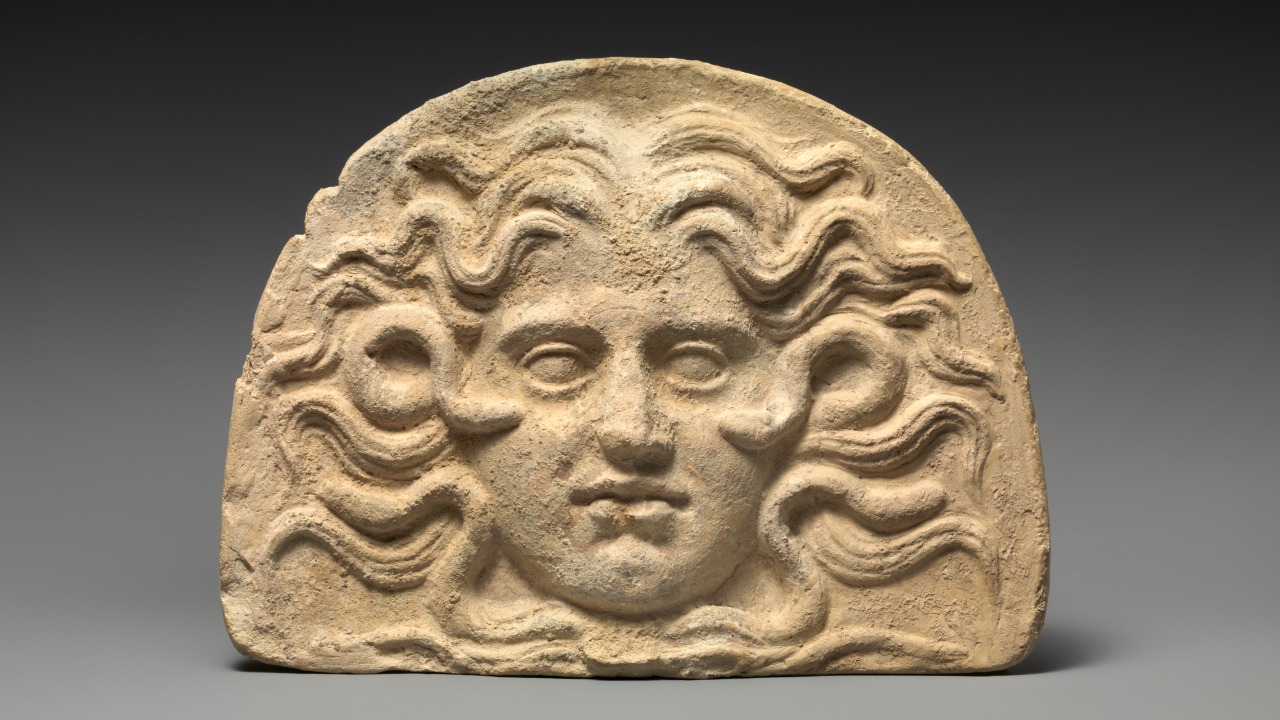
The newly revealed monster does not exist in isolation. Across the wider region, other finds point to a deep and varied tradition of giving physical form to fear, punishment, and cosmic power. At an 11,000-Year-Old Site, excavators documented a Mysterious Figurine With Stitched Lips Found in a ritual context, its sealed mouth interpreted as a sign of enforced silence or secret knowledge. That object, reported By Fulya Ozerkan, AFP, shows how early communities were willing to deform the human body in symbolic ways to express social or spiritual control. The stitched lips, like the smile on the new carving, are not naturalistic details but deliberate exaggerations, designed to make viewers feel the weight of taboo and transgression.
Farther west, Archaeologists uncovering an ancient Roman forum in modern-day Turkey found a rather unique depiction of Medusa, the snake-haired guardian whose image was used to ward off evil. The report on that Roman discovery in Turkey notes that Medusa’s face was carved into architectural elements, turning a mythic monster into a structural protector. When that tradition is set alongside the Terrifying Mythical Figure and the stitched-lip statuette, a pattern emerges. Communities repeatedly turned to hybrid beings, part human and part other, to police boundaries between sacred and profane, inside and outside, living and dead. The new carving’s poised, almost amused menace fits neatly into this lineage of threshold guardians, suggesting that even in very early periods, people were already experimenting with how much horror a protective image should contain.
Reuniting fragments and rethinking myth
The story of the terrifying figure is also a story of patience. After 96 years, Archaeologists Finally Found the Missing Part of a long-studied object, a breakthrough that has been linked in reporting to the same cycle of research that brought the Strange Carving of the Terrifying Mythical Figure to light. The earlier fragment had puzzled generations of scholars, who could not quite decide whether it represented a deity, an animal, or an abstract symbol. Only when the missing piece was recovered did the full outline of a composite creature snap into focus, revealing horns, claws, or other features that clearly placed it in the realm of myth. That experience has made researchers cautious about drawing quick conclusions from partial evidence, and it hangs over the interpretation of the newly uncovered carving as well.
The Dec account that connects the rediscovered fragment to the Terrifying Mythical Figure emphasizes how much context can change once an image is complete. What once looked like a simple geometric pattern turned out to be part of a larger narrative scene, with the monstrous being interacting with smaller human figures. That shift in understanding has encouraged archaeologists to revisit other ambiguous carvings and figurines, asking whether they too might be incomplete or misaligned. In that sense, the new discovery is not just adding a single terrifying face to the record but prompting a broader re-evaluation of how myth was visualized. The figure’s unsettling smile, its implied movement, and its placement within a larger composition all argue for a storytelling tradition that was more dynamic and more psychologically aware than earlier models allowed.
From sacred caves to modern imaginations
The impact of the carving is not limited to academic circles. Public fascination with ancient monsters and otherworldly visitors has been primed by a steady stream of discoveries and interpretations, some more speculative than others. A widely viewed video titled Explorer Uncovers Alien-Like Carvings in Sacred Mayan Cave, released in Aug, leans into the idea that unusual ancient images might record extraterrestrial visitation. While such claims remain unverified based on available sources, their popularity shows how quickly ambiguous carvings can be pulled into modern narratives that have little to do with the intentions of their creators. The Terrifying Mythical Figure, with its almost cinematic sense of a creature about to rise, is already being discussed in similar terms, even as archaeologists stress the need to ground interpretation in local myth and material context.
Museums and cultural institutions are also grappling with how to present such finds responsibly. A recent report on a Texas museum sending items back to Italy amid a global museum debate notes that questions of ownership and context are now central to how ancient art is displayed. In that same discussion, the mention of Archaeologists, a Roman forum, Turkey, and Medusa underscores how intertwined these issues have become: a single carved face can be at once a legal object, a religious symbol, and a pop culture icon. As the newly uncovered terrifying figure moves from excavation trench to conservation lab and, eventually, to public exhibition, curators will have to decide whether to emphasize its horror, its craftsmanship, its ritual role, or its place in ongoing debates about where such objects belong. The choices they make will shape not only how visitors feel when they meet the monster’s smile, but also what lessons they take away about the people who first carved it into stone.