
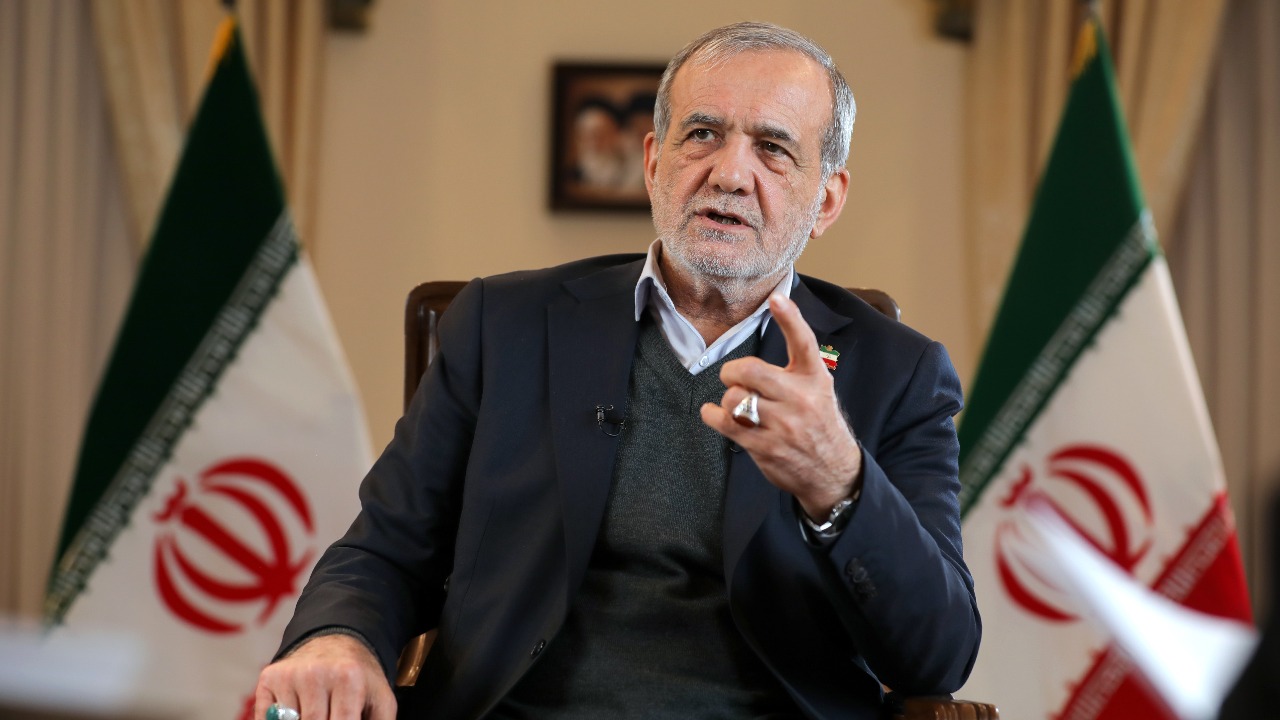
Iran’s leadership has quietly shifted from defiance to conditional engagement, opening the door to renewed nuclear and regional talks with Washington. President Masoud Pezeshkian has signaled that he is prepared to test diplomacy again, even as hardliners at home and rivals abroad watch for any sign of weakness. The move suggests Tehran now sees managed negotiation, rather than open confrontation, as the safer path in a volatile Middle East.
The decision to authorize new contacts with the United States follows weeks of rising tension and pointed threats from President Donald Trump. It reflects a calculation in Tehran that controlled dialogue could ease economic pressure and reduce the risk of direct conflict, without abandoning core security goals. How far these talks can go will depend on whether both capitals can align tactical needs with long-term mistrust.
From quiet directive to public signal
The clearest sign of a policy shift came when Iran’s president instructed his team to begin fresh nuclear discussions with the United States. According to a government account relayed to the outlet Fars, he ordered the start of talks focused on the nuclear file and related sanctions, a move that marked a departure from months of rhetorical resistance to any engagement with Washington. The report described how Iran had quietly accepted that a managed channel with the United States was necessary to address both nuclear constraints and regional flashpoints, even as public messaging in Tehran remained cautious.
That private directive was soon matched by more open language from President Masoud Pezeshkian. In remarks carried by regional and international outlets, he stated that Iran was ready to negotiate with the United States under conditions he framed as fair and balanced. His comments were echoed by senior diplomat Araghchi, who told CNN he was confident that a deal could be reached, reinforcing the sense that the president had secured at least provisional backing from key figures in the foreign policy establishment. The shift was captured in reports that highlighted how Pezeshkian and Araghchi were now publicly aligning diplomacy with the need to avoid a wider war between Israel and Iran.
Trump’s pressure and the security backdrop
The recalibration in Tehran did not occur in a vacuum. It followed a period in which President Donald Trump sharpened his rhetoric and signaled that further Iranian escalation at sea or through regional proxies would draw a forceful response. Reporting from the Gulf described how a U.S.-flagged tanker was approached and challenged by Iranian gunboats, an incident that underscored how quickly miscalculation could trigger a direct clash. Against that backdrop, Pezeshkian’s confirmation that talks with the United States were underway appeared less like a concession and more like an attempt to regain control of the tempo of confrontation.
Domestic pressures also weighed heavily. Iran has faced public anger over a deadly crackdown and ongoing economic hardship, both of which have been intensified by sanctions linked to its nuclear program and regional activities. Trump’s threats raised the prospect of even tighter measures or limited military strikes, which could further damage an already strained economy. By confirming that he had opened a channel with Washington after those warnings, the president signaled to his own public that he was seeking to shield Iran from additional punishment while preserving national pride. The reporting that Trump had directly shaped the timing of the talks highlighted how deterrence and diplomacy were now tightly intertwined.
‘Fair and equitable’ terms and regional diplomacy
In public, Pezeshkian has framed his outreach as a demand for balance rather than capitulation. He stated that he had instructed his foreign minister to pursue what he called “fair and equitable negotiations” with the United States, language that was carefully chosen to reassure domestic critics that Iran would not accept one-sided terms. Coverage of his remarks noted that Iran wanted any new framework to address sanctions relief and security guarantees in tandem, rather than focusing solely on nuclear restrictions. By emphasizing fairness, the president sought to cast engagement as a sovereign choice rather than a response to pressure.
The diplomatic push has unfolded alongside a flurry of regional travel by American envoys. One report noted that Witkoff was traveling to Israel for meetings with Prime Minister Benjamin Netanyahu and other Israeli security officials, underlining how closely Washington was coordinating with its key ally as it weighed next steps with Tehran. The same account stressed that Witkoff would discuss both the nuclear track and the risk of a broader war between Israel and Iran, a reminder that any U.S. Iranian dialogue is inseparable from the wider regional security architecture. For Pezeshkian, the challenge will be to show that engagement can reduce the chance of conflict without sidelining Iran’s own regional ambitions.
Balancing domestic constraints and U.S. expectations
Even as he moves toward talks, Pezeshkian must navigate a complex internal landscape. Reports on his outreach stressed that he is seeking to reassure conservative factions that any agreement will protect Iran’s technological advances and regional leverage. In one account, he was described as pushing for negotiations that would be structured and time-bound, with clear benchmarks for sanctions relief. The coverage noted that updated guidance from his office emphasized the need for “fair and equitable negotiations” and highlighted that the directive had been issued at 12:32 AM CST, a detail that underscored how intensely the president’s team was managing the messaging. The reference to “By JON GAMBRELL Associated Press” in the same report illustrated how closely outside observers were parsing every word from Tehran.
On the other side of the table, Washington is weighing how far it is prepared to go in easing pressure. The United States remains focused on preventing Iran from advancing its nuclear program beyond agreed limits while also curbing support for armed groups across the region. Analysts noted that any new framework would have to satisfy both security hawks in Washington and partners such as Israel, while also offering enough economic relief to make the deal sustainable in Tehran. The broader relationship between Iran and the United States remains deeply mistrustful, but both sides now appear to accept that managed engagement is preferable to uncontrolled escalation.