
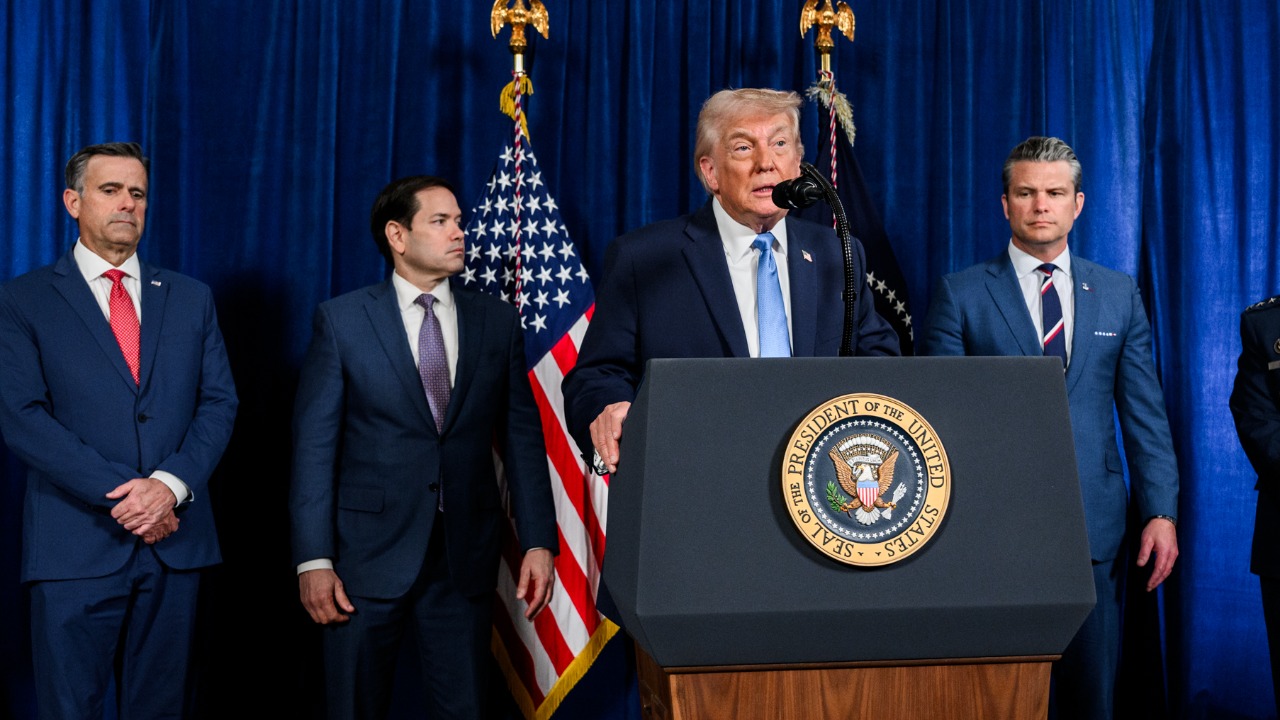
The United States has moved to classify branches of the Muslim Brotherhood in Egypt, Lebanon, and Jordan as terrorist organizations, reshaping the legal and political landscape for one of the most influential movements in modern political Islam. The decision, driven by President Donald Trump’s administration, locks these chapters out of the U.S. financial system and exposes their leaders and supporters to sweeping sanctions and criminal penalties. It also pushes long running regional debates about the Muslim Brotherhood’s nature, and its links to armed groups, into a far sharper and more polarized frame.
The decision and its legal architecture
I see the core of this move in the formal designations that now bind U.S. agencies and banks. The State Department has treated the Egyptian, Jordanian, and Lebanese branches as both Foreign Terrorist Organizations and Specially Designated Global Terrorists, a dual label that triggers immigration bans, asset freezes, and material support prosecutions under U.S. law, as detailed in the administration’s own Designation of Certain. The Treasury Department has moved in parallel, using its sanctions authority to cut these organizations off from the international financial system and to target individuals it accuses of directing or financing violent activity.
Officials have framed the step as a coordinated effort by The Treasury and State to close what they describe as a dangerous gap between rhetoric and enforcement. In their joint announcement, they stressed that the Lebanese, Jordanian and Egyptian chapters of the Musl are now treated in U.S. law like other designated groups that “engage in or support terrorism,” a standard that allows prosecutors to pursue anyone who knowingly provides them with funds, training, or services, as set out in the Treasury and State announcement. I read that as a signal that Washington intends not only to stigmatize these branches politically but to make any financial or logistical contact with them legally perilous.
Why Egypt, Jordan, and Lebanon were singled out
To understand why these three chapters were targeted, I look first at the pattern U.S. officials describe. They argue that since early 2025, elements with connections to the Muslim Brotherhood in Jordan, which was officially dissolved by a Jordanian judicial decision, have been involved in activity that supports Hamas, including fundraising and recruitment, a claim laid out in Treasury’s description of Since early 2025 developments. The Department of the Treasury has gone further, accusing the Egyptian and Jordanian branches of the Muslim Brotherhood of providing material backing to Hamas operations, a charge that underpins its decision to treat these branches as FTOs and SDGTs in its statement.
Lebanon enters the picture through a mix of leadership and alleged operational ties. The State Department has specifically designated the Secretary General of the Lebanese Muslim Brotherhood, Muhammad Fawzi, describing him as a key figure in a network that channels support to armed groups, a role highlighted in the Treasury notice that details how the Department of State targeted Secretary General of. The United States has framed the Lebanese branch as part of a broader Middle Eastern infrastructure that, in its view, blurs the line between political activism and violent militancy, a rationale echoed in accounts of how The United States has treated these Middle Eastern chapters of the Muslim Brotherhood as terrorist groups on Tuesday.
The Trump administration’s political calculus
From my vantage point, the designations reflect a long gestating promise by President Donald Trump to treat the Muslim Brotherhood as a terrorist movement rather than a legitimate political actor. His administration has now labeled three branches as terrorist organizations, a step that supporters in Washington’s conservative circles have urged for years and that was previewed in coverage noting how President Donald Trump’s team had pledged to act, as reported in a Nation Jan segment that also cited the figure 35 in the context of congressional backing. The White House had already laid the groundwork with a Presidential action that spoke of Designation of Certain Muslim Brotherhood Chapters as part of a broader strategy to confront what it sees as a transnational Islamist threat, a framework spelled out in the Presidential statement.
The political stakes are not confined to U.S. domestic debates. In BEIRUT, analysts have noted that The Trump administration has waded into a long running regional argument over whether the Muslim Brotherhood is primarily a political movement or a gateway to militancy, a tension explored in reporting that asks What the Muslim Brotherhood represents and where it stands now after the U.S. terrorist designation, as seen in the What to know analysis. I read the new designations as a deliberate choice to side with governments like Egypt and the UAE that have long treated the Brotherhood as an existential threat, and to signal that Washington’s counterterrorism lens now dominates its view of political Islam in the region.
Regional reactions and emerging fault lines
The response from Middle Eastern capitals has underscored how divisive the move is. UAE officials have been quick to praise the decision, with statements that UAE welcomed the U.S.announcement designating Muslim Brotherhood chapters in Lebanon, Jordan, and Egypt as terrorist organisations and framed it as a step that aligns with their own long standing concerns about the group’s role in regional instability, as reflected in the UAE welcomed statement. The United States today announced the designation of branches of the Muslim Brotherhood in language that some Gulf allies have echoed, stressing that under the new rules the Lebanese branch in particular will face tighter scrutiny on cross border financial flows, a point captured in social media posts noting how The United States has moved Under the designations to constrain the Lebanese network, as seen in the The United States announcement.
On the other side, the Egyptian Muslim Brotherhood has vowed to legally contest the designations and to rally international opinion against what it calls a politicized attack on a movement with deep social roots. Earlier statements from the group have argued that the Treasury and State Departments are punishing lawful political activity by conflating it with the actions of armed factions, a charge that surfaced after U.S. officials said they were imposing sanctions on the Muslim Brotherhood’s Egyptian, Jordanian and Lebanese branches, as described in the Earlier account. I see these clashing narratives as the early contours of a broader diplomatic contest, one that will test how far Washington’s European allies and regional partners are willing to follow the U.S. lead.
Consequences for political Islam and security policy
Beyond the immediate sanctions, the designations raise deeper questions about how the United States intends to deal with nonviolent Islamist movements that operate in contested political spaces. Analysts have warned that labeling Muslim Brotherhood chapters as terrorist organizations could blur distinctions between groups that participate in elections and those that embrace armed struggle, a concern spelled out in an OPINION piece that argues The White House, by using its Presidential authority in this way, risks hardening attitudes toward Muslim societies and political Islam across the board, as outlined in the OPINION analysis. At the same time, U.S. security officials insist that the move is a necessary response to concrete evidence of funding and fighting for Hamas by the Egyptian, Jordanian and Lebanese branches, a claim that underpins the listing of these entities on sanctions rolls, as detailed in a sanctions tracker that notes how The US has added the Egyptian, Jordanian and Lebanese branches of the Muslim Brotherhood to its lists for their role in funding and fighting for Hamas, as seen in The US summary.