
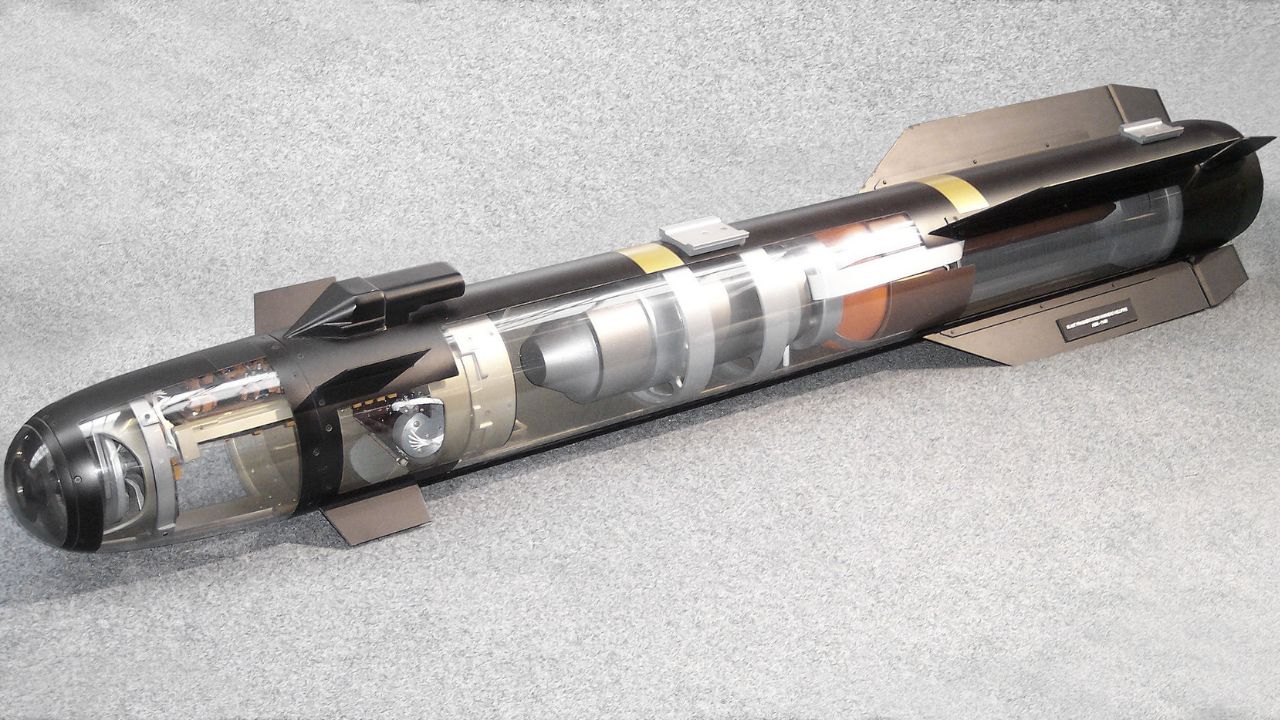
The United States has signed off on a compact but telling upgrade to NATO’s northern defenses, clearing a potential $45 million package of AGM‑114R Hellfire missiles for Denmark. The move deepens Washington’s role in hardening the alliance’s front line from the Baltic to the Arctic, while giving Copenhagen a sharper precision‑strike tool for its growing fleet of maritime helicopters.
I see this decision as more than a routine Foreign Military Sale. It is a calibrated signal that the U.S. intends to keep partners like Denmark well supplied with high‑end munitions at a time when European security, Arctic access, and alliance burden‑sharing are all under intense scrutiny.
The deal: a focused $45 million boost to Danish firepower
The core of the package is straightforward. The State Department has issued a determination in WASHINGTON that approves a possible Foreign Military Sale to Denmark of AGM‑114R Hellfire missiles and associated equipment, with a total estimated cost of $45 million. According to the formal notification, the request covers up to 100 AGM‑114R Hellfire missiles, along with related launchers, test rounds, and support items, a structure that mirrors the standard template Washington has used for similar precision‑weapon packages across NATO.
The notification, identified as Transmittal No 101, lists a Media and Public Contact address and specifies that the total cost is $45 million, underscoring that this is a tightly scoped, munitions‑centric deal rather than a broader platform acquisition. Reporting on the package notes that The FMS covers up to 100 AGM‑114R Hellfire Missiles, three AGM‑114R captive air training missiles, and a small set of launchers and racks, a composition that fits Denmark’s need to arm existing aircraft rather than buy new ones.
Why Denmark wants Hellfire now
Denmark has been steadily upgrading its armed forces as part of a broader effort to meet NATO spending benchmarks and secure its position on the alliance’s northern flank. As a relatively small country with outsized responsibilities in the Baltic Sea and Arctic approaches, Denmark has leaned on high‑end, interoperable systems rather than mass, and the Hellfire package fits that pattern. The State Department has formally approved a proposed Foreign Military Sale, or FMS, to the Denmark for AGM‑114R Hellfire missiles that is explicitly framed as a way to strengthen precision‑strike and defence capabilities, and that language reflects Copenhagen’s desire to field weapons that can credibly deter both surface and land threats.
From my perspective, the timing is equally important. Denmark advances on $45 million in Hellfire sustainment from the USA just as NATO is reinforcing its posture in the High North and Baltic region, and the DSCA has stressed that the package is intended to support ongoing operations and sustainment rather than introduce a new capability from scratch. Social media posts echo that framing, with the State Department described as having approved a proposed FMS to the Denmark for AGM‑114R Hellfire missiles that will deepen precision‑strike options already in service.
How Hellfire strengthens NATO’s northern flank
At the tactical level, the AGM‑114 family gives Danish pilots a versatile, combat‑proven weapon that can be used against armored vehicles, small boats, and fortified positions. The manufacturer describes Hellfire as a precision strike missile with multiple guidance options and warhead types, and that flexibility is particularly valuable for maritime helicopters that may be called on to interdict fast attack craft in the Baltic or support ground forces along the alliance’s eastern edge. A video analysis of how Hellfires fit NATO’s northern posture notes that, on the surface, it looks like a routine sustainment package, but On the closer inspection, the strategic logic behind it is to ensure that front‑line allies can deliver precise effects without waiting on U.S. assets.
Strategically, the sale plugs into a wider pattern of U.S. support for NATO partners that are investing in similar capabilities. Belgium, for example, is moving to acquire 240 Hellfire missiles under a possible U.S. foreign military sale that includes missiles as well as U.S. government and contractor engineering, technical and logistics support, along with parts, consumables, accessories, repair and return support, according to reporting on that package. When I look at Denmark’s request in that context, it reads as part of a deliberate effort to standardize precision munitions across the alliance, which simplifies logistics and deepens interoperability in any future contingency.
Industry, platforms, and the Greenland shadow
The industrial dimension of the deal is relatively compact but still notable. Lockheed Martin Named Principal Contractor in the Proposed Sale of to Denmark, a role that reinforces the company’s position as the primary supplier of Hellfire rounds to NATO customers while other firms, such as MERCK & CO., INC., appear only incidentally in the financial reporting around the transaction. The DSCA has indicated that there is no current offset agreement in place for this transaction and that any such arrangement would be defined in future negotiations, a point reflected in coverage noting that it is also intended to include U.S. government and contractor services but that no offset has yet been agreed.
On the operational side, the missiles are expected to arm Denmark’s MH‑60R Seahawk helicopters, which are central to the country’s anti‑submarine and surface warfare missions. Aerospace News has highlighted that the United States has approved a $45 M package, describing it as a $45 Million Hellfire missile sale for Denmark‘s MH‑60R Seahawk helicopters that includes launchers and three BRU‑14 ejector racks, a configuration that will let Danish crews carry multiple missiles per sortie. Another analysis of the Washington decision notes that the sale aims to expand Denmark‘s ability to operate jointly with U.S. and allied aviation units and even touches on debates about the island’s strategic value, a clear reference to Greenland’s place in Arctic security calculations.
That Greenland angle has surfaced explicitly in some commentary, which points out that U.S. Approves $45M Hellfire Missile Sale to Denmark Despite Active to Seize Greenland, framing the package as a vote of confidence in Copenhagen’s stewardship of the island amid periodic geopolitical pressure. Other coverage of the U.S. decision simply notes that The US State Department Approves a $45-million Hellfire Missile Sale to Denmark and that the Defense Security Cooperation Agency has notified Congress, while additional reports emphasize that Denmark advances on Hellfire sustainment with U.S. government and contractor services and that Global Defense & Aerospace Post has framed the US approves sale of AGM‑114R Hellfire Missiles to Denmark as part of a wider regional trend. A separate summary notes that U.S. Approves potential $45 million Hellfire package to Denmark, while another highlights that Denmark advances on Hellfire missile acquisition from USA alongside Malta’s King Air maritime patrol aircraft, and yet another notes that Washington clears sale of an AGM‑114 Hellfire missile package, illustrated with a Photo by Aaron DeCapua. Together, these strands point to a single conclusion I cannot ignore: in approving this Hellfire Missile Sale to Denmark, Washington is not only arming a close ally, it is tightening the web of NATO defenses that stretch from the Baltic Sea to the icy approaches of Greenland.