
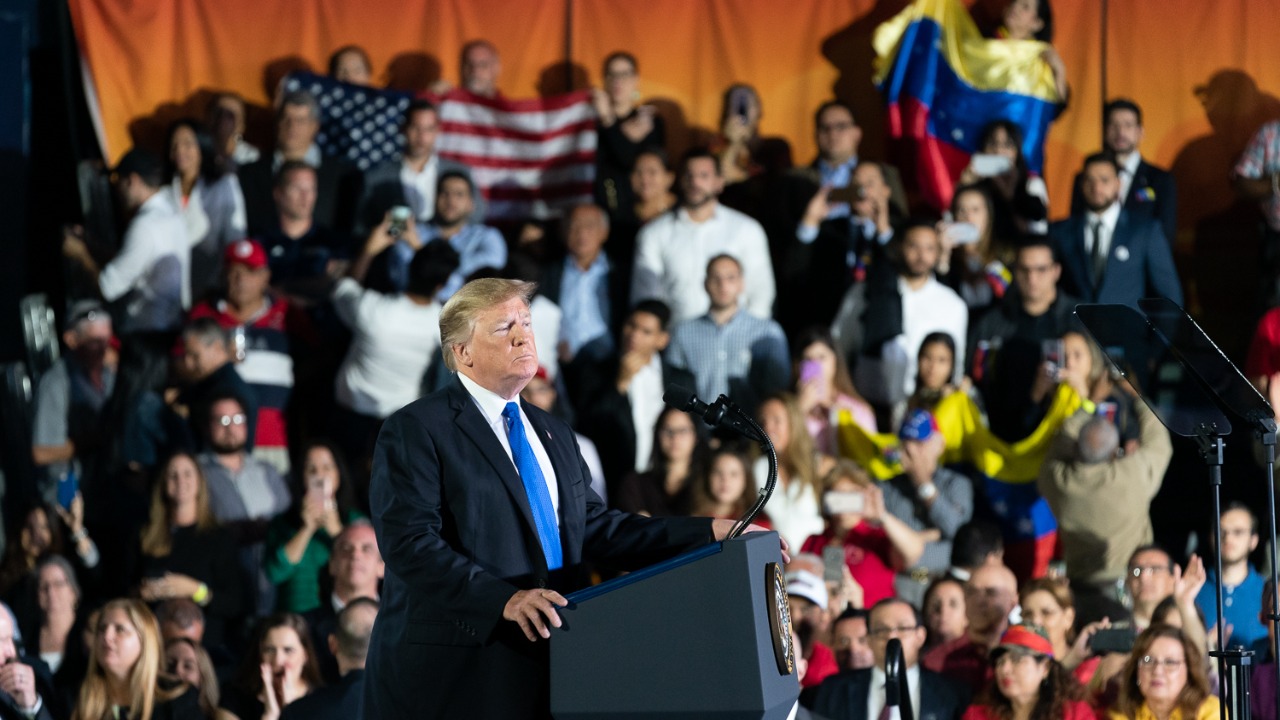
The overnight raid that toppled Nicolás Maduro from his palace bedroom and delivered him into United States custody was the kind of operation presidents usually describe in hushed, careful tones. President Donald Trump instead celebrated it as a “spectacular assault,” casting the capture of Venezuela’s longtime strongman as proof of American reach and resolve. Behind that triumphant language sits a far more complex story, from the planning rooms in Washington to the darkened streets of Caracas and the uncertain future now facing 30 million Venezuelans.
The assault that ended with Maduro on a prison tier in New York was not a single strike but a tightly choreographed campaign of air power, special operations and political engineering. It unfolded over hours, but it was built on years of pressure, indictments and covert mapping of the Venezuelan security state. Understanding how it happened, and what it means, requires looking inside the operation Trump praises and at the regional and legal shockwaves it has already set off.
The road to a “spectacular” decision
By the time Trump gave the order to move on Caracas, the confrontation with Maduro had been building through sanctions, indictments and threats of force. Over Christmas and New Year’s, U.S. troops and special operators waited on alert as the White House weighed whether to cross the line from pressure to regime decapitation. According to detailed accounts, Trump finally issued the execute order on Jan. 2 at 10:46 p.m., setting in motion a cascade of strikes and raids that would reach Maduro’s bedroom before dawn.
The president had already framed Maduro as a “dictator” and a “narco-terrorist,” and U.S. prosecutors had charged the Venezuelan leader in a narco-terrorism conspiracy, giving the administration a legal and political rationale for direct action. Officials had also spent months tightening a pressure campaign on Venezuela’s oil exports and recognizing an opposition figure after a court named her interim president, steps that laid the groundwork for a post-Maduro transition. The decision to move from sanctions to kinetic force, described by Trump as a way to bring “dictator Maduro to justice,” culminated in what he would later hail as a “spectacular assault” that stunned foreign capitals and many in Washington alike.
How the strikes on Venezuela unfolded
The capture of Maduro was anchored in a broader campaign of U.S. air and missile strikes that hit key military and security targets across Venezuela. The United States launched a series of coordinated attacks on air defense sites, command centers and suspected narcotics infrastructure, part of what officials described as a large-scale operation against both the regime’s coercive apparatus and its revenue streams. According to a detailed chronology of the 2026 United States strikes in Venezuela, the Pentagon emphasized that no American servicemembers were killed, underscoring the reliance on stand-off weapons and elite units rather than a conventional invasion.
Those strikes were not only about softening defenses for the raid on the presidential compound, they were also designed to blind and paralyze Maduro’s security forces. U.S. planners targeted radar and communications nodes to prevent loyalist units from coordinating a response, while also hitting facilities tied to drug trafficking and oil exports that Washington had long accused the regime of using to fund repression. Reporting from Caracas described explosions across the capital and other strategic locations as the night sky lit up and power flickered, a shock that set the stage for the small team that would go directly after the Venezuelan president.
Inside the Delta Force raid in Caracas

At the heart of the operation was a clandestine assault by U.S. special operators on Maduro’s secure compound in Caracas. An in-depth reconstruction of How the Elite Delta Force Raid in Caracas Unfolded describes a small, highly trained team infiltrating under cover of the wider bombardment, moving through a city where much of the power grid had been knocked offline. Speaking from Mar-a-Lago after the mission, Trump boasted that President Nicolás Maduro of Venezuela had been captured in what he called one of the most precise and successful special operations the United States had ever achieved, a claim that underscored how central the raid was to his narrative of strength.
U.S. officials say the operators reached Maduro’s residence in the early hours, breaching inner security perimeters that had been mapped over months of surveillance and human intelligence. The team’s objective was not to kill but to extract the Venezuelan leader and his inner circle alive, both to avoid martyring him and to bring him to trial on U.S. charges. The raid’s success, with Maduro seized and removed from the country before sunrise, is already being studied in military circles as a case study in combining strategic bombing with pinpoint special operations to decapitate an entrenched regime in a single night.
The moment Maduro was taken from his bedroom
For Maduro and his family, the end came with startling speed. Accounts from U.S. officials describe how Venezuelan President Nicolas Maduro and his wife Cilia Flores were dragged from their bedroom during the capture, as heavily armed operators moved room to room through the presidential residence. The couple was quickly restrained and separated from their personal security detail, which had been disoriented by the wider strikes and the sudden breach of what was supposed to be one of the most secure compounds in Venezuela.
Officials later emphasized that the raid was conducted with an eye to minimizing casualties, even as some Venezuelan civilians and members of the military were killed in the broader operation. One U.S. official said there were no American fatalities and described the extraction as “clean” from the perspective of the assault team, even if the political fallout was anything but. The vivid detail that Maduro and his wife were dragged from their bedroom has already become a symbol in Venezuela, for some a moment of long-awaited justice and for others a humiliating spectacle imposed by a foreign power.
From Caracas to New York: Maduro in U.S. custody
Once secured, Maduro and Cilia Flores were moved rapidly out of Venezuela, part of an extraction chain that had been rehearsed in detail before the first bomb fell. Former Venezuelan President Nicolás Maduro and his wife landed on U.S. soil under heavy guard, transported to New York to face federal charges tied to narcotics and terrorism. Officials briefed that the captured leader was being held at the Metropolitan Correctional Center, a high-security facility that has housed some of the most high-profile defendants in recent U.S. history.
Live coverage tracked Maduro’s arrival in New York and his transfer into federal custody, with cameras capturing motorcades and tight security around the courthouse district. Reports noted that the captured Venezuelan President Nicolás Maduro was being questioned in New York as Trump and senior officials outlined plans for what would come next in Venezuela. The image of a man who once controlled the levers of a petrostate now confined to a cell in lower Manhattan crystallized the scale of the operation’s success for the White House, even as legal experts began to debate the jurisdictional and sovereignty questions raised by his capture.
Trump’s claim the U.S. will “run” Venezuela
Trump did not limit himself to celebrating the raid’s tactical success. In remarks after the operation, he said the United States would “run” Venezuela for now, signaling an expansive vision of American control over the country’s political and economic future. He framed the intervention as a way to stabilize a failed state, restore democracy and, as he put it in one briefing, “get the oil flowing,” a reference to the vast reserves that have long made Venezuela a strategic prize. In one account of the strikes, officials described how the president linked the military action directly to plans to “get the oil flowing” again to global markets.
Those comments, along with his assertion that U.S. forces would temporarily oversee the country, alarmed critics who saw echoes of past occupations and raised fears of a long-term American presence in Venezuela. Live updates from New York captured Trump saying the U.S. would “run” Venezuela while Maduro was being questioned, language that went beyond the usual talk of supporting a transition or backing an interim government. For supporters, the president’s bluntness was a sign of resolve and a promise that Washington would not walk away after toppling an autocrat. For skeptics, it was a warning that the “spectacular” raid might be only the beginning of a far more open-ended entanglement.
Casualties, civilian cost and the view from Caracas
Behind the precision rhetoric, the operation carried a human toll inside Venezuela. Reports from the ground indicate that some Venezuelan civilians and members of the military were killed during the strikes and the subsequent collapse of regime defenses, even as U.S. officials stressed efforts to avoid mass casualties. Residents in CARACAS described a night of explosions, power outages and uncertainty as the capital’s defenses were hit and rumors spread that Venezuelan President Nicolás Maduro had been removed from the country. The scale of the damage to infrastructure and neighborhoods around key targets is still being assessed, but early images show shattered buildings and burned-out vehicles near strike zones.
Trump has highlighted that no American servicemembers were killed, a point echoed in briefings that framed the mission as a model of risk-limited intervention. Yet for Venezuelans who woke to find their skies filled with aircraft and their streets patrolled by shaken security forces, the sense of violation is harder to quantify. Coverage from CARACAS, Venezuela detailed how the strikes were justified as part of a campaign against drug boats, narcoterrorism and oil tankers, but for families near the blast sites, the distinction between strategic targets and the homes next door was painfully thin.
What comes next for Venezuela’s politics and oil
With Maduro gone, the question of who governs Venezuela has moved from theory to urgent reality. Analysts note that overnight and into the morning of January 3, an extraordinary military operation captured Venezuela’s dictator Nicolás Maduro, but that success at the tactical level does not automatically translate into a stable political order. A detailed assessment of what comes next warns that the operation will only be successful at the strategic level if it is followed by a credible transition plan, inclusive institutions and a clear path to elections. The analysis of what comes next for Venezuela stresses that removing a dictator is the beginning, not the end, of the challenge.
Oil looms over every discussion of that future. Venezuela holds some of the world’s largest proven reserves, and Trump has been explicit that one goal of U.S. involvement is to restore production and exports after years of mismanagement and sanctions. Reporting on the strikes notes that the president wants to “get the oil flowing” and that some of the targets included facilities tied to the regime’s control of energy revenues. At the same time, coverage of the dramatic action that capped an intensive Trump administration pressure campaign on Venezuela’s autocratic leader highlights that some Venezuelan civilians and members of the military were killed, and that the country’s ability to resume stable exports to other countries will depend on how quickly security and governance can be rebuilt. The balance between exploiting resources and respecting Venezuelan sovereignty will define how both Venezuelans and the wider region judge the intervention.
Regional shockwaves and global reaction
The U.S. attack on Venezuela and the capture of Maduro have sent shockwaves through Latin America and beyond. Regional governments that had long criticized Maduro’s human rights record now face the precedent of a sitting president being seized in a foreign special operations raid and flown to another country’s prison. Some neighbors worry that the operation, however justified in Washington’s eyes, could normalize cross-border regime change and invite future interventions. Others, particularly those that had recognized an opposition leader after a court named her interim president, see the removal of Maduro as the overdue enforcement of democratic norms.
Globally, the reaction has mixed relief at the end of a long-running crisis with concern about the method. Analysts have compared the mission to past U.S. operations that targeted individual leaders, but note that this time the target was a head of state with ongoing international recognition in parts of the world. Coverage of the U.S. attacks on Venezuela notes that Trump has framed the mission as a warning to other regimes accused of narcoterrorism and corruption. Whether allies and rivals accept that framing, or instead see a destabilizing assertion of unilateral power, will shape the diplomatic landscape long after the images of the raid have faded.
Inside the U.S. narrative: competence, spectacle and control
Within the United States, Trump and his advisers have presented the operation as proof of unmatched military competence and presidential decisiveness. One detailed account describes how, through Christmas and New Years, troops waited for Trump to issue the order, and how some in his circle now tout the mission as one of the most complex and successful in American history. The president’s own language, from calling the raid a “spectacular assault” to promising that the U.S. will “run” Venezuela, reflects a desire not only to remove a hostile leader but to showcase American power at a moment of global uncertainty. That narrative leans heavily on the fact that no American servicemembers were killed and that Maduro is now in a U.S. cell rather than a fortified palace.
Yet even sympathetic observers acknowledge that the story is not solely one of flawless execution. Legal scholars are parsing the implications of seizing a foreign head of state, human rights advocates are documenting civilian harm, and Latin American leaders are weighing how to respond to a precedent that could one day be turned against them. Live coverage of Maduro’s arrival in New York captured both the triumphal tone from the White House and the unease among international observers who see a gap between tactical brilliance and strategic clarity. The assault Trump calls spectacular has undeniably reshaped Venezuela’s future and tested the boundaries of U.S. power, but whether it will be remembered as a turning point toward stability or a new source of turmoil remains an open question.
On the ground in Venezuela: fear, hope and a power vacuum
Inside Venezuela, the immediate aftermath of the raid has been defined by a mix of fear, hope and confusion. In CARACAS and other cities, some residents celebrated the fall of a leader they blamed for economic collapse and repression, while others worried that the sudden removal of the only figure capable of holding the security forces together could unleash chaos. Reports from the streets describe checkpoints manned by nervous soldiers, shuttered shops and long lines at gas stations as people tried to secure basic supplies in case the situation deteriorated. The sense of living through a historic rupture is palpable, but so is the anxiety about what, and who, comes next.
International observers are already on the ground or preparing to deploy, and opposition figures who had long operated in exile or semi-clandestinely are stepping forward to claim a role in the transition. Yet the power vacuum left by Maduro’s capture is not easily filled, especially in a country where institutions have been hollowed out and armed groups, from colectivos to elements of the security services, retain significant influence. Coverage of the dramatic action that capped an intensive Trump administration pressure campaign on Venezuela underscores that the legal and political questions are only beginning. For Venezuelans, the assault that ended one era has opened a new one whose contours are still coming into view.
The symbolic battleground: images, maps and memory
As with any modern military operation, the fight over how the raid is remembered began almost as soon as the first images emerged. Trump has already shared photos and video clips that highlight the professionalism of U.S. forces and the moment of Maduro’s capture, framing them as proof of American resolve. At the same time, Venezuelans and international activists are circulating their own images of damaged neighborhoods and grieving families, challenging the narrative of a clean, surgical strike. The contrast between these visual stories will shape how the operation is taught, debated and mythologized in years to come.
Even the geography of the raid is becoming part of that symbolic battleground. Online, interactive tools now allow users to zoom in on the locations in CARACAS where key strikes hit and where the special operations team moved, turning the city into a kind of open-source case study in modern intervention. One such digital map of Caracas has been used to trace the route from Maduro’s compound to the extraction point, giving the public an unprecedented spatial sense of how the “spectacular” assault unfolded. As Venezuelans and Americans alike process what happened, these maps and images will help fix the operation in collective memory, not just as a set of military facts but as a contested story about power, justice and the price of intervention.
Legal fault lines and the question of precedent
Beyond the immediate political and military consequences, the capture of Maduro has opened a thicket of legal questions that will take years to resolve. U.S. prosecutors have long pursued cases against Venezuelan officials, and Maduro now faces indictments that accuse him of narcotics trafficking and terrorism. Bringing a former head of state into a U.S. courtroom, however, raises issues of sovereign immunity, jurisdiction and the legality of seizing a foreign leader on his own soil. Legal scholars are already debating whether the operation fits within existing doctrines of self-defense and counterterrorism or whether it stretches them into new territory.
Those debates are not abstract. They will shape how other countries respond when their own leaders or officials are targeted by foreign courts, and they may influence whether allies cooperate with future U.S. efforts to apprehend high-level suspects abroad. Live coverage of Maduro in U.S. custody has already highlighted the unprecedented nature of a captured Venezuelan President being held in a New York jail. As hearings begin and motions are filed, the courtroom battles over Maduro’s fate will double as a global test of how far a powerful state can go in using force to bring a foreign leader before its own judges.
Trump’s gamble and the uncertain endgame
For Trump, the operation against Maduro is both a military triumph and a political gamble. He has tied his own reputation for strength and competence to the success of a mission that removed a long-standing adversary without American casualties and placed a foreign president in U.S. custody. Supporters hail the raid as proof that the United States can still project decisive power, while critics warn that the long-term costs, from regional instability to legal blowback, have yet to be tallied. The president’s decision to describe the mission in superlative terms, as one of the most spectacular assaults in U.S. history, raises the stakes for how it will be judged in hindsight.
On the ground in Venezuela and in diplomatic circles abroad, the endgame remains uncertain. A sustainable transition will require more than a successful raid: it will demand inclusive politics, economic stabilization and a careful balance between U.S. involvement and Venezuelan self-determination. Live updates tracking Venezuela’s evolving crisis make clear that the country’s future is still in flux. The assault Trump calls spectacular has already entered the history books as a daring feat of arms. Whether it will also be remembered as the start of a better chapter for Venezuela, or as the opening move in a longer, more turbulent story, is a question that only the coming months and years can answer.