
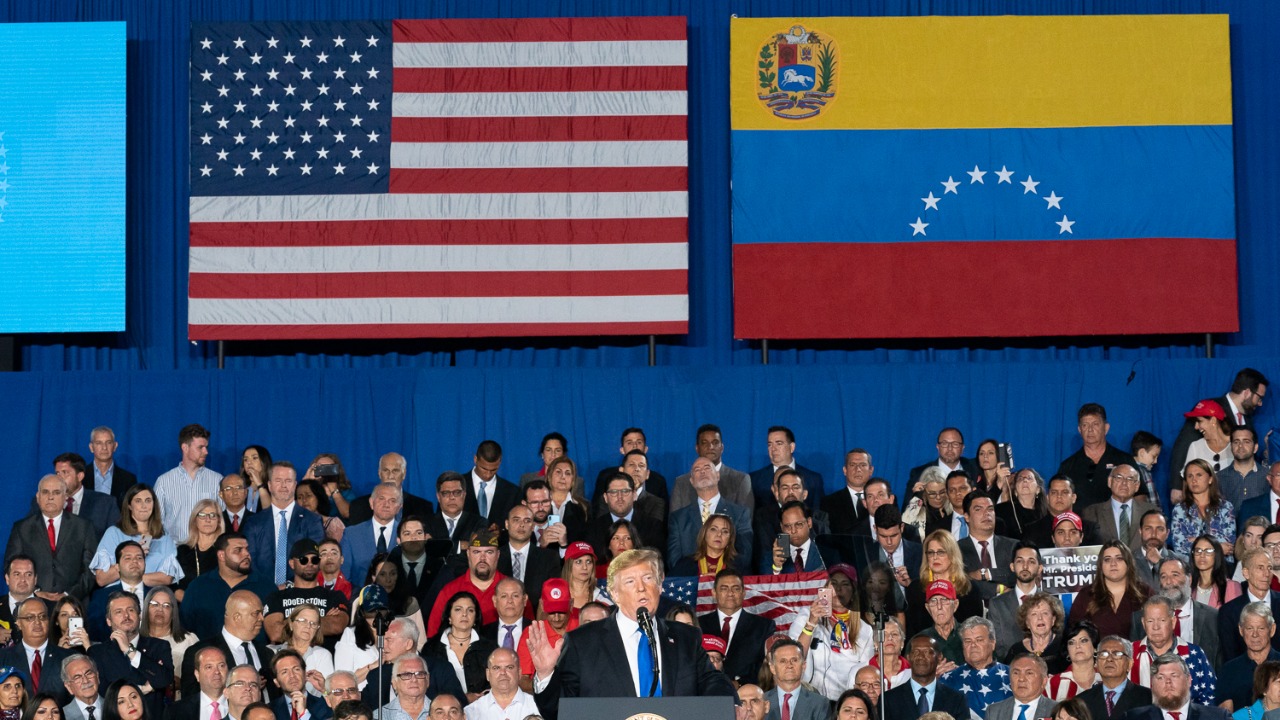
President Donald Trump is keeping the prospect of military force against Venezuela alive even as his administration intensifies pressure through air operations and economic blockades. The result is a standoff in which Washington’s show of strength is growing, but the path to deescalation or open conflict remains uncertain.
By leaving the “war option” on the table while ramping up strikes on alleged drug smuggling networks and tightening sanctions, Trump is signaling that the United States is prepared to go beyond coercive diplomacy if President Nicolás Maduro does not yield. That posture is reshaping security calculations across the Caribbean and the wider region.
From covert planning to open threats of force
The current phase of the Venezuela crisis has been building for months, moving from quiet planning to explicit talk of potential military action. Earlier in 2025, President Donald Trump suggested he had already made a decision on Venezuela military operations, a signal that planning for the use of force in the region was well underway. Officials briefed Trump on a campaign branded “Operation Southern Spear,” which was described as part of a broader consideration of regime change and the possible use of force in the region, indicating that military options were not theoretical but actively developed.
By mid November, reporting described Trump as weighing how far to push those plans, with references to “Operation Southern Spear” framed as another sign of increasing focus on the possibility of regime change in Venezuela. The fact that such an operation had a formal name and had been presented to the president underscored that the United States was not simply relying on sanctions or diplomatic isolation, but was preparing for scenarios that could involve direct military engagement with Venezuelan forces.
Escalating military moves around Venezuela
As planning matured, the United States shifted from internal deliberations to visible military actions around Venezuela’s borders. U.S. military strikes on alleged drug smuggling boats began in September in the Caribbean Sea and the eastern Pacific, targeting vessels that Washington has linked to “narco-terrorists” and drug related crime. Those operations, which continued into December, were framed as counter narcotics missions but took place in waters that are strategically important to Venezuela’s economy and security, signaling a willingness to project force close to its coastline.
The air component of this pressure campaign became clearer when U.S. fighter jets flew over the Gulf of Venezuela amid rising tensions with Caracas. The flights, reported in early December, followed the maritime strikes in the Caribbean Sea and the eastern Pacific and were described as part of a broader effort to deter what the Trump administration calls “narco-terrorists” and to challenge Maduro’s control of nearby airspace. Together, the boat strikes and jet overflights have created a pattern of sustained military activity around Venezuela, raising the risk of miscalculation between U.S. forces and Venezuelan units that monitor the same waters and skies.
Trump’s message: pressure first, war still possible
Trump has paired these operations with increasingly blunt public statements that keep the possibility of war in play. In mid December, he left open the option of military conflict with Venezuela, saying that war remained possible as part of his effort to force political change in Caracas. He has made clear that his aim is to pressure Venezuela to change its leadership through a military campaign that targets the country’s economic lifelines and security apparatus, and he has declared Maduro’s regime a dictatorship that must be confronted.

In separate comments reported the same week, Trump again refused to rule out military action, insisting that the United States would continue to escalate pressure until Maduro’s government yields. He has described the land as “very easy” in the context of potential operations and suggested that more steps could come “very soon,” language that keeps Venezuelan leaders and regional allies guessing about Washington’s next move. By repeatedly stating that the military option remains on the table, Trump is trying to amplify the coercive effect of sanctions, blockades, and targeted strikes without yet committing to a full scale invasion or air campaign.
Blockades, sanctions, and the risk of retaliation
Alongside the military buildup, the White House has tightened economic and maritime pressure on Venezuela in ways that could provoke a backlash. Trump ordered a blockade of sanctioned oil tankers entering and leaving Venezuela, a step that directly targets the country’s ability to export crude and import fuel and other critical supplies. That blockade, reported in mid December, was accompanied by warnings that violent retaliation against U.S. citizens in Venezuela was possible as Maduro and his allies look for ways to respond. The move also came as Washington labeled some of Maduro’s allies a foreign terrorist organization, further hardening the U.S. stance.
These measures deepen the economic isolation that has already battered Venezuela’s oil sector and public finances. By choking off sanctioned tankers, the United States is trying to cut revenue that Maduro uses to sustain his security forces and patronage networks. At the same time, the risk that Venezuelan security services or aligned groups could target U.S. citizens or facilities has grown, as suggested by warnings about potential violent retaliation. The blockade therefore functions as both a tool of pressure and a possible trigger for escalation, especially if an incident at sea or on Venezuelan soil leads to casualties that Washington feels compelled to answer.
Internal U.S. debate and strategic limits
Even as Trump talks tough, there are signs that Washington is grappling with the limits of its Venezuela strategy. Earlier in December, reporting described Trump as running low on options in the Venezuela military standoff, with experts warning that the next move might force a showdown. Former Secretary of State Mike Pompeo urged Trump to “ratchet up the pressure” on Maduro, arguing that stronger measures were needed even as some analysts cautioned that further escalation could divert resources from other theaters and strain U.S. capabilities.
The internal debate reflects a tension between the desire to topple Maduro and the costs of a direct conflict. On one side are voices like Mike Pompeo, who see Maduro as a threat that must be confronted more aggressively and who support steps that could bring the United States closer to open confrontation. On the other are strategists who warn that a war with Venezuela would require significant ground, air, and naval assets, potentially pulling attention and equipment away from other priority regions. This split helps explain why Trump has embraced a strategy of maximum pressure that stops short of invasion, using sanctions, blockades, and limited strikes while keeping the threat of war as a final, unexercised option.
Regional stakes and Maduro’s calculations
The cumulative effect of these moves is a tense regional environment in which both sides are testing boundaries. Tensions between the United States and Venezuela are escalating sharply as Washington ramps up its military presence in the region and intensifies its campaign against President Nicolás Maduro. The combination of strikes on alleged drug smuggling boats, fighter jet flights over the Gulf of Venezuela, and the blockade of sanctioned oil tankers has created a layered pressure system that touches Venezuela’s economy, security forces, and political leadership all at once.
For Maduro, the challenge is to resist this pressure without triggering the full scale conflict that Trump keeps hinting remains possible. Declaring Maduro’s regime a dictatorship and branding some of his allies as terrorists has narrowed the space for compromise, making any negotiated settlement harder to sell in Washington. At the same time, the risk of violent retaliation against U.S. citizens and assets, flagged in connection with the tanker blockade, shows that Caracas and its partners still have tools to raise the cost of U.S. actions. As long as Trump insists that war is still an option while continuing to expand military and economic pressure, the standoff will remain volatile, with each new operation or statement carrying the potential to push the crisis into a more dangerous phase.