

When careers and lives depend on a rifle or shotgun doing exactly what it is supposed to do, the choices professionals make tend to converge on a familiar set of long guns. Across hunting camps, tactical ranges, and precision competitions, the tools that keep showing up are not always the newest or flashiest, but the ones that have proved they will work in bad weather, under stress, and far from a gunsmith. The long guns experts still reach for first share a few traits: proven actions, predictable accuracy, and designs that have survived both history and hard use.
From classic Mauser actions to modern carbon fiber hunting rifles and modular semi‑automatics, the professional’s rack today is a blend of old and new. The patterns in those choices reveal what actually matters when a shot has to count, and why certain rifles and shotguns keep earning space in the truck even as fresh models debut every year.
The enduring pull of Mauser actions and controlled-feed classics
Ask professional hunters and dangerous‑game guides what they trust when a client’s shot goes wrong and a wounded animal turns, and the answer often starts with a Mauser‑pattern bolt action. Controlled‑round feed, massive claw extractors, and simple, robust internals have kept the Mauser Model 98 at the center of serious working rifles for more than a century. That pattern still anchors custom builds, with one veteran describing how a later acquisition, a custom rifle in the same caliber, was built on a Mauser Model 98 action to deliver the reliability needed when follow‑up shots are not optional.
The same confidence shows up in the way heavy calibers are paired with these actions. A 416 M Mauser 98 rifle, for example, combines a hard‑hitting cartridge with an action that has already proved it can feed and extract under dust, mud, and recoil. That pairing is not about nostalgia. It is about a track record of cycling when lighter, more complex systems can choke. Even as modern precision rifles multiply, the continued use of Mauser‑based guns in professional roles underscores how much weight experienced shooters put on controlled‑feed reliability and the ability to keep running after years of abuse.
Modern long‑range tools for hunters and competitors
On the other end of the spectrum from heavy safari rifles, professional guides and long‑range instructors are leaning into lightweight precision platforms that still deliver repeatable hits at distance. One standout example is a Best Lightweight Long, Range Hunting Rifle built around the Browning X Bolt 2 Pro concept, which uses carbon fiber and refined ergonomics to give mountain hunters a rifle they can carry all day without sacrificing stability on a 500‑yard shot. The appeal for working guides is obvious: less fatigue on steep terrain, faster target acquisition, and enough inherent accuracy to back up a client’s marginal hit when the animal is already moving.
Competitive shooters and crossover hunters are making similar calculations with purpose‑built long‑range rigs. In testing of the 9 Best Long‑Range Rifles, models like the Nosler Model 21, tagged as Best for Hunting, and the Bergara MG Lite, highlighted as Best Lightweight, show how modern actions, quality barrels, and thoughtful stock design can deliver precision that used to require full custom work. Budget‑minded professionals are not left out either, with the Bergara B‑14 HMR singled out as Best Budget, giving instructors and law‑enforcement marksmen a platform that can stretch to serious distances without draining a department or personal gear budget. These rifles are not replacing every traditional bolt gun, but they are increasingly the default choice when the job description includes dialing turrets and reading wind.
Sniper‑grade precision and the long‑range benchmark
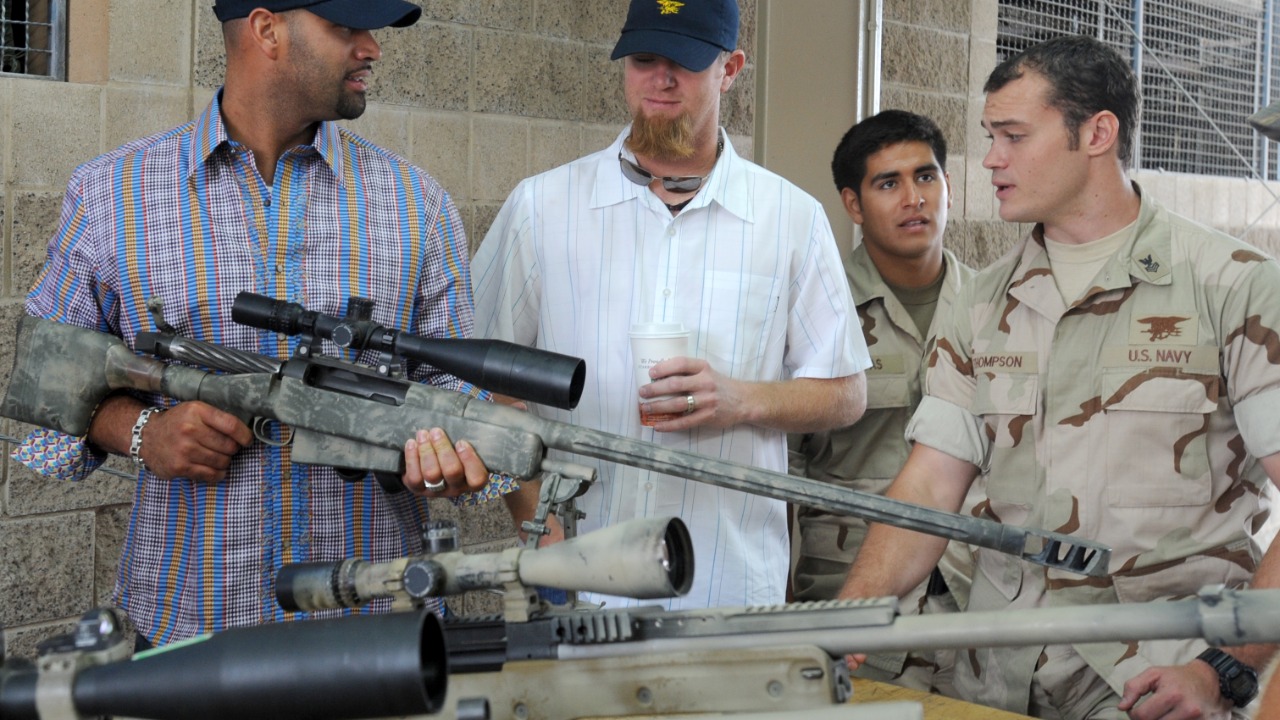
For military and law‑enforcement snipers, as well as civilian instructors who train them, the benchmark for a “serious” long gun is set by rifles that can deliver consistent hits at extreme ranges. Lists of the Top, Most Accurate Sniper Rifles in the World routinely feature platforms like the McMillan TAC, the Steyr SSG, and the Barrett M82A1, each representing a different approach to solving the same problem of precision under real‑world conditions. The McMillan TAC‑50, for instance, has become synonymous with ultra‑long‑range engagements, while the Steyr SSG M1 and similar designs emphasize repeatable accuracy and ruggedness in more portable packages.
These rifles are not common in civilian gun safes, but they shape expectations for what a precision long gun should do. When a police department or military unit evaluates new rifles, they are measuring them against the performance envelope set by these World‑class systems. That influence trickles down into the commercial market, where features like adjustable stocks, heavy barrels, and chassis systems echo the sniper rifles professionals use on deployment. Even when a hunter or competitor is shooting a more modest platform, the design DNA often traces back to the same long‑range priorities.
Workhorse shotguns and the quiet dominance of pump actions
While rifles get most of the attention in discussions of professional long guns, pump‑action shotguns remain some of the most relied‑upon tools in law enforcement, security, and guiding. The enduring popularity of designs that blend elements from the Remington 870 and Mossberg 500 shows how much value professionals place on parts commonality and proven mechanisms. A shotgun that retains the mixture of Remington 870 and Mossberg 500 designs and parts gives armorers and individual officers access to a deep pool of components, accessories, and institutional knowledge, which matters when a gun must be kept running for years.
These pump guns are not glamorous, but they are versatile. From breaching doors to stopping dangerous animals at close range, the same basic platform can be configured with different barrels, stocks, and sighting systems to fit a wide range of missions. The fact that new models are still borrowing heavily from the 870 and 500 patterns is a quiet acknowledgment that the core design got the fundamentals right. For professionals who may have to grab a shotgun in the dark and trust it to function with whatever ammunition is on hand, that kind of lineage is more persuasive than any marketing claim.
AR‑pattern rifles, service history, and the popularity question
No discussion of professional long guns can ignore the AR‑pattern rifle, which has moved from controversial service debut to near ubiquity in both military and civilian roles. The introduction of the AR‑15, designated the M16A1, during the Vietnam War was far from smooth, with early reliability problems and a reputation for jamming that took years of changes in ammunition, maintenance, and training to overcome. That rocky start is an important reminder that even today’s most popular platforms can have deeply flawed beginnings, and that professional trust is earned over time rather than granted at launch.
Despite that history, the AR‑15 pattern is now so entrenched that shooters on enthusiast forums are openly debating whether it Will Still Be the Most Popular Rifle in America in 50 Years. The very framing of that question, captured in a thread titled Do You Believe the, reflects how thoroughly the design has permeated law‑enforcement patrol rifles, private security carbines, and civilian training programs. For professionals, the appeal is less about trend and more about modularity: the ability to swap uppers, optics, and accessories to tailor a single lower receiver to multiple roles. That same logic is visible in other defense projects, where program managers emphasize platforms best able to use modularity to morph into different weapon system variants, reinforcing the idea that future‑proofing through adaptability is now a core requirement.
First guns, training tools, and why “best” is always contextual
Professionals are not only choosing guns for themselves, they are also steering newcomers toward platforms that build safe habits and realistic expectations. In some hunting circles, that has meant revisiting the role of muzzleloaders and traditional bolt actions as first rifles. One experienced shooter recounts how, after swift approval, he walked out with a stainless steel Remington Model 700 BDL DM, highlighting how a classic 700‑series bolt gun can serve as a durable, accurate starting point for serious marksmanship. Paired with quality optics on a solid base, such as a two‑piece steel mount marketed with the prompt Who Should Buy to emphasize stability for long‑range shooting, these setups give new hunters a foundation that still looks very similar to what professionals use in the field.
At the same time, instructors and experienced owners are quick to stress that there is no single perfect firearm for every person or purpose. One widely shared beginner’s guide ends with a blunt Conclusion that There is no “best” gun, even while recommending specific options like a J‑frame revolver in 38 Special or a compact Glo‑branded pistol for self‑defense. That nuance matters for long guns as well. A rifle that is ideal for a backcountry guide may be a poor fit for a small‑statured new shooter, and a precision chassis gun that shines on a competition line may be overkill for a landowner managing predators at modest ranges. Professionals tend to converge on a handful of proven platforms, but their advice usually comes with the caveat that context, training, and mission profile matter as much as the name on the receiver.
Why certain rifles keep making the “all‑time” lists
Looking at which guns experts rank among the best ever made helps explain why some long guns keep showing up in professional hands decade after decade. Historical assessments of the 50 best designs often highlight how specific rifles changed the way wars were fought or how hunters approached big game. One example is the shift that occurred when the U.S. Army Ordnance Corps, caught napping during the Spanish, American War, realized that the Krag, Jorgensen system it had fielded was outclassed by the Mauser designs used by opponents. The eventual decision to copy the Mauser pattern, even a little too closely, underscores how battlefield performance can force institutions to rethink their standards and adopt features that professionals in the field already recognize as superior.
Modern long‑range rankings serve a similar function for today’s shooters. When evaluators single out a Best Lightweight Long, Range Hunting Rifle or name specific models as Best for Hunting or Best Lightweight, they are distilling thousands of rounds of testing into a short list of traits that matter under pressure: consistent accuracy, manageable recoil, reliable feeding, and ergonomics that support real‑world shooting positions. Those same traits explain why certain bolt actions, pump shotguns, and semi‑automatic rifles keep earning trust from guides, snipers, and instructors. The labels change, and new materials like carbon fiber or advanced polymers enter the picture, but the underlying reasons professionals reach for particular long guns first remain remarkably consistent.