
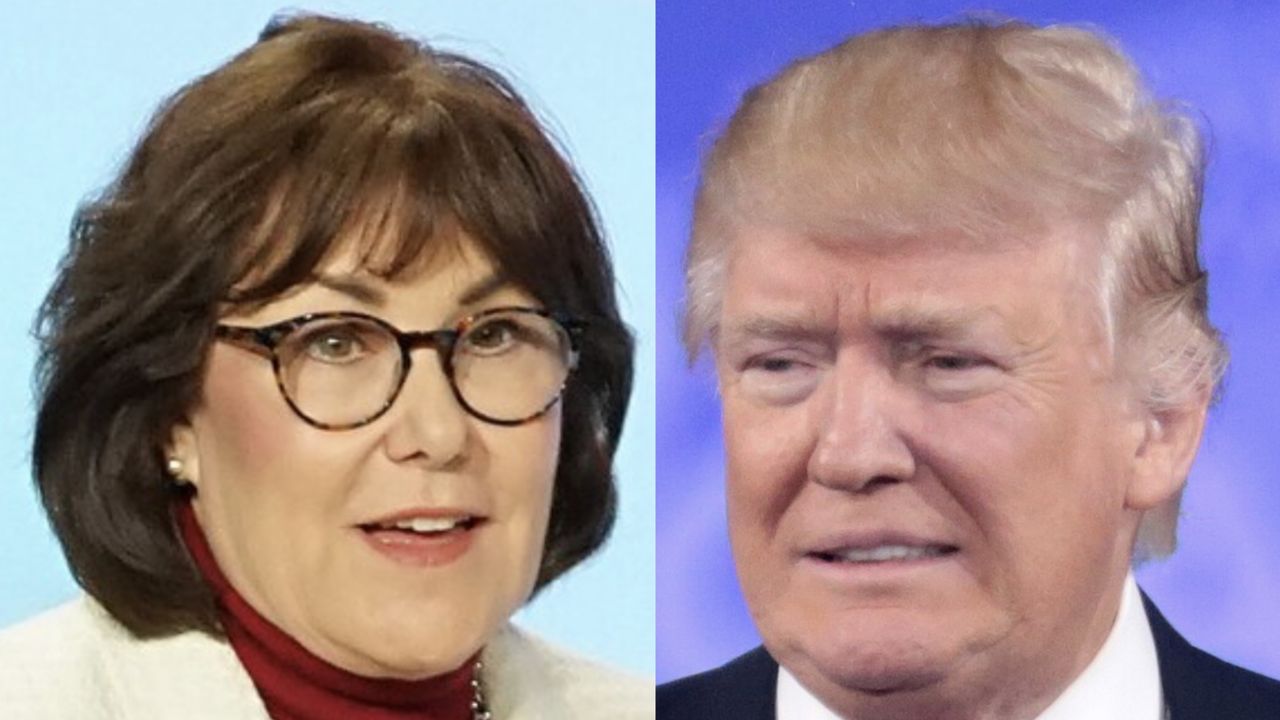
Senator Jacky Rosen announced new legislation on November 20 targeting financial arrangements involving the federal government’s acquisition of ownership stakes in private companies, accusing President Donald Trump, members of his family and individuals close to his administration of using their government positions to enrich themselves. The Nevada Democrat said Americans deserve greater transparency surrounding the administration’s investment deals and proposed prohibiting administration officials, members of Congress and their immediate families from personally benefiting from those transactions. Her announcement builds on an earlier effort to restrict elected officials and their relatives from profiting when the federal government acquires or sells private-company stakes.
Rosen published the following statement on X:
While you struggle with rising prices, Donald Trump, his family, and his friends are using the White House to enrich themselves. The Trump Admin has been taking ownership stakes in dozens of private companies, and you deserve to know what these deals are and who stands to benefit.
That’s why I’m introducing the Taxpayer Shares Protection Act to ban administration officials, members of Congress, and their immediate families from getting rich off these deals.
The legislation addresses a specific financial ethics concern: the potential for public officials and their immediate relatives to benefit personally from government transactions involving private businesses. Rosen’s argument is that when taxpayer money is used to acquire equity or equity-like interests in companies, the financial benefits should not flow to individuals holding public office or members of their families.
The proposal also comes after Rosen introduced Senate Resolution 929 on September 30, 2026. That resolution expressed the Senate’s position that the president, vice president, Cabinet secretaries, members of Congress and their families should not profit from federal acquisitions, sales or transfers of ownership interests in private companies. It called for prohibiting those individuals from receiving compensation or fees connected to such transactions or being given or sold stakes acquired by the government.
Rosen’s October resolution also provided a broader description of the financial arrangements motivating her efforts. Her office said federal agencies had announced more than 35 transactions involving the acquisition of equity or equity-like interests in private companies since January 2025, representing more than $27 billion in taxpayer funds. The senator argued that the scale of those transactions made stronger restrictions necessary, particularly when government decisions could affect the financial interests of people connected to the administration.
The issue extends beyond the proposed restrictions on government ownership stakes. Rosen has also supported restrictions on stock trading by elected officials. Her office previously highlighted her participation in bipartisan legislation to prohibit members of Congress from owning and trading individual stocks. The effort advanced through the Senate Homeland Security and Governmental Affairs Committee, although it did not become law during that Congress. Her support for the proposal establishes a separate, documented part of her record on preventing public officials from using their positions while maintaining potentially conflicting personal investments.
The comparison between Trump’s financial activity and congressional stock trading has also become a significant part of the national debate. A September 2026 Bloomberg investigation found that Trump or his money managers made approximately 28,700 securities trades between January 20, 2025, and June 30, 2026. Members of Congress collectively reported approximately 22,200 comparable transactions during that period. The investigation used financial disclosure records filed by the president and members of Congress. The comparison concerns reported securities transactions, not a finding that Trump personally executed every trade or engaged in illegal trading.
The disclosures also show why Trump’s investment activity has attracted attention from lawmakers and government ethics advocates. A May Reuters report examining his first-quarter 2026 financial disclosures identified at least $220 million, and potentially approximately $750 million, in securities transactions. The filings included investments connected to major American corporations, financial institutions and technology companies. Reuters noted that the disclosures reported transaction values in broad ranges rather than exact amounts, limiting what could be established about individual purchase prices and profits.
The president’s annual financial disclosure, released by the Office of Government Ethics on June 30, 2026, provided an additional picture of his business income. The 927-page filing covered 2025 and included extensive reporting on cryptocurrency ventures, traditional investments, real estate, licensing arrangements and other business interests. The Office of Government Ethics made the certified disclosure publicly available, providing the underlying government record for evaluating the president’s reported financial interests.
Reuters examined the disclosure and reported that Trump’s family cryptocurrency ventures generated more than $1.4 billion in income during 2025. The reporting identified nearly $800 million received by companies connected to World Liberty Financial, the cryptocurrency business Trump cofounded with his sons, as well as another $635 million reported from Trump-branded meme coin sales. The figures concern reported business revenue and financial interests, rather than a determination that any particular transaction violated federal ethics or financial laws.
Forbes also documented substantial changes in the family’s estimated wealth. Its September 15, 2026 assessment placed Trump’s net worth at approximately $7 billion, an estimated $2.7 billion increase from when he won the 2024 presidential election. Forbes attributed much of the increase to cryptocurrency ventures and overseas business arrangements. The estimate is a wealth valuation, not the same thing as income reported on the president’s federal financial disclosure.
The president’s sons have also experienced substantial reported financial growth through ventures established or expanded during the second Trump administration. Forbes estimated Eric Trump’s wealth at approximately $400 million in December 2025, compared with approximately $40 million a year earlier. Its reporting examined his involvement in American Bitcoin and World Liberty Financial, among other interests. Forbes separately estimated Donald Trump Jr.’s wealth at approximately $300 million in December 2025, up from approximately $50 million in November 2024, citing cryptocurrency, investment and business ventures. These are Forbes estimates, not government-certified personal net worth figures.
Rosen’s concerns also intersect with financial developments involving the administration’s energy policies and the war with Iran. A particularly relevant government analysis came from the Democratic minority of the Joint Economic Committee on October 26. The committee estimated that Trump’s net holdings in oil and gas companies had increased to as much as $81.6 million, representing a potential $35.8 million increase during 2026. Its analysis attributed the appreciation partly to rising energy stock prices associated with disruptions caused by the Iran war.
The same JEC analysis found that more than 94% of Trump’s reported 2026 oil and gas stock purchases occurred after the war began on February 28. It estimated that he purchased as much as $17.5 million in additional oil and gas stocks between March and August. The committee compared his holdings at the end of 2025 with subsequent transaction disclosures and stock-price movements. Those findings raise questions about the appearance of financial conflicts when a president’s policy decisions affect industries in which he holds investments, although the analysis does not establish that the purchases were made using confidential government information or that the president personally directed individual trades.
Rosen’s own legislative record includes other efforts to restrict the use of public resources for political or personal benefit. In March 2026, she introduced legislation to prohibit Cabinet members from using taxpayer funds for self-promotional advertising campaigns and from hiring advertising or consulting firms with connections to senior administration officials. The proposal followed controversy surrounding a $220 million advertising campaign associated with Homeland Security Secretary Kristi Noem. Rosen subsequently introduced an amendment in September to expand the restrictions to the president and vice president.
Her record also includes legislation that became law. Rosen and Senator Rick Scott introduced the bipartisan No CORRUPTION Act, which addressed a loophole allowing former members of Congress convicted of certain felonies connected to their official duties to continue receiving taxpayer-funded pensions while pursuing appeals. The legislation passed both chambers and was signed into law on December 26, 2024. Rosen has also supported the Government Spending Oversight Act, which would establish a committee to investigate and audit federal spending, and the Billion Dollar Boondoggle Act, which sought greater transparency for delayed or over-budget government projects.
The distinction between these earlier initiatives and the November announcement is important. Rosen’s previous measures addressed congressional corruption, stock ownership, advertising expenditures and oversight of government spending. Her new proposal specifically targets the financial benefits that public officials and their immediate families might receive from federal acquisitions, sales or transfers of stakes in private businesses. Together, these efforts demonstrate a sustained legislative focus on taxpayer protection and financial accountability rather than a concern limited to one individual transaction.
The latest announcement also raises a broader question for Congress: whether existing disclosure and ethics requirements are sufficient when the federal government becomes a shareholder in private businesses. Current financial disclosure requirements make certain transactions public, but disclosure alone does not necessarily prevent an official or relative from benefiting from an investment connected to government policy. Rosen’s proposal seeks to address that potential conflict through a direct prohibition.
As of November 20, the publicly documented legislative history includes her September 30 resolution, S. Res. 929, and her announcement of the Taxpayer Shares Protection Act. The October resolution is a Senate expression of policy rather than an enacted prohibition. The precise operative language and legislative text of the newly announced act should be distinguished from that earlier resolution until its formal bill text is available. The central question raised by Rosen is whether the government can make multibillion-dollar investments in private businesses while ensuring that public officials and their families cannot personally profit from those transactions.