
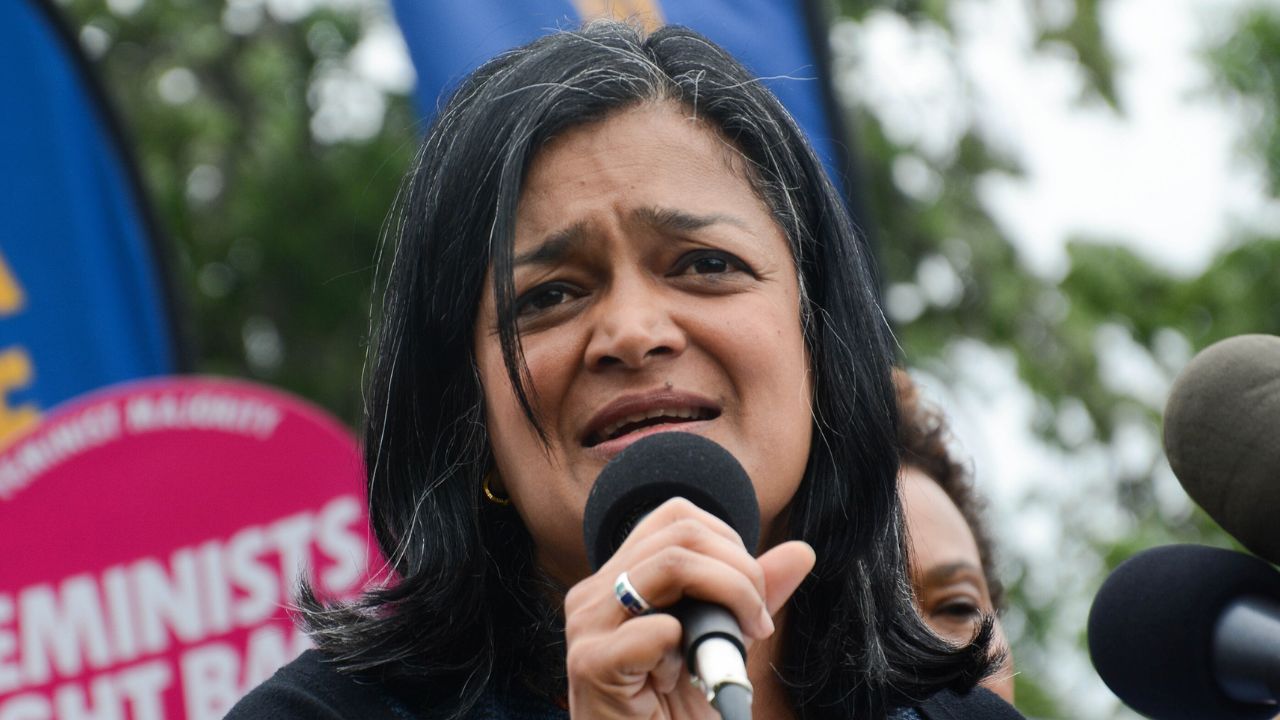
Rep. Pramila Jayapal of Washington outlined four policy priorities she says Democrats would pursue if they regain control of the House of Representatives, including ending the war with Iran, reversing healthcare cuts, increasing accountability for Immigration and Customs Enforcement and stopping President Donald Trump’s tariffs. Her statement comes one day before the November 3 midterm elections, as Democrats seek to challenge the Republican congressional majority.
Jayapal has consistently opposed Trump’s military campaign against Iran and has criticized the administration’s immigration, healthcare and trade policies.
Jayapal’s full X post reads:
“Ending the Iran War.
Reversing healthcare cuts.
Holding ICE accountable.
Stopping Trump’s reckless tariffs.This is what’s on the line and what Democrats will do in the majority.
11:14 AM · Nov 2, 2026
Jayapal’s first priority concerns the Iran war. In June, she said she would have voted in favor of a War Powers Resolution to end what she described as Trump’s illegal war in Iran. She argued that the president had begun the conflict without congressional approval, an imminent threat or a defined endgame.
Her position has included criticism of the war’s financial and humanitarian consequences. Jayapal has argued that billions of dollars spent on military operations should instead be directed toward lowering healthcare and housing costs for Americans.
Her second priority is reversing healthcare cuts. Jayapal has opposed Republican legislation that reduces federal healthcare assistance while providing tax benefits to higher-income Americans. Her statement reflects her broader position that access to healthcare should be expanded rather than reduced.
The precise changes Democrats could reverse would depend on the legislation passed by Congress, the availability of votes in the Senate and whether Trump would sign the proposals. A Democratic House majority alone would not guarantee restoration of every healthcare program.
Jayapal’s third priority is holding ICE accountable. Her position reflects longstanding criticism of immigration enforcement practices and calls for congressional oversight of detention conditions, use of force and the treatment of immigrants. The phrase “holding ICE accountable” is a broad policy commitment rather than a specific legislative proposal in the November 2 post.
Her fourth priority concerns Trump’s tariffs. Jayapal has opposed the administration’s trade policies, arguing that tariffs can increase costs for American consumers and businesses. She has framed the issue as part of a broader affordability agenda.
The four priorities are interconnected in Jayapal’s political argument: ending the war would reduce military spending and economic disruption, reversing healthcare cuts would expand access to medical care, ICE accountability would address immigration enforcement and stopping tariffs would reduce costs associated with trade policy.
Reuters reported on November 2 that Democrats were favored to retake the House, while the Senate outcome remained less certain.
Polymarket data showed a market-implied Democratic probability of approximately 94.5% for House control on November 2. Those figures should not be treated as election results.
Jayapal’s latest statement makes a direct commitment about what Democrats intend to prioritize in a majority. The four issues reflect positions she has taken throughout Trump’s second term, particularly on the Iran war and healthcare spending.