
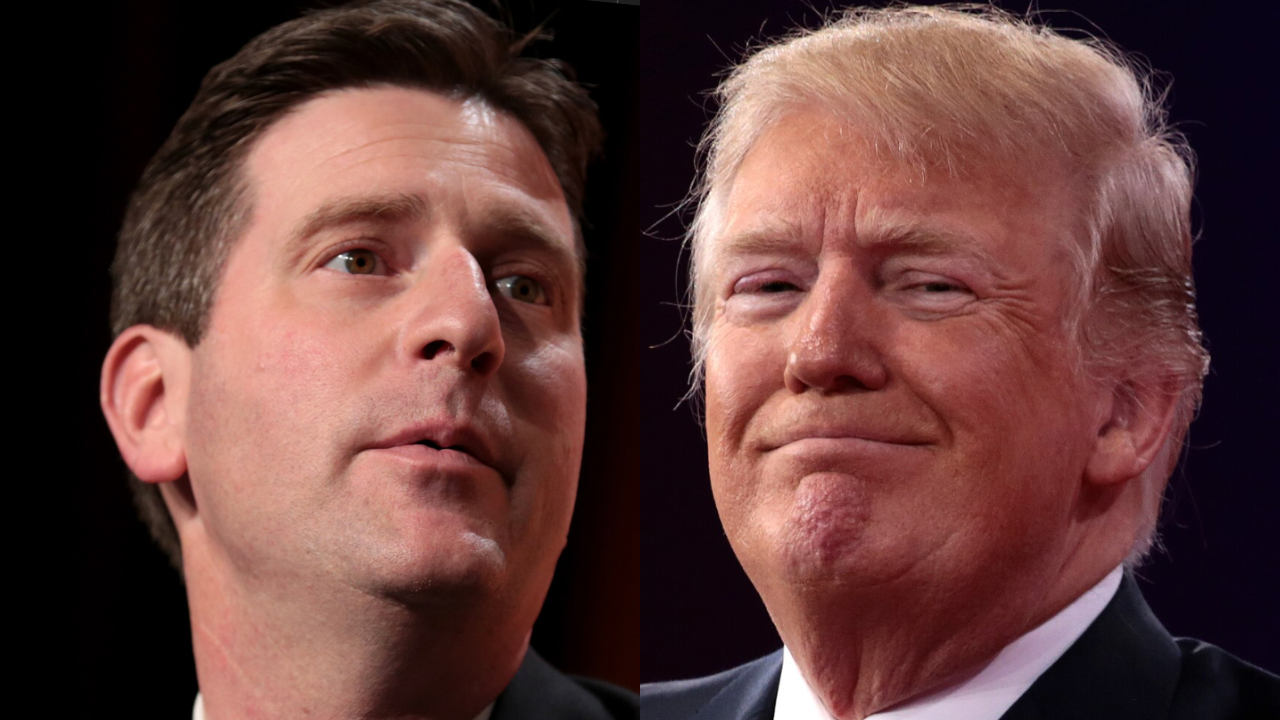
Rep. Greg Stanton, D-Ariz., said Sunday that President Donald Trump’s war with Iran drove up fuel prices and that Trump has now struck a deal to stop sanctions on Russian diesel, warning that Russian President Vladimir Putin could use the resulting windfall to fund his invasion of Ukraine. Stanton made the comments in two posts on X and urged Congress to pass a bipartisan bill aimed at blocking the arrangement.
Stanton’s Statement
In his first post, published at 1:05 p.m. on Oct. 25, 2026, Stanton wrote:
“Trump’s war of choice with Iran sent fuel prices soaring. Now he’s struck a deal to stop sanctions on Russian diesel, despite little evidence it will lower prices for Americans.
To make matters worse, Putin can use that windfall to fund his brutal invasion of Ukraine.”
In a follow-up comment posted at the same time, Stanton wrote:
“Both Democrats and Republicans oppose this misguided deal.
All Members of Congress should join @HouseForeign Democrats in passing the bipartisan Prohibit Corrupt Russia Oil Deals Act now.”
What The Diesel Deal Does
Trump announced the arrangement on Oct. 9 after a phone call with Putin. He said Russia would immediately supply more than 300,000 tons of diesel, followed by 500,000 tons in November and one million tons after that. The Treasury Department’s Office of Foreign Assets Control issued General License 135 the same day, authorizing the sale, delivery and importation of Russian-origin diesel through April 7, 2027.
A week later, on Oct. 16, Trump signed an executive order invoking Section 115 of the Lindsey O. Graham Sanctioning Russia and Iran Act of 2026 to waive sanctions, restrictions and duties under that law. He cited the national interest in a certification to Congress. Trump had signed the law on Sept. 18, and its first implementation deadline fell on Oct. 18. The law allows tariffs of up to 100 percent on major purchasers of Russian oil and gas.
Trump has defended the arrangement as a way to bring down costs, arguing that more diesel on global markets could ease prices. Russia, once a major diesel exporter, has banned exports since July as it struggled to meet domestic demand amid Ukrainian attacks on its refineries. Ukrainian President Volodymyr Zelenskyy has warned that the deal could pave the way for broader sanctions relief for Moscow.
Stanton’s Record On The Iran War
Stanton’s criticism of the Iran war dates to its first days. The U.S. and Israel began striking Iran on Feb. 28, and by March 2 six American service members had been confirmed killed. Stanton said in a radio interview that day that “It appears that we are in a war with Iran,” adding: “Only Congress can declare war.” He said he was left confused by the administration’s reasons for the campaign and called on the president to present evidence of an imminent threat and a clear objective.
On March 5, the House narrowly rejected a war powers resolution that would have required congressional approval for further action in Iran. Stanton posted a video that day saying he “voted YES to require the president to make his case to Congress” before continuing strikes.
On April 7, Stanton responded to Trump’s threat that “a whole civilization will die tonight” if Iran did not reopen the Strait of Hormuz. He called the threat “insane” and “unacceptable” and rejected the idea that it was a negotiating tactic, calling it a “madman strategy.” Trump announced a two-week ceasefire contingent on reopening the strait later the same day.
On April 16, Stanton’s office issued a formal statement on a war powers resolution. It said Trump launched a “war of choice without congressional authorization, without clear objectives or an exit strategy,” and that the Founders placed the power to take the nation to war with Congress. It also faulted congressional Republicans for declining to rein in the president and said that, with the ceasefire’s expiration days away, Republicans had pushed the country closer to the edge rather than pulling it back.
The conflict continued through the spring and summer. On May 11, Trump said the ceasefire was “on life support,” Reuters reported. On June 3, the House approved a war powers resolution 215-208, with four Republicans joining Democrats. It was the first time the chamber had passed such a measure during the conflict, though it did not immediately halt operations.
The Fuel-Price Link
Fuel costs rose sharply after the war began. By April 30, crude oil was up nearly 60 percent, gasoline 44 percent and diesel nearly 50 percent from their levels at the end of February. Acting Pentagon comptroller Jules Hurst told lawmakers on May 12 that the war had cost an estimated $29 billion. As of Aug. 19, Americans had paid $87 billion in extra costs for gas and diesel since the war began, according to the Brown University Iran War Energy Cost Tracker.
Trump has repeatedly said the price is worth paying. In March, he wrote on social media that short-term oil prices were “a very small price to pay” for safety and peace. On Sept. 17, as the war passed the six-month mark, he renewed the message that high gas and diesel prices are worth the cost.
The Russia Oil Legislation
Democrats on the House Foreign Affairs Committee had targeted Russian oil licenses before the diesel deal. On April 9, Ranking Member Gregory Meeks and Rep. William Keating introduced the End Russian Oil Windfalls Act to terminate Treasury’s general licenses for Russian oil sales and bar future ones. The committee’s release tied the bill to the “war of choice in the Middle East” and its effect on pump prices. In March, Meeks and Rep. Don Bacon, R-Neb., had demanded that Treasury Secretary Scott Bessent and Secretary of State Marco Rubio explain the easing of Russian oil sanctions.
Meeks introduced the Prohibit Corrupt Russia Oil Deals Act on Oct. 16. The bill would bar the U.S. International Development Finance Corporation from investing in Russian energy, revoke the Treasury licenses covering Russian fuel transactions and prohibit similar licenses in the future. It would also require sanctions on Russia’s energy sector. Meeks said in a statement that Trump was “cozying up to Putin” when the United States should be increasing pressure on the Kremlin.
The bill had 17 House cosponsors at introduction, all Democrats except Bacon. Separately, a bipartisan group of House members led by Rep. Jim Costa, D-Calif., wrote to Trump on Oct. 15 urging him to revoke General License 135 and fully implement the Graham Act. Rep. Joe Wilson, R-S.C., joined that effort. It is this cross-party opposition that Stanton referenced in saying both parties oppose the deal.
Stanton’s post places his earlier war powers votes and statements alongside the new objection. The Iran war, in his telling, raised prices, and the diesel deal, he says, does little to reduce them while giving Russia revenue. Midterm elections are Nov. 3.