
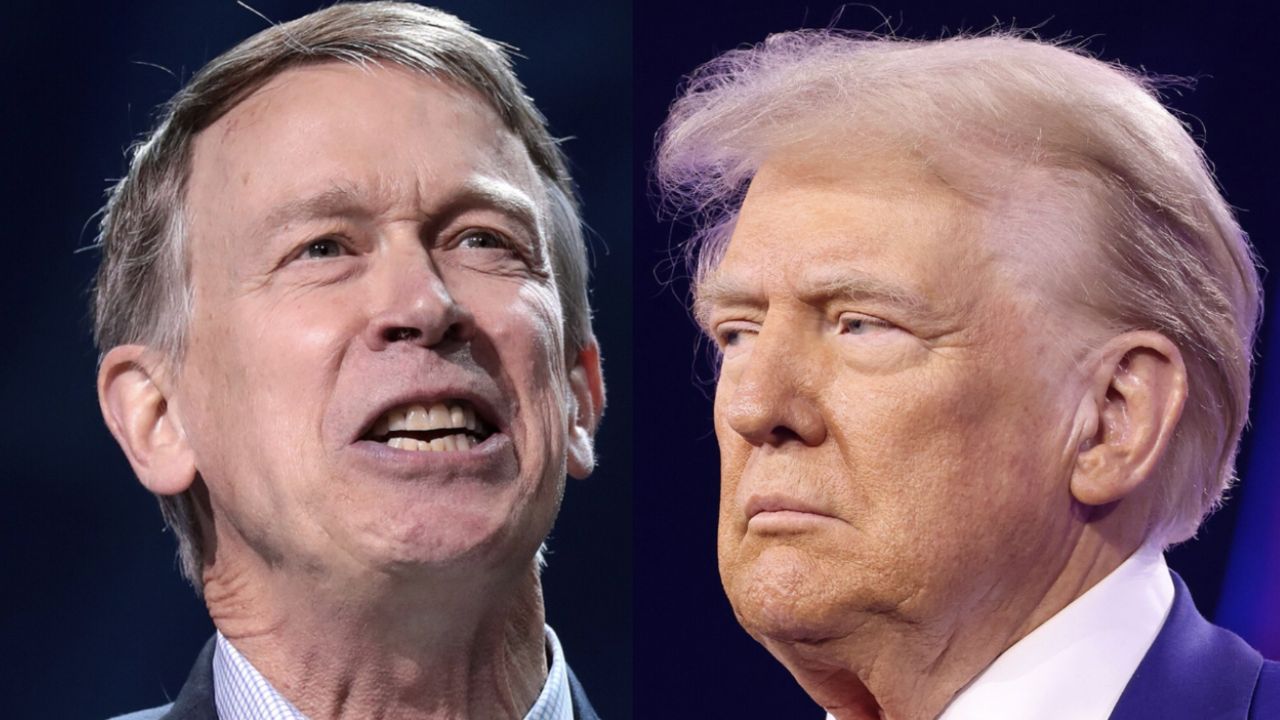
Sen. John Hickenlooper (D-Colo.) said Saturday that President Donald Trump will “try anything” to lift his approval rating, including cutting a deal with Russian President Vladimir Putin. He said Trump is using taxpayer dollars to pay for Russian diesel that Putin will use in his war against Ukraine. Hickenlooper has supported Russia sanctions legislation since 2022.
Hickenlooper’s full post, published at 11:13 a.m. on Oct. 24, 2026, read:
Trump will try anything to pump his flailing approval rating even if that means selling you out and cutting a deal with Putin.
He’s using your taxpayer dollars to pay for Russian diesel, money that Putin will use in his war against Ukraine.
The post responds to a CNBC article published Oct. 17 under the headline “Trump’s Russia diesel deal may offer Putin more than money — and spell trouble for Ukraine.” The article reports that Trump agreed to ease sanctions so Russia could supply diesel to global markets. It also reports the administration waived key provisions of a recently enacted sanctions package. Ukrainian President Volodymyr Zelenskyy condemned the waiver on X.
The article describes the deal’s size. Russia would supply 4.8 million metric tons of diesel, equal to about ten days of U.S. domestic demand or about one day of global demand. Experts told CNBC the deal would do little to move prices. Higher diesel costs, the article notes, tend to push up prices across the economy as the midterm elections approach.
On Russia’s gain, the article cites Sergey Aleksashenko of the NEST Centre. He estimated the first 1.8 million tons could generate up to $1.25 billion in extra export revenue over three months, about 1 percent of Russia’s commodity export revenue in that period. He estimated the benefit to Russia’s federal budget at under $30 million a month. The main gain, he said, is political.
Maria Snegovaya of the Center for Strategic and International Studies said the deal likely strengthens Moscow’s belief that pressure will yield further Western concessions. The article says the U.S. sanctions exemption runs until April 2027. Zelenskyy warned the agreement could set a precedent, saying sanctions will be lifted on other sectors next.
The article does not say U.S. government funds would be used to buy the diesel. It describes the arrangement as an easing of sanctions so Russia can supply the global market. It also does not address Trump’s approval rating, which Hickenlooper raises in his post.
Hickenlooper’s record on Russia sanctions
Hickenlooper has backed Russia sanctions since the invasion. In April 2022 he voted to remove Permanent Normal Trade Relations status from Russia and Belarus, and the Senate passed the Ban Russian Energy Imports Act, which he introduced with colleagues. The bipartisan bill bans imports of Russian crude oil, petroleum products, liquefied natural gas and coal.
On April 1, 2025, he joined a bipartisan group of senators introducing the Sanctioning Russia Act of 2025, which would impose sanctions if Russia stalls peace negotiations with Ukraine and a 500 percent tariff on goods from countries that buy Russian oil, gas and uranium.
His office also announced a letter on the pause in sanctions. Hickenlooper and Sen. Michael Bennet, with 13 Democratic colleagues, urged Treasury Secretary Scott Bessent to fully resume sanctions on Russian oil. The release says pausing the sanctions has not noticeably lowered domestic energy prices and that Russia’s oil revenue has doubled since April.
The sanctions fight reached final passage this summer. The Senate passed the Lindsey O. Graham Sanctioning Russia and Iran Act by an 86-11 vote on Aug. 7. Trump signed it in September. The CNBC article reports the White House then waived key provisions in the package.
A separate bipartisan effort has pressed Trump on the diesel deal itself. Six Republican and six Democratic senators wrote Oct. 13 that the deal was a gift to an adversary and should be rescinded. The Democratic signers were Richard Blumenthal, Chris Coons, Dick Durbin, Jack Reed, Jeanne Shaheen and Sheldon Whitehouse.