
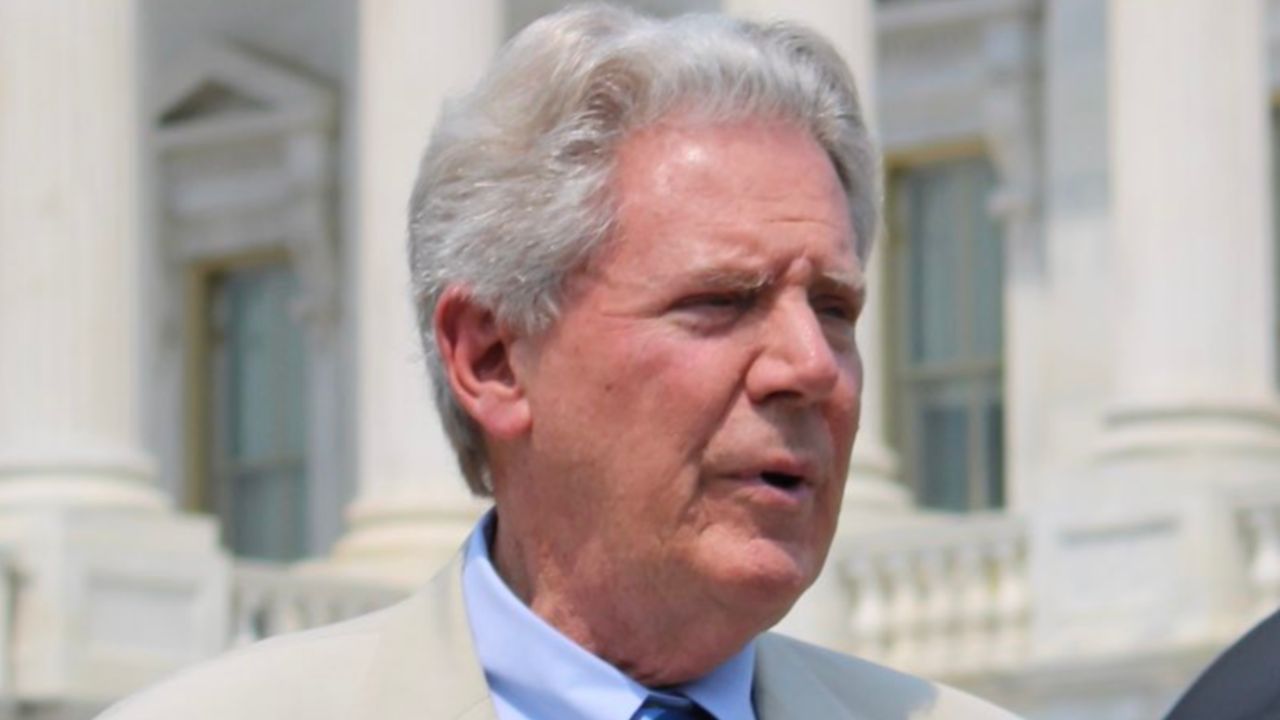
Rep. Frank Pallone Jr. (D-N.J.) said Monday that President Donald Trump’s decision to waive new sanctions on Russia is “why I voted against this bill.” He argued the law contained a “poison pill” that allowed Trump to “essentially ignore the sanctions.” Pallone posted the statement on X at 12:13 p.m. on Oct. 19, linking an Axios report on the waiver.
What Pallone Wrote
This is why I voted against this bill.
I am 100% behind Ukraine in its fight against Putin, but this bill had a poison pill in it that allowed Trump to essentially ignore the sanctions while giving him MORE power to impose tariffs that only increase YOUR costs.
The Article Pallone Linked
Axios reported that Trump waived new sanctions on Russia late Friday night, saying it was in the “national interests” to hold off on levies under the Graham Act, which he signed last month. The report said the move eased pressure on Russia despite a bipartisan chorus urging the opposite, and followed his deal a week earlier to let Russia sell diesel internationally.
The White House released an executive order implementing the Lindsey O. Graham Sanctioning Russia and Iran Act. The law allows the president to waive any sanctions provision, restriction or duty. White House spokeswoman Taylor Rogers said enforcing the sanctions would impede efforts to negotiate a “durable and comprehensive peace agreement” between Ukraine and Russia.
What the Executive Order Says
The order, dated Oct. 16, states that Section 115 of the Graham Act authorizes the president to waive sanctions provisions, restrictions and duties. It requires a written certification to Congress that a waiver is in the “national interests of the United States,” along with a report explaining the basis for it. Trump states he has submitted that certification.
Section 2 of the order lists increases in duty rates, including 500 percent on goods from Russia and 100 percent on goods from the largest importers of Russian oil and gas, but makes each subject to the waivers in Section 4. Section 4 waives the duties in sections 112 and 113 of the Act and several sanctions provisions. It says the waivers stay in effect until the president or the Secretary of State determines further action is appropriate, and it preserves sanctions under earlier executive orders.
The Axios report said Republicans and Democrats alike criticized the waiver. Sen. John Cornyn (R-Texas) wrote, “Lindsey would be appalled.” Sen. Thom Tillis (R-N.C.) called the move “beyond irresponsible,” and Ukrainian President Volodymyr Zelensky said the Act “could have helped enormously — and still can.” Secretary of State Marco Rubio told reporters Trump could take up to 60 days to assess the economic impact.
The Bill Pallone Opposed
The Senate passed the Graham Act 86-11 on Aug. 7. The House concurred 262-159 on Sept. 16, and Trump signed it Sept. 18. Reuters reported that dozens of Democrats broke with party leaders to support it, and that it also authorizes stiff tariffs on China, India and other countries to reduce their dependence on Russian oil and gas.
A roll-call tally shows 204 Republicans and 58 Democrats voted yes, while 152 Democrats and seven Republicans voted no. House Democratic leaders issued a joint statement the same day saying the bill “gives extraordinary power to Donald Trump” by allowing him to waive its sanctions while granting “new, expansive tariff authority.” They said they voted no.
Rep. Don Beyer (D-Va.) said on the House floor that he predicted Ukraine’s supporters “will regret it” if the bill passed. Rep. Michael McCaul (R-Texas) said after the vote that it brought the country “one step closer to securing Lindsey’s vision of enduring peace in Ukraine and beyond.”
Pallone’s Record on Russia and Ukraine
Pallone has long condemned Russia’s invasion. In a Feb. 24, 2022, statement, he said the United States must “treat Putin as the bloodthirsty autocrat that he is.” In a later statement on House passage of Ukraine security aid, he said he was glad the House passed a bill delivering “the military aid Ukraine needs to defend its territory.”
The House was scheduled to recess after the Graham Act vote and not return until after the midterm elections. The waivers remain in effect until the administration determines otherwise.