
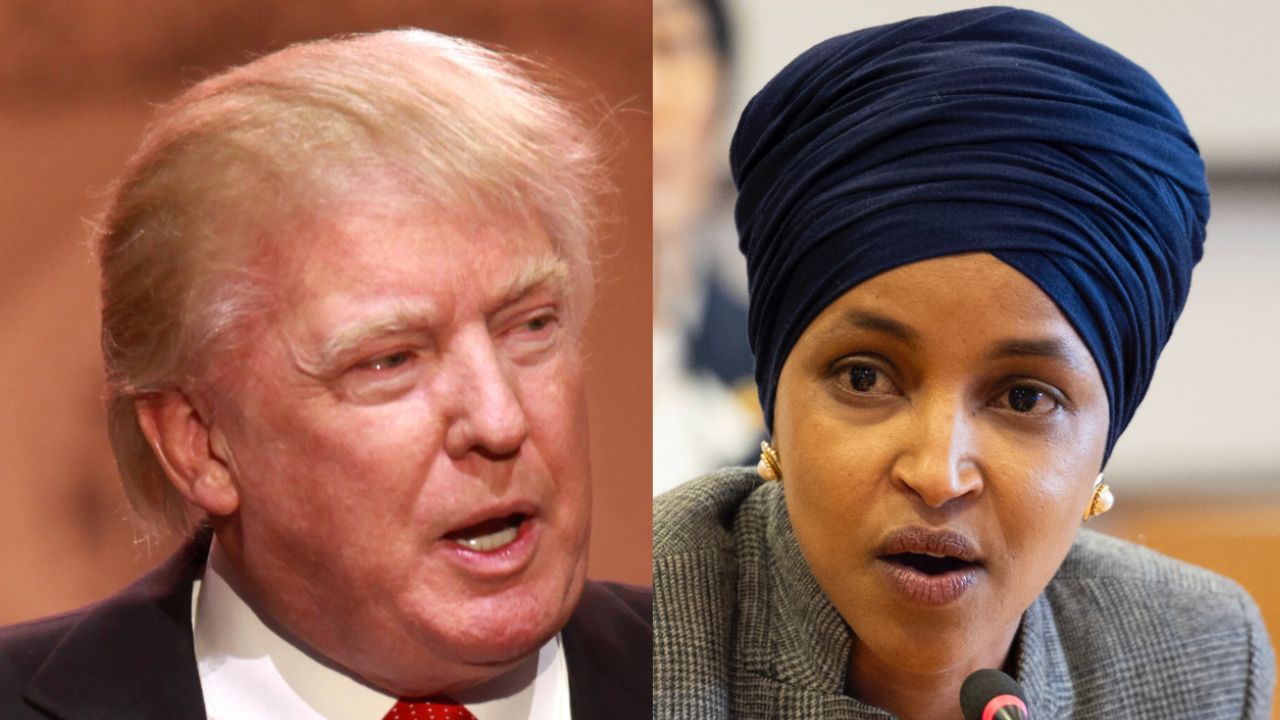
Federal agents executed a predawn search warrant at the Washington-area home of Rep. Ilhan Omar on Monday. The move came 22 days before Election Day and at a point when the Justice Department has historically avoided overt investigative steps against political candidates. Omar, a Minnesota Democrat and one of President Donald Trump’s most frequent political targets, called the search “an attempt to target political enemies and weaponize federal law enforcement.”
A Predawn Search in Washington
Homeland Security Investigations, the division of Immigration and Customs Enforcement known as HSI, carried out the search, the Justice Department confirmed. “Today in the Washington, DC area, Homeland Security Investigations executed a judicially authorized search warrant secured by the Department of Justice,” a department spokesperson said. “This enforcement action is part of an ongoing federal investigation.” The spokesperson declined to comment further.
The warrant lists a series of potential immigration crimes under investigation, including false statements and fraud in immigration paperwork, along with a general conspiracy charge. A person familiar with the investigation told Reuters that part of the probe concerns immigration paperwork filled out by Omar’s late father when she was a child. Prosecutors first submitted the application more than a week ago, and the federal judge approved it only after discussion of potential constitutional issues, including the Speech or Debate Clause, which protects members of Congress.
Omar Responds
In a statement posted on social media, Omar wrote: “For ten years, Trump has targeted me with baseless lies and smear campaigns. This is just the latest escalation in his campaign of political intimidation.” She added: “I will not be silenced.”
Her position on the underlying allegations has not changed. In a September fund-raising email, Omar wrote: “I will say it again so it’s as clear as possible: I’m not at all worried about these investigations, because they are complete shams.” She has previously called claims about her family’s immigration history “absurd and offensive.”
House Democratic leaders Hakeem Jeffries, Katherine Clark and Pete Aguilar issued a joint statement calling the search a “rogue abuse of power.” They wrote: “The Trump administration’s raid on Congresswoman Ilhan Omar’s home is deeply disturbing and raises serious questions about the continued corrupt weaponization of the federal government against Donald Trump’s adversaries.” They also said Trump’s “mass deportation machine has descended upon the home of a duly elected Member of Congress and her family,” and vowed to “deliver full accountability.”
Minnesota Gov. Tim Walz wrote on social media: “Americans see this for what it is. President Trump is abusing his power to go after political opponents weeks before an election.” Few Republicans commented publicly. Rep. Nancy Mace wrote online: “If the fraud is proven, she should be denaturalized and removed from this country. NO ONE is above the law.”
Scores of supporters rallied Monday afternoon at a Minneapolis park, many holding signs reading “Stand with Ilhan” and “Hands off the Somali community.” Minneapolis City Council member Jason Chavez predicted the search would energize her constituents. “Folks are riled up,” he said. “What is happening is just wrong.”
Trump and Administration Officials Weigh In
Speaking to reporters ahead of a campaign rally in Ohio, Trump said: “I understand they’re looking at her very carefully.” He continued: “She comes from a country that is a non-country. And then she comes over here and she complains about our Constitution. I think she’s a terrible person, but that’s really up to the D.O.J.” Trump has frequently attacked Omar over her Somali heritage.
Administration officials had signaled the investigation for months. Homeland Security Secretary Markwayne Mullin said in September that “something’s gonna happen” in the probe into Omar’s family’s entry into the United States. “If we can prove that you shouldn’t have been here in the first place, we’ll deport you,” he told a conservative podcaster at the time. Border czar Tom Homan said in a Monday television interview that the Justice Department is leading the investigation with Homeland Security, but he declined to discuss specifics.
Vice President JD Vance had also weighed in. In March, he told a conservative podcaster: “We actually think that Ilhan Omar definitely committed immigration fraud.” The next step, he said, was to “build a case necessary to get some justice for the American people.”
The 60-Day Rule
The timing is a central point of controversy. Justice Department policy has long urged prosecutors to avoid overt, unnecessary investigative steps that could affect an election, a guideline commonly called the 60-day rule. It is not absolute, with exceptions for cases where evidence could be destroyed, crimes are ongoing or people are in danger. For many years, department officials have treated a publicly observable search of a politician’s home or business as the kind of activity to avoid.
Randall Eliason, a George Washington University law professor and former public corruption prosecutor, said the raid appears to break with past practice, though the policy cannot be enforced. “The idea is to avoid even the appearance of any kind of interference by the Department of Justice with the political process,” he said. “It’s not surprising that they wouldn’t really care about violating this policy because they’ve shown they don’t really care about politicizing the Justice Department in many other ways.”
Trump himself invoked the rule in 2024, when he and his lawyers, some of whom now run the Justice Department, accused special counsel Jack Smith of violating it with a September 2024 court filing in the 2020 election case. That filing was made in response to a court order, which is not subject to the policy. A person familiar with the matter said the department consulted its Public Integrity Section and acting Deputy Attorney General Trent McCotter before the search. The Trump administration has reduced that section to about two lawyers and curtailed much of its authority.
Background: Omar’s Immigration History
Omar was born in Mogadishu in the early 1980s. Her family fled when she was about 8 as civil war engulfed Somalia, she has written in a memoir. After time in a Kenyan refugee camp, she and her relatives were admitted to the United States as refugees in the mid-1990s and settled in Minnesota, home to the largest Somali diaspora in the country. Her immigration history has drawn scrutiny since 2016, when she became the first Somali American elected to the Minnesota Legislature.
Earlier federal inquiries, including one examining whether Omar married a sibling to obtain a green card for him, ended without charges. A Biden-era Justice Department investigation opened in 2024 examined her finances, campaign spending and interactions with a foreign citizen. More recently, investigators have focused on whether her late father, Nur Omar Mohamed, lied or omitted information while seeking legal status, and whether Omar derived citizenship from a father who may have been ineligible for naturalization. If conclusive evidence emerged that she derived citizenship improperly, the Justice Department could pursue criminal or civil denaturalization, which can lead to deportation proceedings. Homan said last year that earlier efforts were stymied by statutes of limitations and that he had “no doubt” Omar committed fraud.
A Pattern of Investigations Into Trump’s Critics
The Justice Department during Trump’s second term has investigated or charged a range of his perceived political adversaries. It has charged former FBI Director James Comey, New York Attorney General Letitia James and former national security adviser John Bolton. It has also investigated Democratic lawmakers who urged the military not to follow illegal orders, Sen. Adam Schiff, and Federal Reserve officials Jerome Powell and Lisa Cook. A federal judge threw out the case against James and one of two against Comey, Bolton pleaded guilty and is due to be sentenced this month, and grand juries and judges have stymied several other probes.
Omar has long been a target of Trump’s rhetoric. He has cast the Somali American community as a threat to Minnesota and previously called Somalis “garbage,” and in February said Omar and Rep. Rashida Tlaib should be “institutionalized” and sent back to “where they came from.” Omar has called his focus on her an “unhealthy and creepy obsession,” and says she and her family have received death threats she attributes to “hateful political rhetoric.” Last month, a Minnesota man who squirted vinegar on Omar was sentenced to 14 months in prison for assaulting a federal official.
What Comes Next
Omar is seeking a fifth two-year term in the November 3 midterms. She has represented a solidly Democratic Minneapolis district since 2019, won reelection in 2024 by 50 percentage points, and faced no serious primary challenge this year. No charges have been announced, and the Justice Department has described the matter only as an ongoing federal criminal investigation. Whether the search produces charges, or draws further scrutiny over its timing, is likely to play out in the final weeks before voters go to the polls.