
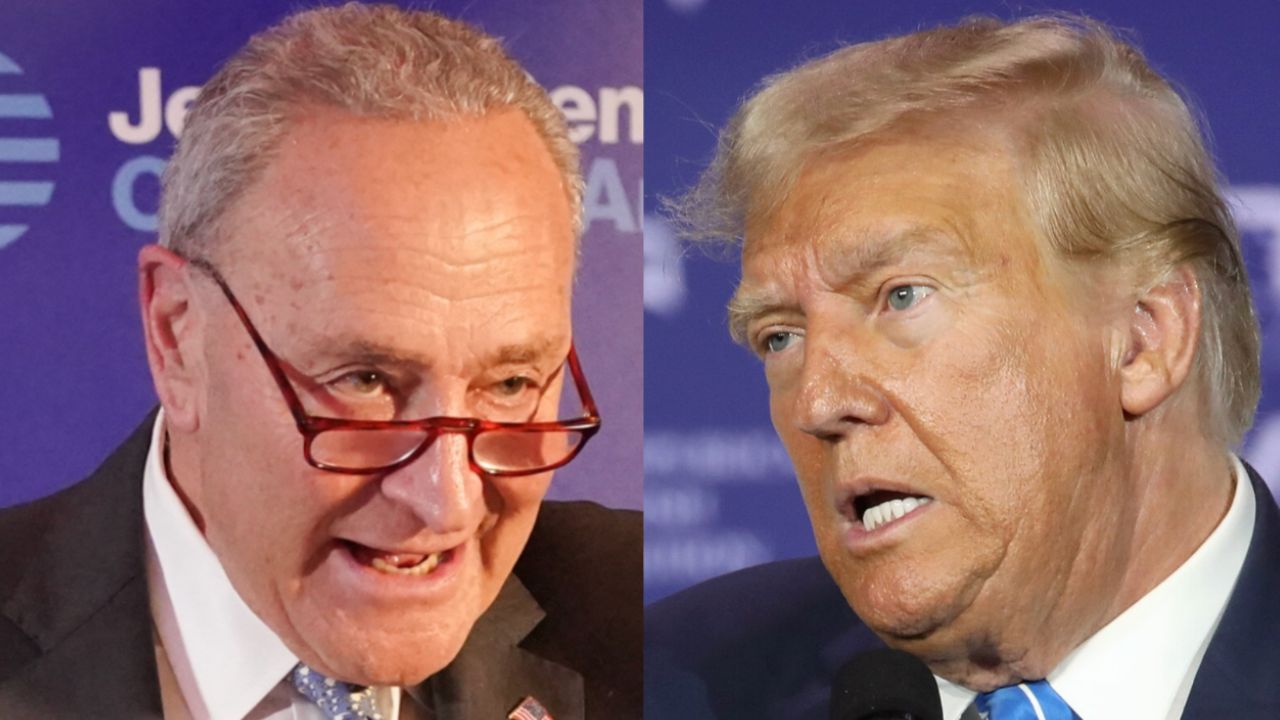
Senate Democratic Leader Chuck Schumer said Monday that a federal judge’s order halting taxpayer-funded television ads featuring President Donald Trump is a victory for taxpayers but only the start of his push for accountability. In a post on X, the New York Democrat said Americans “deserve answers about every dollar spent” on the campaign, which began airing nationally in September, weeks before the November midterm elections. He also demanded to know who approved the ads and who will be held responsible.
What Schumer Said
Schumer published the message at 6:44 a.m. on Monday, October 12, 2026. The full post reads:
“Taxpayer dollars are not Trump’s personal propaganda fund. This court order is a win for taxpayers, but stopping the ads is only the beginning. Americans deserve answers about every dollar spent.
That’s why I’ve demanded a thorough investigation into these ads and that all records are preserved.
Now we need answers: Who approved them, how much was spent, and who will be held accountable.”
His office issued the same statement through the Senate Democrats’ press office, framing the court order as a halt to Trump’s “illegal usage of taxpayer funds” on campaign-style ads.
The Court Order
U.S. District Judge Jennifer L. Rochon of the Southern District of New York issued a four-page order that took effect at 6:45 p.m. on Sunday, October 11. It temporarily restrains the administration from using Department of Homeland Security funds to develop, place or air the challenged advertisements. It also bars officials and anyone acting with them from entering, renewing or expanding agreements for the ads.
The order stays a September 20 purchase order between Customs and Border Protection and an advertising contractor, Lepugh, Inc., which does business as LMD Agency, Inc. It also stays the Office of Management and Budget’s apportionment of $20 million for the campaign. The court named five ads: “The Country He Loves,” “Celebrating the Enduring Spirit,” “Final Battle,” “To the Great Proud People of Iran” and “Maduro.”
What the Judge Found
Rochon concluded that the plaintiffs are likely to succeed on the merits, would suffer irreparable harm without an injunction, and that the balance of equities and the public interest favor relief. She wrote that a full opinion would follow shortly. The order directs the government to cancel every scheduled placement of the ads, including those set for the evening of October 11, and to give the contractor a copy of the order immediately.
The administration must file a status report within 24 hours confirming compliance. The order stays in effect for 14 days unless the court extends it, and no bond is required. The judge also canceled a conference that had been set for October 13.
Who Brought the Case
Common Cause, Robert Hunter, Service Employees International Union Local 32BJ and Empire State 32BJ SEIU PAC sued the Department of Homeland Security, Secretary Markwayne Mullin, the Office of Management and Budget, Director Russell Vought, the Executive Office of the President and White House Chief of Staff Susie Wiles. They argued that the spending exceeded what Congress authorized and violated restrictions on publicity and propaganda. Three of the plaintiffs filed the motion for emergency relief on the evening of October 8.
The court held an initial conference the next morning. It ordered expedited briefing through the weekend, and briefing concluded midday Sunday. The plaintiffs said there is “no legal justification—and no precedent” for a president to use government machinery and congressionally appropriated money to influence elections.
How the Ad Campaign Unfolded
The ads, which feature Trump prominently and promote the administration’s policies, began airing on national television in September and carried a disclaimer saying they were paid for by the U.S. government. The Wall Street Journal has reported that Trump personally pushed for the campaign and was involved in creating it. The $20 million came from money Congress provided to Customs and Border Protection in last year’s “One Big Beautiful Bill” Act, Senate Democrats said in late September.
Senate Appropriations Committee Vice Chair Patty Murray and Sen. Christopher Murphy, the top Democrat on the panel’s Homeland Security subcommittee, wrote to Mullin that the spending appeared to violate the Hatch Act. A DHS official said the money came from border-agency funds set aside for commemorating border security efforts, and the White House has described the spots as public-service announcements.
Schumer’s Earlier Attacks
Schumer was already pressing the issue before the ruling. On the Senate floor on September 28, he said Americans sat down to watch football, not to be “force fed Trump’s propaganda on their own dime.” He described the ads as indistinguishable from Trump’s 2024 campaign spots, except that taxpayers were paying for them.
The Super PAC Pivot and the Watchdog Requests
On Monday, October 5, Trump said on Truth Social that the ads were “positive promotion for our Great U.S.A.” and that he would pay for them with money he raised for MAGA Inc., his allied super PAC. He did not commit to repaying the federal money already spent. Schumer responded that Trump “must return this money to the American people” and that there must be a full investigation.
The next day, Schumer asked the Government Accountability Office and the Office of Special Counsel to investigate and said he would file a complaint with the Federal Election Commission alleging illegal coordination with the super PAC. In a statement, he called the ads “illegal, corrupt, and undemocratic” and said Trump had “gutted funding for health care and other essential programs” while finding millions for political ads. No GAO decision on the ads has been issued.
Republicans Also Raised Concerns
The criticism was not limited to Democrats. Senate Majority Leader John Thune, a South Dakota Republican, told reporters he liked the ads’ message but that taxpayers should not pay for them. Sen. Katie Britt of Alabama, who chairs the subcommittee that oversees DHS funding, said taxpayer money should be used for its intended purposes. Legal experts said the spending could implicate a federal ban on using appropriated funds for “publicity or propaganda” and limits on partisan activity by government employees.
A Familiar Fight Over DHS Advertising
The dispute echoes an earlier one. In March 2025, House Democrats on the Oversight and Homeland Security committees opened an investigation into a roughly $200 million DHS advertising campaign they said was meant to flatter the president and had been awarded without competitive bidding. They wrote that an unstated primary purpose of the ads appeared to be extending Trump’s campaign. The 2025 and 2026 controversies are separate programs, but both turn on whether federal advertising money is being used to promote the president.
The Judge Weighs Future Ads
A written opinion from the judge, reported Monday, said Trump’s description of such advertising as a standard practice suggested the government might try again, which is why a restraining order was needed. The order remains in effect for 14 days. The administration’s compliance filing is due within 24 hours of its entry.
What Comes Next
Schumer’s demand covers three questions: who approved the ads, how much was spent, and who will be held accountable. Answers could come from the GAO review he requested, from the FEC complaint, or from further litigation, since the judge’s full opinion is still pending. Because the order is only a temporary restraining order, the legal fight over the ads is far from settled.