
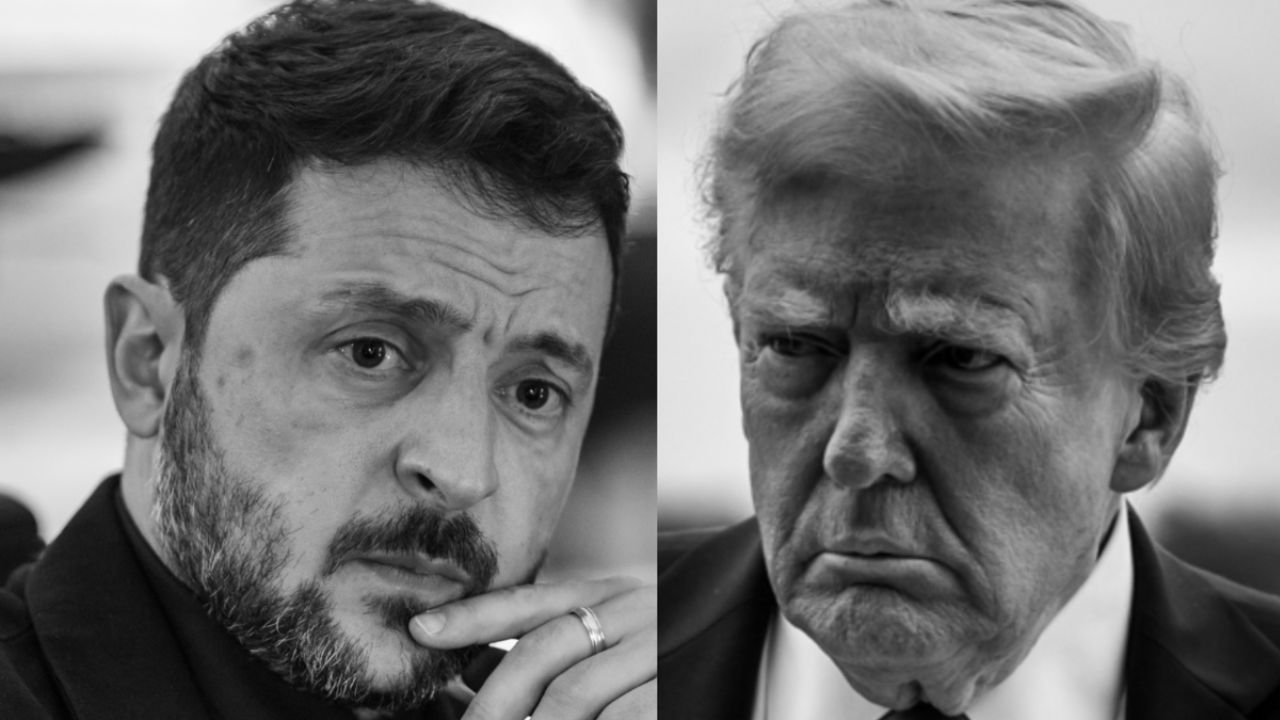
Ukrainian President Volodymyr Zelensky publicly condemned President Donald Trump’s newly announced diesel agreement with Russian President Vladimir Putin on Friday. In a lengthy post on X, the wartime leader argued that any easing of sanctions on Moscow without a lasting de-escalation deal is “an obvious weakness” that would let Russia “kill more” and “wage war for longer.” The post came less than an hour after Trump unveiled the arrangement on Truth Social, and it opened a rare open rift between Kyiv and Washington over how to end Europe’s largest war since 1945.
Zelensky’s Full Post
Zelensky wrote the post after what he described as a visit to Kyiv by a bipartisan delegation from the U.S. Congress and a phone call between the American and Russian leaders. His message ran six paragraphs and named the Lindsey Graham sanctions bill, a recent European decision on Russian oligarchs, and a week of deadly Russian strikes. The full text, as posted:
“Peace never comes through weakness. Today, representatives of the U.S. Congress were in Kyiv – a bipartisan delegation – and I am grateful to them for visiting Ukraine at such a difficult time. They asked: what is needed to end the war? The answer must be strong. There must be sanctions under the Lindsey Graham bill, there must be support for Ukraine in protecting lives, and there must be pressure on Russia for its war. And today, there was a conversation between the leaders of America and Russia. A conversation that leads to something different.
Recently, there was a European decision to lift sanctions on Russian oligarchs. Since then, Russian strikes and the torment of people have only increased. This past week alone, there was a brutal Russian missile strike on a residential building in Pryluky, aerial bombs were dropped on Kramatorsk – on ordinary city buses – and there have been constant attacks on Kyiv’s energy infrastructure and on the life-sustaining infrastructure in Dnipro, Kharkiv, Odesa, and our other cities. Dozens of people have been killed and hundreds wounded.
The Russians are compensating for their inability to achieve their objectives on the battlefield with this kind of terror. This year, Russia is weaker on the battlefield than at any other point in the war. That is why Putin is relying on terror. That is why he is relying on attempts to strike backroom deals to secure some form of pressure relief for Russia, in order to buy more time and more opportunities for war.
Any easing of sanctions against Russia without a clear and lasting de-escalation agreement with Russia is an obvious weakness. It plays into Russia’s hands – allowing it to kill more, wage war for longer, have even less respect for America, and inflict even greater losses and damage on the world.
Ukraine is ready to take symmetrical de-escalatory steps, and the American team knows our position. Our strikes on Russian oil refineries and other oil facilities are a response to Russia’s years-long campaign of terror against Ukraine’s energy sector. Ukraine will not set Russian oil refineries on fire if Russia does not destroy our energy infrastructure. This is the kind of agreement we are proposing to America, and we believe the United States has enough power to achieve such a compromise.
Gifts to Putin will not bring peace or any benefit to the civilized world. Russia will “repay” the diesel with further terror and perfidy. Allowing Russia to sell petroleum products is an investment in a war that must be ended, not prolonged. What is needed is real de-escalation with Russia on a reciprocal basis.
We count on America’s fair support for our defense of life, for our defense of people in Ukraine – and on the United States having a correspondingly strong conversation with Russia. A strong one, not a weak one.”
What Trump Announced
Trump’s announcement, posted to Truth Social earlier on Friday, laid out a staggered schedule of Russian diesel deliveries to the American and global markets. He wrote:
“I have just concluded a highly successful discussion with President Vladimir Putin, of Russia, wherein it was agreed that Russia will immediately supply over 300,000 Tons of Diesel Fuel to the American and Global Marketplace, another 500,000 Tons during the month of November, and 1,000,000 Tons immediately thereafter. Additionally, based on the condition of their Diesel Refineries, Russia will then deliver, within a short period of time, 3,000,000 Tons of Diesel Fuel. Between our TOTAL CONTROL of the Strait of Hormuz, and this great announcement on Russian Energy, Diesel Prices for Americans and, indeed, the World, will be COMING DOWN, IN RECORD NUMBERS, AND FAST! Lower prices for Americans, especially our Great Farmers, Ranchers, and Truckers, is my Greatest Priority. This is a very big and important announcement. Additionally, it must be understood, that Iran will not have a Nuclear Weapon! Thank you for your attention to this matter. President DONALD J. TRUMP”
The Kremlin’s readout of the call said Putin told Trump that Moscow was “ready to supply oil and petroleum products to the US and global markets.”
Timing and Reaction in Kyiv
The call came as Ukrainian and American negotiators were meeting in Florida. Zelensky said his team was told about an hour before Trump’s announcement that the U.S. president planned to speak with Putin. “Our team is simply being used as a front,” he told reporters, adding that he saw it as no way to treat a partner. He also described the move as “a weak decision of strong partners.” Analysts have said the agreement is unlikely to lower diesel prices in any meaningful way. A former senior U.S. State Department official argued the result Putin wanted had already been achieved, regardless of whether the fuel is delivered.
“Peace Never Comes Through Weakness”
Zelensky opened with that line and tied it to the visit by U.S. lawmakers. He said the congressional delegation asked what is needed to end the war and that his answer was “strong”: sanctions under the Lindsey Graham bill, support for Ukraine in protecting lives, and pressure on Russia. He framed the Trump-Putin call as one that “leads to something different” from that agenda. The Graham measure is named for the late South Carolina Republican senator, who died in July at age 71 just days after meeting Zelensky in Kyiv.
The Case Against Easing Sanctions
The core of the post is Zelensky’s warning that sanctions relief carries a price. He argued that easing pressure on Russia without “a clear and lasting de-escalation agreement” lets it “kill more, wage war for longer, have even less respect for America, and inflict even greater losses and damage on the world.” He called the diesel arrangement a “gift” to Putin and said Moscow would “repay” it “with further terror and perfidy.” Allowing Russia to sell petroleum products, he wrote, is “an investment in a war that must be ended, not prolonged.”
Kyiv’s Counteroffer: Refineries for Energy Grids
Zelensky did not only criticize. He described Ukraine’s long-range strikes on Russian refineries as a response to years of Russian attacks on Ukraine’s power sector and put a reciprocal deal on the table. “Ukraine will not set Russian oil refineries on fire if Russia does not destroy our energy infrastructure,” he wrote, saying Kyiv believes the United States has enough power to broker such a compromise. The proposal addresses the grievance Trump has voiced for weeks: that Ukrainian drone strikes on Russian refining are worsening a global diesel shortage.
A Week of Strikes
Zelensky pointed to a deadly week in Ukraine. On October 7, a Russian cruise missile hit a five-story apartment building in Pryluky, in the Chernihiv region, about 150 kilometers east of Kyiv. Ukraine’s State Emergency Service put the death toll at 22, including five children, with 54 people injured. The strike was part of a barrage that coincided with Putin’s 74th birthday. “This is the kind of ‘gift’ Putin gave himself for his birthday,” Zelensky said at the time. On October 8, a Russian guided bomb struck two passenger buses in Kramatorsk, in the Donetsk region. Regional prosecutors put the toll at 33 dead and 18 wounded.
Is Russia Really “Weaker on the Battlefield”?
Zelensky asserted in the post that Russia is “weaker on the battlefield than at any other point in the war” and is substituting terror for battlefield gains. Both armies have remained largely deadlocked along the front line, more than four and a half years into the full-scale invasion, while a long-range air war has intensified. Ukraine’s refinery campaign has had measurable effects. Russia banned diesel exports in July, and a government draft forecast seen by Reuters shows Moscow cutting its 2026 oil output outlook to a 17-year low.
How Diesel Became a Diplomatic Flashpoint
Diesel prices have become a political liability for Trump ahead of the November midterm elections. The U.S. national average hit a record $6.53 a gallon in late September, against $3.69 a year earlier. The International Energy Agency has said restricted shipments through the Strait of Hormuz and disruptions to Russia’s refining system have compounded the shortage. Oil analyst Andy Lipow estimated that Russia’s export ban removed roughly 800,000 barrels of diesel per day from the market.
The Road to Friday’s Deal
Trump’s public pressure on Kyiv began in mid-September. On September 13, he told reporters Zelensky “has to stop knocking out diesel fuel in Russia,” Reuters reported. The next day, he said on Truth Social that Russia and Ukraine had agreed not to strike each other’s energy targets, though Ukrainian officials said no formal agreement existed. Trump pressed the point again in a September 20 call with Zelensky. A senior Ukrainian official on the call said the message was “diesel, diesel… diesel.” U.S. envoys Jared Kushner and Steve Witkoff had earlier held talks with Putin in Moscow before meeting Zelensky in Kyiv.
The Sanctions Fights in Europe and Washington
The “European decision” Zelensky referred to came in late September, when EU member states agreed to drop sanctions on Russian billionaires Alisher Usmanov and Mikhail Fridman while extending measures on about 3,000 other individuals and entities for 36 months. Ukrainian Foreign Minister Andrii Sybiha called the move “shameful and unjustifiable.” In Washington, the Graham sanctions bill passed the Senate in August after a 86-12 procedural vote on July 28. It includes sanctions on Putin, senior Russian leaders, banks and energy projects, and authority for tariffs of up to 100% on major buyers of Russian energy. It also gives the president waiver authority if he certifies to Congress that a waiver is in the national interest. That provision matters now that Trump has moved to ease restrictions on Russian fuel.
Trump Hits Back
Trump responded on Saturday outside the White House, thanking Putin and then turning on Zelensky. “I want to thank President Putin, to be honest with you,” he said of the deal. Asked about Zelensky’s criticism, he said: “I suggest they get a new leader who can make a deal.” He added that “it’s time for Ukraine to get a new president” and warned Kyiv again against hitting Russian refineries. Zelensky was elected in 2019, and his term was due to end in May 2024. Ukraine’s elections have been suspended under martial law. Zelensky said Saturday that the deal signals to Russia that “it could simply keep attacking.” U.S. negotiators plan to present Ukraine with new ideas and proposals, which they would then discuss with Russia.