
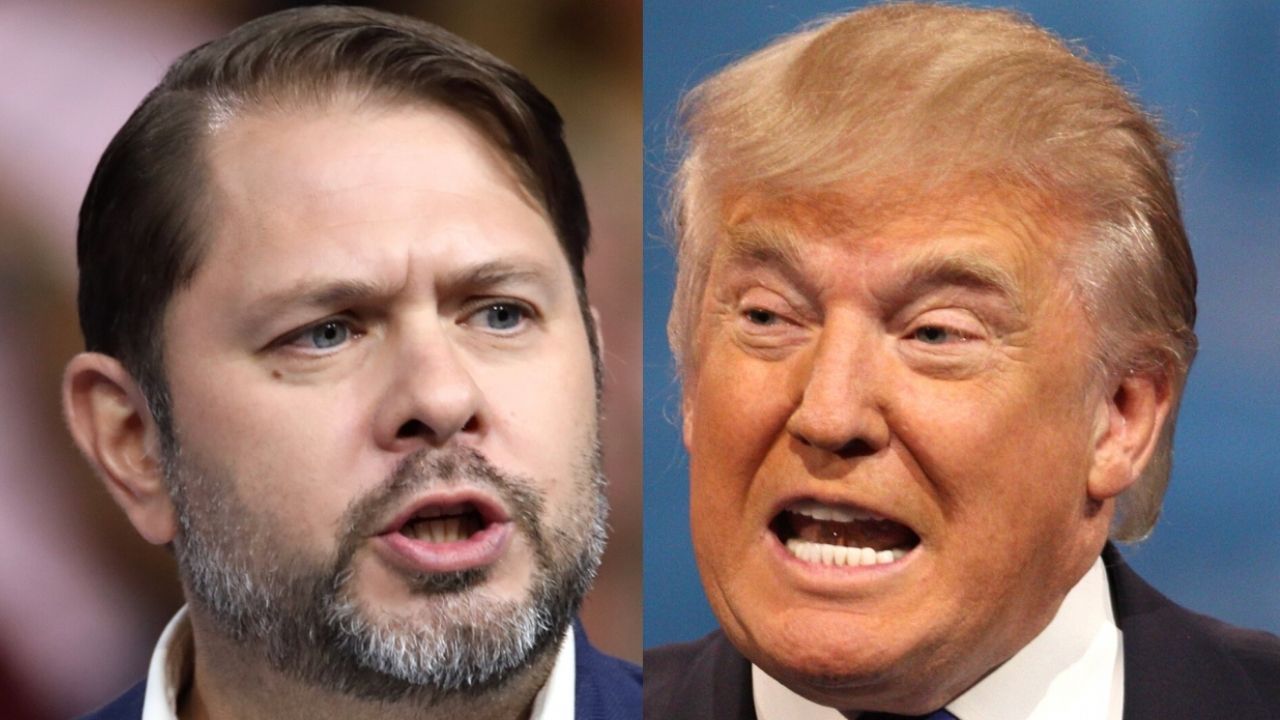
Sen. Ruben Gallego (D-AZ), a Marine Corps combat veteran who fought in Iraq, accused President Donald Trump on Friday of handing Russian President Vladimir Putin a multibillion-dollar windfall while Moscow is alleged to be helping Iran target American forces. The post on X came less than three hours after the U.S. Treasury announced it was easing sanctions on Russian diesel. Gallego pointed to the bipartisan NOPE Act, which he and colleagues introduced to stop a president from unilaterally easing Russian sanctions.
The Full Post
Gallego published the post at 4:37 PM on October 9, 2026. It reads in its entirety:
“Trump’s illegal forever war is sending gas prices through the roof.
His solution? Handing Putin a payday to the tune of billions of dollars as Russia continues to help Iran target our troops.
My colleagues and I introduced the bipartisan NOPE Act to stop Trump from unilaterally easing Russian sanctions. We need to get it done.”
The Treasury Announcement He Was Answering
Gallego was responding directly to a post from the U.S. Treasury Department published at 1:49 PM the same day. It read:
“Today, at President Trump’s direction, the Office of Foreign Assets Control (OFAC) is immediately issuing a temporary general license to allow the supply of Russian diesel to the global market.”
What the License Allows
The document, General License No. 135, is signed by OFAC Director Bradley T. Smith and dated October 9, 2026. It authorizes transactions otherwise barred under the Russian Harmful Foreign Activities Sanctions Regulations and the Ukraine-/Russia-Related Sanctions Regulations. Covered transactions are those related to “the sale, delivery, offloading, or importation, including importation into the United States, of diesel fuel of Russian Federation Origin.” The authorization runs through 12:01 a.m. eastern daylight time on April 7, 2027. The license does not authorize any debit to an account at a U.S. financial institution of the Central Bank of the Russian Federation, the National Wealth Fund, or the Ministry of Finance.
Trump’s Call With Putin
Trump said on social media that he had a “highly successful” discussion with Putin in which the two agreed Russia would immediately supply more than 300,000 metric tons of diesel to U.S. and global markets, equal to about 2.25 million barrels. Trump said Russia would deliver another 500,000 tons in November and a further 1 million tons “immediately thereafter,” with more to follow “based on the condition of their diesel refineries,” which have been damaged by Ukrainian attacks. “Lower prices for Americans, especially our Great Farmers, Ranchers, and Truckers, is my Greatest Priority,” Trump said. Kirill Dmitriev, an envoy for Putin, praised U.S.-Russia cooperation in a post on X after the call.
Prices, Analysts and Billions in Revenue
The U.S. imposed sanctions on Russian oil companies in October 2025 over the war that began in 2022. Reuters reported that the diesel exports could provide Moscow with billions of dollars in revenue that could help Putin continue the war. Diesel prices are up 70% since the U.S. and Israel launched the war with Iran on February 28, and the national average reached $6.28 a gallon on Thursday, as measured by the AAA motorist group. Diesel futures fell almost 5% after the announcement, but analysts doubted the effect would last. Rory Johnston, an oil market researcher, said he could not “overstate how much of a nothing burger this is,” and Wood Mackenzie analyst Jim Mitchell called it “not a fix, but another stream to aid a very tight diesel market.”
Criticism From Kyiv and Republicans
Ukrainian President Volodymyr Zelenskiy criticized the deal, which was announced while a Ukrainian delegation was in the United States to discuss a resolution to the war. He called it a “weak decision on the part of strong partners” and said: “Gifts to Putin will not bring peace or any benefit to the civilized world. Russia will ‘repay’ the diesel with further terror and perfidy.” Rep. Don Bacon, a Republican, also objected. “Now is the time to use those sanctions to squeeze Putin’s war machine, not reward a dictator by putting more money in his hands while he continues targeting and killing Ukrainian civilians,” Bacon said on X.
The NOPE Act
The legislation Gallego referenced is the No Oil Profits for Enemies (NOPE) Act, which he introduced with Sen. Chuck Grassley (R-IA). It is designed to strengthen the Countering America’s Adversaries Through Sanctions Act (CAATSA) and restore congressional oversight of U.S. sanctions on Russia. Gallego’s office said the bill aims to prevent Russia from profiting off ongoing hostilities with Iran. Senators Richard Blumenthal (D-CT), Roger Wicker (R-MS), Tim Kaine (D-VA), Thom Tillis (R-NC), Jeanne Shaheen (D-NH) and Ted Cruz (R-TX) cosponsored the bill.
Gallego’s Case Against Easing Sanctions
In the release announcing the bill, Gallego said: “By easing sanctions on Russia, Donald Trump is bankrolling Putin’s war in Ukraine and helping Iran target American troops in the Middle East. This is a betrayal of our servicemembers, our allies, democracy, and everything we have stood for as a country. By restoring and strengthening congressional oversight on Russian sanctions, this bill would make sure the U.S. stands on the side of democracy, stops recklessly bankrolling our adversaries, and keep the pressure on Russia to end its illegal war.”
Bipartisan Backing and the Legal Gap
Grassley said any effort to ease sanctions on Putin and his cronies should be reviewed by Congress “to ensure accountability.” Blumenthal said removing the oil sanctions now is “nonsensical and unacceptable.” Wicker called Putin “an indicted war criminal” and said easing sanctions “would only prolong its unprovoked, illegal assault.” Kaine said Russia’s “decision to provide military assistance to Iran, including intelligence about the locations of U.S. forces, should be met with a strong U.S. response—not the easing of sanctions.”
How the Bill Would Work
CAATSA, enacted in 2017 during Trump’s first administration, requires the president to report to Congress before taking any action that significantly alters Russia policy. That report triggers a 30-day review period during which the administration may not implement the change absent a joint resolution of approval. The framework covers only sanctions in place when CAATSA was enacted, which leaves out the vast majority of Russia sanctions imposed after the 2022 invasion. The NOPE Act would bring those later sanctions under CAATSA’s Section 216 review. It would also treat any U.S. licensing action affecting Russian energy as a “licensing action that significantly alters U.S. foreign policy,” subjecting it to the same 30-day review.
Gallego’s Record on the Iran War
Gallego has opposed the Iran conflict since before it began. When he joined Kaine’s War Powers Resolution, introduced January 29, he said: “I lost friends in Iraq. I know what happens when America rushes into a war that doesn’t need to happen. Twenty years later, we are once again at a dangerous crossroads.” He added: “I don’t want another generation of young working-class kids paying the price for the vanity of men who will never carry the cost themselves. The Constitution is clear: no President has the authority to drag this country into open-ended conflict without Congress.” His office noted he had also voted to advance a similar Kaine resolution the previous June, which gained bipartisan support but fell short.
Reaction to the War’s Outbreak
After the U.S. and Israel launched strikes on Iran on February 28, Gallego said: “I watched brave young men die in Iraq for a mission that was never clearly justified to the American people. I came home carrying the weight of that war, and I live with PTSD every single day. President Trump promised no more forever wars. Instead, he has illegally dragged us into another one without congressional authorization and no long term strategy.” On X in early March, he wrote: “I lost friends in Iraq. War is not a slogan — it is a burden carried by young Americans and the families who love them. We must never forget that cost. We can support freedom abroad without sending another generation into a forever war.”
The War Powers Vote Fails
The Senate voted 47-53 against advancing Kaine’s resolution, with Gallego voting in favor. In a statement afterward, Gallego said: “President Trump illegally dragged the United States into a conflict with Iran without congressional authorization and without explaining the rationale, the strategy, or end goal. Now, six Americans are dead, and Trump said we should expect even more. This is not in our country’s best interest.” He added: “The American people are struggling with high prices at the grocery store, they can’t afford to buy a house, and because of Republicans’ budget cuts, millions of people have been kicked off their health insurance.”
The Alleged Russian Role
The claim at the center of Gallego’s post, that Russia is helping Iran target U.S. forces, surfaced in early March. Anonymous U.S. officials said Moscow had passed Tehran the locations of American warships and aircraft since the war began, and that the extent of the assistance was not entirely clear. The six U.S. service members killed in Kuwait died in an Iranian drone attack in the war’s first days. Russia has said it is in dialogue with Iran’s leadership, and the Kremlin has described the war as “unprovoked.”
Political Stakes
The dispute lands weeks before the November 3 congressional elections, which will determine whether Republicans keep their thin majorities in Congress. Diesel prices, which Reuters noted are often a major driver of inflation, are near a record. Three industry sources told Reuters that Trump is expected to direct department heads in the coming days to find ways to control diesel prices, potentially using the Cold War-era Defense Production Act. Whether the NOPE Act reaches a floor vote remains unclear, but its cosponsors span both parties and include Republicans Grassley, Wicker, Tillis and Cruz.