
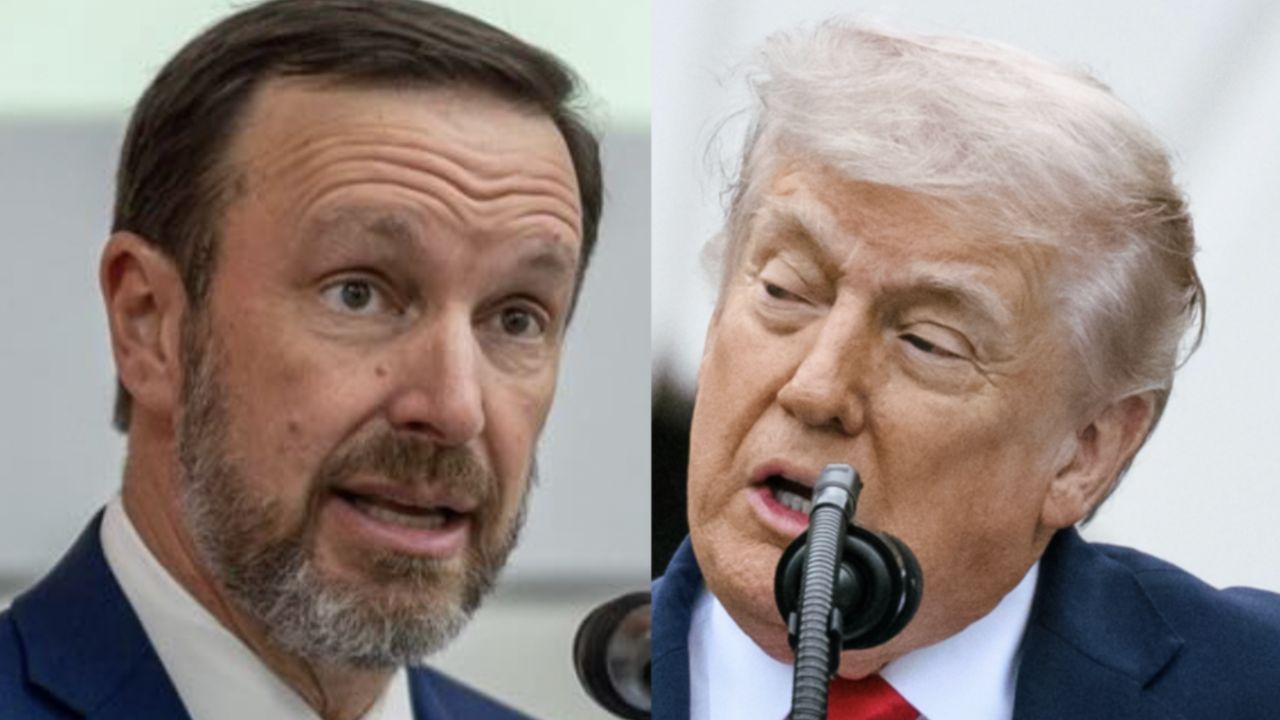
Democratic Senator Renews Warning as Iran Floats New Ceasefire Terms
U.S. Senator Chris Murphy (D-Conn.) said Saturday that President Donald Trump is “losing” the war with Iran and reiterated that he would support even an unfavorable deal to bring the seven-month conflict to a close, arguing that Tehran’s latest ceasefire proposal is evidence the regime believes time is on its side. Murphy’s comments, posted to X on the morning of September 26, 2026, come as diplomatic activity between Washington and Tehran has intensified on the sidelines of the United Nations General Assembly in New York.
The senator’s full post read:
“I’ve said from the beginning I would support a bad deal to end this war. Because Trump is losing this war and it just has to end.
The new deal Iran is proposing shows they know they are winning and the possible deals just get worse the longer this conflict continues.” The post was published at 12:04 PM on September 26, 2026.
Alongside his statement, Murphy shared a screenshot of a news article detailing the terms of Iran’s newest proposal. The excerpt read:
“He said that the proposed agreement would end fighting for seven days, including in Lebanon, and require the United States to release Iranian frozen assets estimated to be at least $12 billion, waive sanctions on Iranian oil and lift the naval blockade on Iran. Then, on the last day, the Strait of Hormuz would be opened.
After the seven days, negotiations over Iran’s nuclear program would restart.”
What Iran’s Seven-Day Proposal Includes
Murphy’s post came one day after Iranian Foreign Minister Abbas Araghchi told reporters at the U.N. that Tehran had submitted a seven-day roadmap to Washington through Qatari mediators. Under the plan, all hostilities in the region, including in Lebanon, would cease immediately, and the United States would lift its naval blockade of Iranian ports, waive sanctions on Iranian oil exports and release at least $12 billion in frozen Iranian assets. The Strait of Hormuz, a critical global oil shipping route that Iran has kept effectively closed since March, would reopen on the seventh day, at which point negotiations over Iran’s nuclear program would resume.
Araghchi said the proposal closely mirrors a memorandum of understanding signed between the two countries in June, which similarly called for a comprehensive ceasefire, an end to the U.S. naval blockade, and 60 days of follow-on negotiations over sanctions and Iran’s nuclear program. That earlier agreement collapsed in July after renewed fighting broke out over control of the Strait of Hormuz. Araghchi added that reaching a deal sooner rather than later “would be better,” a remark widely read as a reference to the timing of the U.S. midterm elections in November.
Trump Rejects the Offer
President Trump rejected Iran’s proposal on the same day Murphy posted his statement. Speaking to reporters as he departed the White House on September 26, Trump said he remained open to negotiating but described the terms as unacceptable. Al Jazeera reported that Trump had separately posted a map on social media referring to the waterway as the “Trump Strait” earlier in the week, as talks between Araghchi and U.S. envoy Steve Witkoff continued through intermediaries.
A War Now Nearing Its Seventh Month
The conflict at the center of Murphy’s criticism began in late February 2026, when US and Israel launched large-scale airstrikes on Iran that killed Supreme Leader Ali Khamenei. Iran responded by closing the Strait of Hormuz, prompting the United States to impose a naval blockade on Iranian ports beginning in mid-April. The Pentagon estimated the blockade had cost Iran roughly $4.8 billion in lost oil revenue within its first weeks.
A short-lived breakthrough came in June, when Trump and Vice President JD Vance signed a 14-point memorandum of understanding with Iran that paused hostilities and set a 60-day window for further negotiation. Murphy was sharply critical of that agreement at the time, saying on the Senate floor that it amounted to Iran “making zero concessions” while the United States agreed to lift oil sanctions and release billions in frozen funds. The MOU unraveled by August amid mutual accusations of violations, and fighting resumed over control of the strait.
Murphy’s Long-Running Criticism of the War
Saturday’s post is consistent with positions Murphy has held publicly for months. In an August 9 appearance on NBC’s “Meet the Press,” Murphy said directly: “Donald Trump has lost this war. America is weaker. Iran is stronger.” He argued at the time that a deal then under discussion, which would have paid Iran an estimated $100 billion annually to reopen the strait, represented “a victory for Iran” that would let the regime rebuild its military and its regional proxy networks. Murphy said he would nonetheless support such a deal because continued fighting was driving up gas and food prices for Americans while further weakening the United States.
When the June memorandum of understanding was first announced, Murphy took to the Senate floor to call it “final, clear, and total proof of how calamitous this war was.” He said the agreement’s terms, including the release of an estimated $24 billion in frozen Iranian assets and the lifting of oil sanctions, showed that Iran had secured concessions without offering anything it had not already been willing to discuss before the war began. Murphy said gas prices had by then eclipsed $6 a gallon in many parts of the country.
Political Stakes Ahead of the Midterms
The renewed diplomatic push comes as both sides face pressure tied to the U.S. political calendar. Araghchi’s suggestion that a faster deal would benefit Trump ahead of November’s midterm elections was echoed in reporting from the U.N. General Assembly, where Iranian officials have signaled they are watching the domestic political environment in Washington closely as they calibrate their negotiating position.
Murphy, a member of the Senate Foreign Relations Committee, has framed the war as a defining issue heading into the midterms, previously saying the election would serve as “a referendum” on a conflict he has repeatedly characterized as unwinnable for the United States in its current form.
Where Things Stand
As of Saturday, September 26, no agreement had been reached, and Trump’s rejection of Iran’s seven-day roadmap leaves the Strait of Hormuz closed and the naval blockade in place. Murphy’s latest statement signals that, while he continues to fault the administration’s handling of the war, he remains prepared to back an agreement he views as unfavorable to the United States if it brings the conflict to an end. Both governments have indicated that further contacts through Qatari and other mediators are expected to continue in the days ahead.