
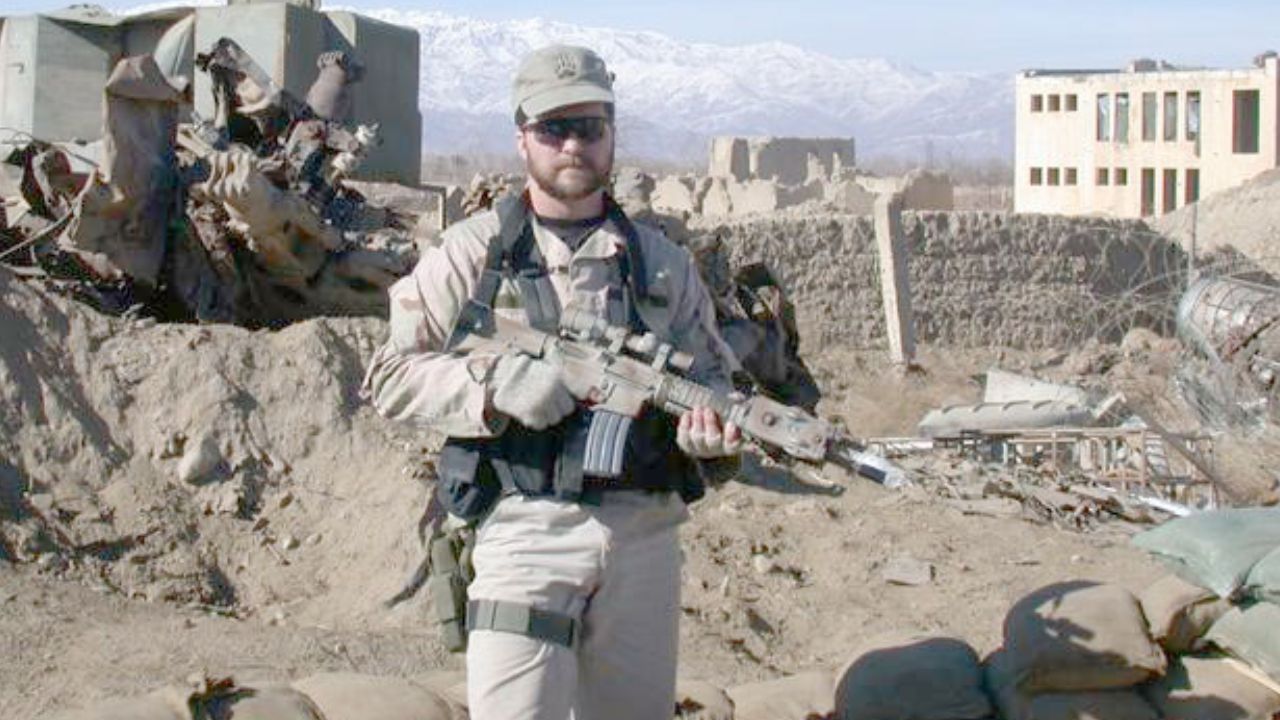
The 4 March 2002 fight on Takur Ghar in Afghanistan—better known as “Roberts Ridge,” part of Operation Anaconda—remains one of the most scrutinized engagements of the post‑9/11 wars. It is remembered for a mountaintop battle that expanded quickly from a SEAL reconnaissance/quick reaction sequence into a multi-hour fight involving SEALs, USAF special tactics, Army Rangers, and aviation assets. It is also remembered for what happened years later: overhead ISR footage was re-examined, and that re-analysis reshaped how some observers understood key moments on the objective. Wikipedia’s “Battle of Takur Ghar” and “Operation Anaconda” entries offer an orientation-level timeline, while Smithsonian Air & Space Quarterly places special emphasis on how drone-era ISR became part of the battle’s legacy—and how contested those reconstructions can be.
At the center of that debate is USAF Combat Controller Tech Sgt. John A. Chapman. He was badly wounded and was initially believed by teammates to have been killed early on the objective. Later review of overhead ISR—commonly described in reporting as MQ‑1 Predator video—supported a different interpretation: that Chapman regained consciousness and continued fighting for a significant period after others displaced. Even when presented as a major update to the historical record, that conclusion remains disputed in important details, including timing, sequence, and what participants could reasonably perceive under fire.
Battle of Takur Ghar / “Roberts Ridge,” Operation Anaconda (Afghanistan), 4 March 2002
Accounts of the Battle of Takur Ghar tend to agree on the broad outline—an insertion and quick reaction that escalated into a complex, extended engagement—but diverge sharply when the discussion narrows to seconds and meters. Wikipedia presents the battle as one of the early, widely analyzed fights of the Afghanistan war era, in part because there were multiple streams of reporting, investigation, and later video review. Smithsonian Air & Space Quarterly adds a technology-centered view, framing Takur Ghar as a case study in how overhead platforms and their video products can influence both tactical understanding and later narrative.
That combination—a high-stakes fight plus a lasting “digital record”—helps explain why Roberts Ridge continues to be argued like a cold case. The same footage can be revisited repeatedly, and small interpretive differences can lead to very different conclusions about who did what, when, and why. The caution implied across these sources is that a general timeline is easier to sustain than a minute-by-minute reconstruction, especially when eyewitness accounts diverge and the same moments are interpreted differently.
USAF Tech Sgt. John A. Chapman (later promoted posthumously to Master Sgt.), Combat Controller
Chapman’s actions and final moments became the focal point of the later reconstruction. He was initially believed by teammates to be dead after being badly wounded. Smithsonian Air & Space Quarterly notes that later investigations indicated he fought longer than originally understood, while also emphasizing that the matter remained contentious—particularly the “how long” and “what exactly happened next.” Air Force Times and Air & Space Forces Magazine both discuss the later-released ISR clips and the claim that he kept fighting after others moved.
The intensity of the dispute is not only about biography; it is also about evidence. Chapman’s case is one of the more prominent modern examples where overhead ISR became central to a major valor-award upgrade effort. CBS News summarizes the later analysis in direct terms: he was believed dead, but later video review suggested he was alive and fighting after the team had moved, aligning with a “last stand” framing. At the same time, the same coverage highlights why the issue is sensitive: the meaning of “believed dead” versus “abandoned” turns on what teammates could see and assess in the moment, and that is precisely where accounts and interpretations collide.
MQ‑1 Predator (overhead ISR / drone video feed used in later analysis)
The system most associated with the years-later reassessment is the MQ‑1 Predator. Its overhead video feed was re-analyzed with improved tools and techniques, and excerpts later became central to public discussion of what investigators said the imagery showed. Air Force Times reports that the Pentagon released Predator drone clips from 4 March 2002 in 2018. Wikipedia also notes that later analysis of Predator footage factored into revised interpretations, while Smithsonian Air & Space Quarterly connects Takur Ghar to broader lessons about drones and the exploitation of their video products.
What made this unusual was not merely the existence of video, but the extent to which the video’s later exploitation was treated as strong enough to support a materially different interpretation than what some participants believed at the time. Smithsonian Air & Space Quarterly also provides an important restraint on how to talk about ISR: it does not “prove everything” on its own. Interpretation depends on timing, frame-by-frame reads, and what other feeds existed or were not captured. In practice, the Predator feed became both a powerful piece of evidence and a source of continued disagreement about what can be stated with certainty.
Senior Chief Britt Slabinski (SEAL), and the SEAL element
A key hinge point in later coverage is the SEAL element’s decision to move, described in reporting as occurring when Chapman was believed to be dead. CBS News describes Senior Chief Britt Slabinski leaving Chapman believing he was dead, while citing later analysis that said Chapman was still alive. The Washington Post similarly frames the tension between Slabinski’s belief in the moment and later Air Force findings. The reporting generally treats this not as a simple morality tale, but as a brutal judgment made under intense fire that was later subjected to forensic review.
That matters because modern combat often generates a “digital shadow” that can be revisited years later, and that record can collide with memory, radio calls, and what people could physically observe in smoke, snow, and gunfire. The dispute is therefore not only about heroism; it is also about how combat judgments are evaluated after the fact and how institutional trust is affected. As CBS News cautions in its framing, “believed dead” is not the same as “abandoned,” and the difference between those phrases is central to how the event is argued and remembered.
Medal of Honor upgrade case, public release of ISR in 2018
The debate over Takur Ghar also persists because it intersected with a major awards process. Chapman’s actions were initially recognized with a lower award, then later reconsidered and upgraded after renewed review that relied heavily on ISR video and other evidence. Air Force Times points to the 2018 release of the drone video clips, which brought some of the underlying imagery into public view. The Washington Post reported on the upgrade push and how video review shaped the controversy, and Air & Space Forces Magazine also notes the years-later reopening that leaned on drone video.
The larger implication is that valor-award processes—often built around eyewitness statements, after-action accounts, and radio traffic—now sometimes must contend with ISR as a quasi-witness that can be re-examined repeatedly. The context sources also flag a discipline for readers and writers alike: when “first time ever” claims are made about awards being based on drone footage, that phrasing should be attributed to the outlet making it rather than treated as uncontested fact. Even without absolutist language, Chapman’s case shows how an ISR-driven reassessment can elevate a case, reshape the public narrative, and intensify service-level disputes about credit, culpability, and narrative ownership.
“Regained consciousness” / “continued fighting alone” / covered incoming forces
The disputed assertion at the heart of the Chapman debate is direct: that he regained consciousness and continued fighting alone after others withdrew, and that he covered incoming forces as other U.S. personnel attempted to land or approach. CBS News summarizes this analysis and ties it to the Medal of Honor citation and the wider controversy over how the fight is remembered. Smithsonian Air & Space Quarterly explicitly notes that the “fought for another hour” contention appears in the discourse, while also signaling that duration and sequencing are among the most disputed elements.
In that sense, Takur Ghar became more than a single firefight; it became a test case for how combat history is written in an era of persistent sensors. ISR can help correct genuine misunderstandings, but it can also harden disagreements when ambiguous imagery is treated as definitive. As portrayed across Wikipedia’s orientation timeline and the drone-focused reporting from Smithsonian Air & Space and Air Force Times, the legacy of Roberts Ridge continues to evolve because the record—especially the ISR record—can be reinterpreted long after the shooting stopped.