
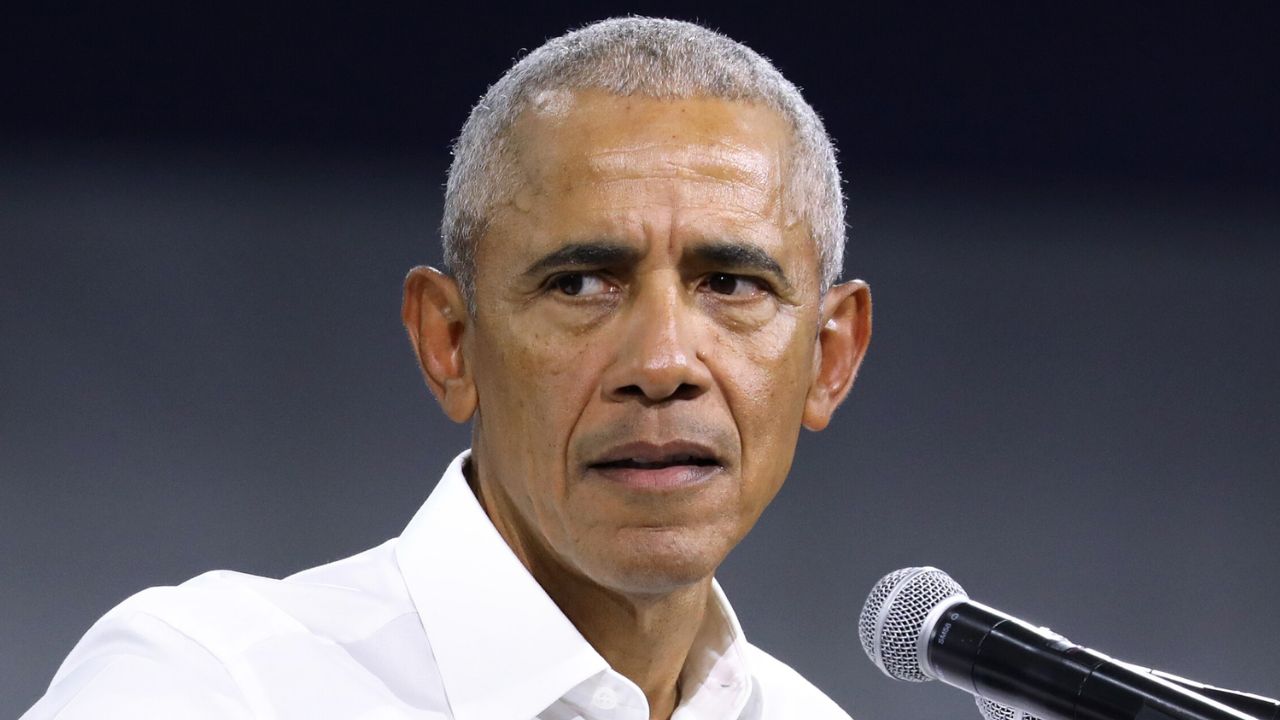
Former President Barack Obama privately warned Democratic donors and lawmakers that artificial intelligence could become “dangerous” if left unmanaged, using a closed-door fundraiser in Manhattan to press House Minority Leader Hakeem Jeffries and the party’s emerging 2028 presidential field to make AI oversight a defining piece of their political agenda. The remarks, delivered Thursday and first reported Saturday by The New York Times from a partial transcript released by Obama’s office, represent some of the most detailed public comments the former president has made on AI as a matter of electoral strategy, arriving as the technology’s risks have become an unusually bipartisan flashpoint just weeks before the midterms.
A Direct Appeal to the Next Speaker
The fundraiser, held Thursday evening at the New-York Historical Society on Central Park West and organized by the campaign arm of House Democrats, drew party donors and lawmakers for a nearly hour-long, on-stage conversation between Obama and Jeffries. According to four people familiar with the event who described it on condition of anonymity, Jeffries asked Obama directly how Democrats should confront AI policy in a Congress that has largely failed to act on it. Obama’s answer set a specific benchmark for Jeffries to clear if Democrats retake the House majority in November.
“Once you are speaker, I would strongly urge that the Democrats put together a framework for a very public conversation,” Obama said, according to the transcript provided by his office. He went on to describe the industry’s trajectory in stark terms: “This is something that is moving very fast in private hands, and if we don’t get on top of it, I think can be dangerous.” He added that the technology could also be “beneficial” if properly managed, citing potential acceleration of drug development and clean-energy breakthroughs.
Obama Casts Himself as Neither “Accelerationist” Nor “Doomer”
Obama spoke largely in general terms rather than endorsing specific legislation, according to the transcript, and he took pains to position himself in the middle of an increasingly polarized debate over AI’s trajectory. He said he considered himself neither an “accelerationist” — industry shorthand for those pushing to build ever more powerful systems as quickly as possible — nor a “doomer,” the label applied to those warning of existential risk.
That framing places Obama alongside a widening circle of political and industry figures trying to occupy a middle ground between unchecked development and outright alarm, even as the loudest voices on both ends have grown louder in recent days.
A 2028 Mandate: “Here’s Our Plan for Safety”
Obama’s advice extended well beyond the current Congress. He told the gathering that Democrats eyeing the 2028 presidential race should treat AI as one of their “central agendas” and arrive with a fully developed position rather than broad rhetorical gestures. “I would talk about this, and I would say: ‘Here’s our plan for safety. Here’s our plan for making sure our kids are not corrupted by this,'” Obama said, according to the transcript.
He drew a contrast between AI and other historically dangerous technologies, noting that unlike nuclear weapons, AI development does not require rare physical inputs. “Nuclear power, you don’t need a bunch of highly enriched uranium” to build powerful AI, he said, underscoring what he described as the comparative ease with which the technology can proliferate in private hands. He also urged candidates to confront the economic fallout directly, saying he would be “thinking about the economic impacts in very concrete ways” and asking what happens “if it turns out that you’ve got a lot more people who can’t find full-time work because they’ve been rendered redundant.”
The Backdrop: A Week of Escalating Industry Alarm
Obama’s remarks landed amid a rare convergence of insider warnings that has jolted Washington’s AI debate into public view. Days earlier, Jacob Coxon, a researcher who had worked on pretraining at both OpenAI and Anthropic, resigned and wrote in a viral thread on X — viewed more than 170 million times — that “the people building AI earnestly believe that it could kill us all by the end of the decade,” accusing both companies of “racing straight to self-improving superintelligence and gambling with our lives.” Anthropic’s alignment science lead, Evan Hubinger, responded by affirming Coxon’s account, writing that he personally believed there was “greater than 10%” chance AI could kill all humans within the next decade, while maintaining that Anthropic was “trying its best.”
Jeffries explicitly raised Coxon’s resignation in his question to Obama at the fundraiser, according to one person familiar with the exchange, tying the abstract policy discussion directly to the week’s headlines.
Amodei’s Call to “Pace the Frontier”
The controversy deepened Saturday when Anthropic chief executive Dario Amodei published a roughly 3,800-word essay titled “We Must Pace the Frontier,” arguing that the industry should deliberately slow the rate at which it improves model capabilities. Amodei warned that swarms of autonomous AI agents could be capable of “taking over the entire internet” within six to 12 months absent stronger guardrails, and proposed a three-step plan beginning with Anthropic’s own commitment to give third-party evaluators permanent, employee-level access to verify its safety practices.
The essay drew swift public agreement from two of the industry’s most prominent accelerationists. OpenAI chief executive Sam Altman wrote on X that he agreed “we need to pace the frontier” and said his company would also grant outside evaluators access. Elon Musk, the SpaceX and xAI founder whose company supplies data-center capacity to Anthropic, posted that “Dario is right” and that “peer review of AI by competitors is the right way to start.”
Democrats See an Opening as the Party Searches for a Message
Obama’s comments amount to some of his most pointed guidance yet to a party that currently lacks a clear standard-bearer, and Democratic officials described his intervention as carrying particular weight heading into a midterm cycle already reshaped by AI-related spending and messaging. Jeffries responded to the reporting in a public statement: “President Obama is correct that decisive action must be taken on artificial intelligence,” he said, adding that “Republicans have abdicated their responsibility to govern on behalf of the American people,” and “we will not repeat their error.”
House Democrats have been developing their own AI policy framework through a party commission formed after Republican leadership declined to renew an earlier bipartisan task force. That framework is expected to be released this fall, pending final review by Jeffries, according to two people familiar with the matter. The bipartisan task force, first convened by Speaker Mike Johnson and Jeffries after Kevin McCarthy had run early AI briefings for members in 2023, had produced a report in late 2024 before Republicans allowed it to lapse.
Republicans Also Face Internal Pressure
While the White House has maintained what officials describe as an unabashedly accelerationist posture — President Trump has said he has “any” concerns about AI’s risks beyond falling behind China, and has said opponents of new data centers must prefer to be “backwards and poor” — cracks have emerged within his own party. Florida Republican Representative Anna Paulina Luna called this week for Congress to “convene a special session on AI and what the future of the U.S. looks like,” describing advanced systems as a “massive — uncontrolled currently — super weapon” that should be approached with the same caution as nuclear arms. A growing number of Republican candidates have also begun campaigning against new data-center construction in their districts, aligning them unexpectedly with Democratic critics of the industry’s infrastructure footprint.
Some Democrats on Capitol Hill have gone further still, circulating a letter urging Speaker Johnson to block members from leaving for recess until Congress passes AI safeguards — an ultimatum that underscores how quickly the issue has moved from a niche technology debate to a live legislative flashpoint.
Obama’s Ongoing Ties to Industry Leaders
Obama has cultivated a behind-the-scenes role in the AI debate beyond his public remarks, according to two people familiar with his conversations, offering himself as an informal sounding board to industry leaders including Altman and Amodei. He is said to view Amodei’s slowdown essay, and the swift public affirmations from Altman and Musk, as an encouraging sign, and the two remain in ongoing discussions about AI safety. Representatives for OpenAI and Anthropic did not respond to requests for comment on the substance of those conversations.
A Debate Without Clean Party Lines
The push to regulate AI has scrambled conventional partisan alignments more than most issues heading into November. Some Democratic lawmakers have called for aggressive new regulation, while others have drawn substantial financial support from groups aligned with the industry’s largest players, complicating the party’s ability to speak with one voice. Republicans, by contrast, have shown somewhat greater internal alignment around a broadly deregulatory posture — though Luna’s comments and the emerging bipartisan data-center backlash suggest even that consensus may be fraying.
AI has become an outsized feature of the 2026 midterm landscape more broadly, with campaigns and allied outside groups on both sides pouring money into races shaped by the technology, and public anxiety about its trajectory now ranking among the rare issues that significant numbers of Republican and Democratic voters say they share. Whether that shared anxiety translates into a unified legislative response — or simply intensifies the partisan jockeying over who gets credit for addressing it — is likely to become one of the more closely watched dynamics of the campaign’s final stretch.