

Modern warfare didn’t become “modern” all at once. It arrived in steps, often driven by artillery systems that forced armies and navies to rethink what speed of engagement, volume of fire, and battlefield reach could look like in practice. The common thread across the weapons below isn’t just caliber—it’s doctrine: how quickly a crew can deliver effective fire, how flexibly a system can be employed, and how widely it can be fielded. From recoil mechanisms that made rapid, accurate fire practical to rocket systems that made area fire mobile and common, these six weapons show how artillery repeatedly reset expectations.
This isn’t a list of the biggest guns. It’s a look at systems that changed what commanders could reasonably plan for—and what opponents had to assume was possible. Each section highlights a concrete design or employment detail, then the doctrinal consequence that followed. When a new artillery idea works at scale, everyone else adapts, whether through new tactics, procurement choices, or countermeasures.
Canon de 75 modèle 1897 (“French 75”)
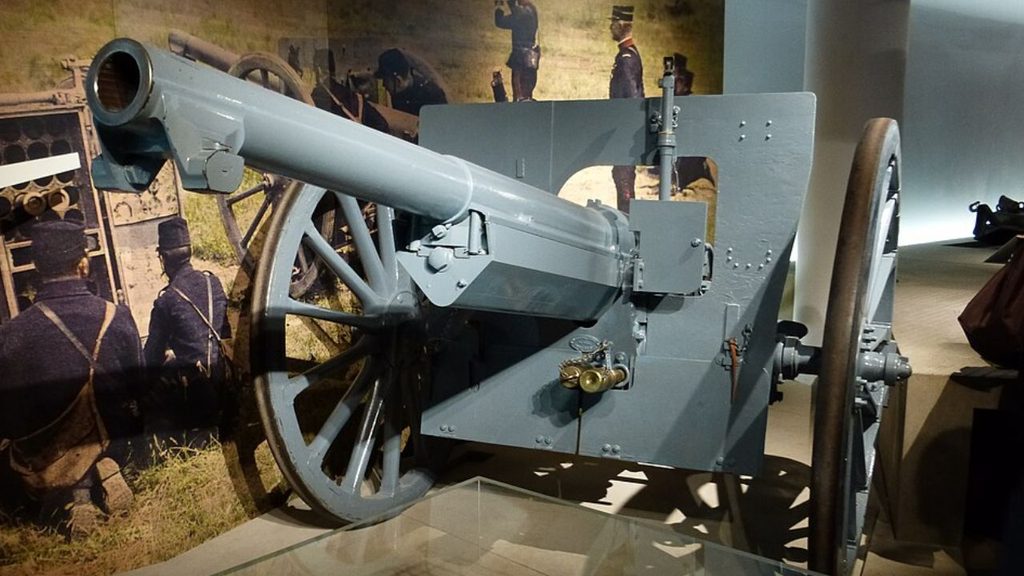
The Canon de 75 modèle 1897—better known as the “French 75”—is often cited as the first modern “quick-firing” field gun because its hydro‑pneumatic recoil system let crews fire rapidly without re-laying the gun after each shot. Musée de l’Armée (France) points to that recoil approach as the core of its impact: recoil control doesn’t only spare the carriage, it helps preserve aim and keep the firing rhythm high. The “quiet revolution” here is mechanical—less a new type of shell than a system that turned each gun and crew into a sustained-volume firing unit.
That mattered because it changed what artillery could be used for. When a gun can keep firing accurately without being physically shoved back into place and re-aimed, artillery becomes continuous pressure rather than a series of discrete events. This helped reshape pre‑World War I thinking toward sustained, rapid fire. A wording caveat is important for accuracy: “first” is framed differently across sources, so it’s most precise to describe the French 75 as the first field gun to widely operationalize and normalize this recoil approach—not the first recoil system ever.
8.8 cm FlaK 18/36/37/41 (“the 88”)
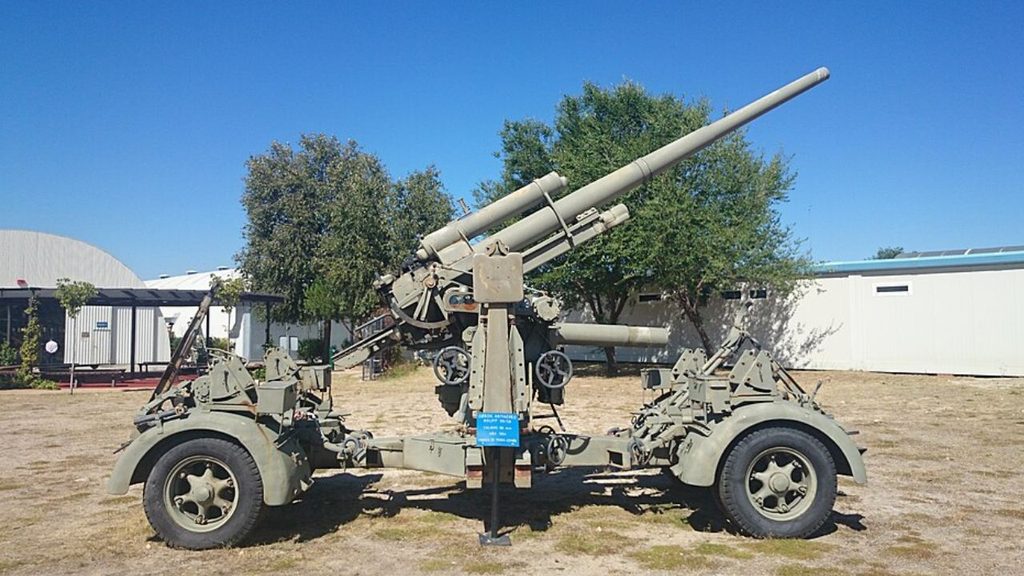
The 8.8 cm FlaK series—often shortened to “the 88”—was developed as an anti-aircraft gun but became infamous for effectiveness as an anti-tank and general-purpose ground weapon. The Australian War Memorial’s “Machines of War” material emphasizes what that implied: a high-velocity AA gun could be highly effective against ground targets, including armor. The standout detail is the role shift itself—an air-defense weapon that, in practice, expanded what opponents had to fear from “artillery” on the ground.
Doctrinally, the 88 helped change battlefield assumptions about anti-armor threats. Armor could not treat dedicated anti-tank guns as the only serious danger; a high-velocity AA weapon could also reach out and punish vehicles and positions. It also underscored a broader point about flexibility: employment matters, and systems designed for one mission can become decisive in another. One caution keeps the story grounded: some narratives over-credit the improvisation of specific commanders, so it’s better to focus on the sourced reality—effective ground-target performance—rather than pinning the concept on a single personality.
Bofors 40 mm L/60 gun
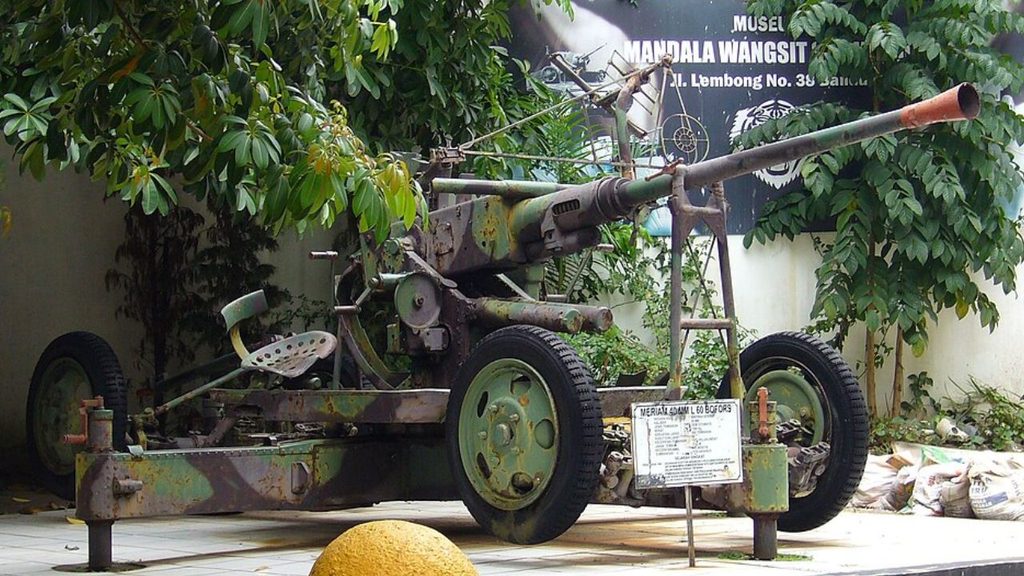
The Bofors 40 mm L/60 gun became a near-universal answer to air attack in World War II, used at sea and ashore. U.S. Naval Institute’s Naval History Magazine describes it as the most widely used anti-aircraft weapon of the war, which is less a claim about legend than about how broadly it spread. The hook is both industrial and operational: when a light AA gun becomes common across fleets and armies, it shapes training, integration, and the baseline expectations of air defense.
That ubiquity had practical effects. A widely fielded weapon makes it easier to build layered defense using familiar equipment and procedures, and it can simplify logistics and training across large forces. At the same time, “most widely used” is a major claim, so it should be treated exactly as USNI frames it rather than turned into precise production figures without separate sourcing. In plain terms, the Bofors didn’t just perform well—it became a shared standard for light anti-aircraft defense.
BM-21 Grad (122mm MRL)
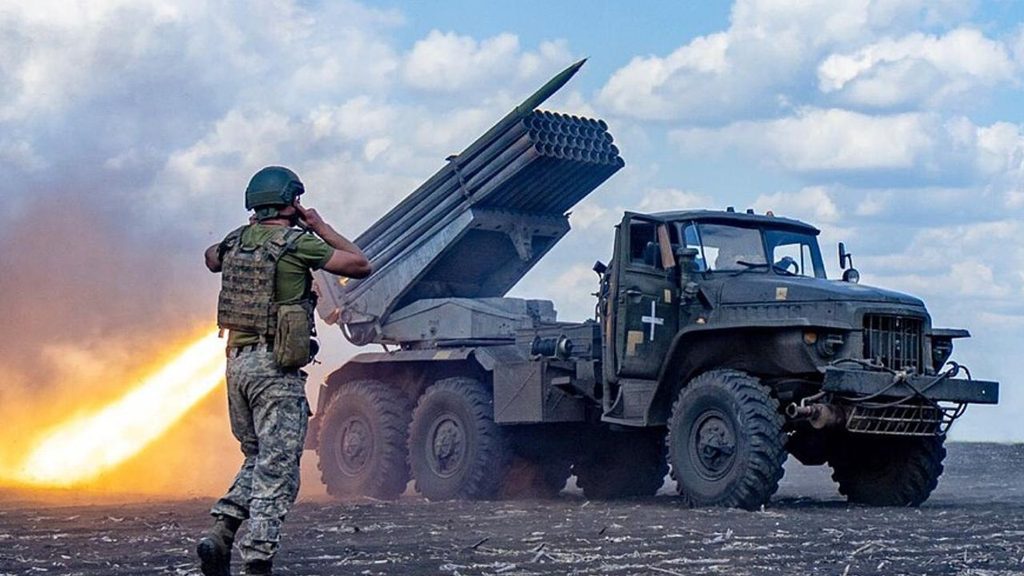
The BM-21 Grad is a 122mm multiple rocket launcher introduced in the early 1960s that became prevalent worldwide in large part because it can deliver massive area fire from a relatively light, mobile platform. A Geneva International Centre for Humanitarian Demining (GICHD) report on explosive weapon effects is clear about the category-level consequence: systems that produce powerful area effects can be militarily significant without relying on the heaviest platforms. The key detail is the “cheap saturation” blueprint—simplicity plus volume—which helps explain why the concept spread and proved adaptable in many settings.
Once launchers like the Grad are common, they change how forces move and how they survive. Commanders have to plan around dispersion, rapid movement, and the risk that a sudden salvo can blanket an area. The discussion also shifts toward the realities of area impact rather than single-target precision. A necessary caution: it’s not responsible to attach a single, fixed lethality footprint to the Grad in general terms, because the GICHD report notes effects vary widely with rocket type, fuzing, terrain, and training.
M270 Multiple Launch Rocket System (MLRS)

The M270 Multiple Launch Rocket System is a Western tracked rocket artillery platform whose first combat use is documented in the 1991 Gulf War, according to Wikipedia’s M270 MLRS entry. In this context, the significance is doctrinal: it marks deep-fires rocket artillery being used at scale as an integrated part of Western operations, rather than treated as a specialized add-on. The “surprising detail” is a perception gap—popular “grid square removal” language often outruns what cautious sourcing can support.
As a concept, the M270 represents the normalization of deep-attack thinking with rocket artillery: mobile launchers delivering large salvos to shape the fight beyond immediate front-line contact. That pushes opponents toward dispersion, concealment, and counter-battery focus. The caution remains central for publication-ready accuracy: claims about overwhelming battlefield effects are frequently exaggerated, so any stronger language should be anchored in credible after-action reporting if it’s introduced later. The sourced point here is narrower but still important—documented early combat employment in 1991 and what that signaled about modern operational planning.
2S7 Pion (203mm SPG)
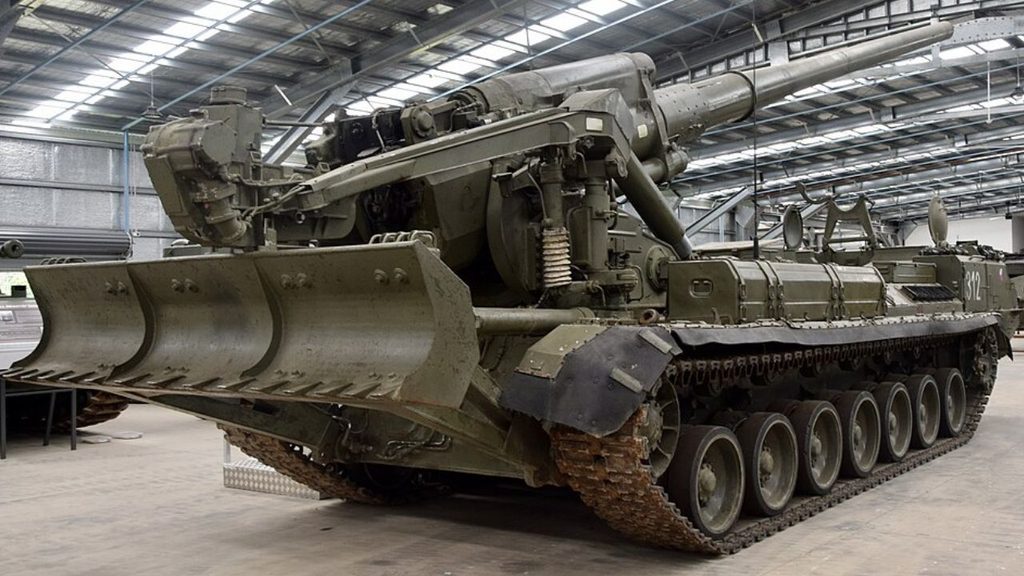
The 2S7 Pion is a 203mm self-propelled gun notable for being capable of firing nuclear ammunition, an extreme attribute that influenced Cold War-era thinking about escalation and counter-battery urgency. Wikipedia’s 2S7 Pion entry is the source in this context, and it frames the weapon as more than a large conventional artillery piece: it carries strategic implications. The unsettling twist is straightforward—“nuclear-capable tube artillery” compresses the space between tactical gunnery and strategic consequence.
In practical terms, that capability affects how opponents interpret deployments and how they prioritize finding and suppressing heavy guns. It also complicates escalation management: a large-caliber SPG can represent more than conventional bombardment in a crisis. Accuracy caution matters here as well—details about nuclear rounds and deployment practices are often opaque—so it’s important not to claim yields, issue rates, or routine fielding patterns without primary sourcing. The larger point is the doctrinal weight: in this form, artillery becomes part of deterrence logic and crisis signaling, not only the mechanics of shells and targets.