
From the outside, fighter development can look like a neat progression: a prototype appears, headlines follow, and a production aircraft rolls out. In practice, some of the most important work happens in programs that are deliberately hard to see—limited-run prototypes, research aircraft, and stealth demonstrators built to answer specific questions rather than to impress an audience.
These seven aircraft didn’t become famous for combat records. They matter because they helped validate—or rule out—ideas about low-observable shaping, manufacturing approaches, stability and control, and high-agility configurations. In several cases, their rarity isn’t an accident. It’s the point.
Boeing Bird of Prey (U.S.)

Boeing’s Bird of Prey was a stealth technology demonstrator developed as a “black project” and kept secret until Boeing unveiled it in 2002, according to Boeing MediaRoom. That timing explains why so few people ever saw it up close when it was most relevant: the program’s value was in testing, not visibility.
Boeing MediaRoom describes the Bird of Prey’s purpose as exploring low-observable shaping and manufacturing approaches that could feed later designs. Beyond that, open details are limited, and that constraint is part of what makes it notable—an aircraft can be built to influence future design and still remain largely out of public view while it does its job.
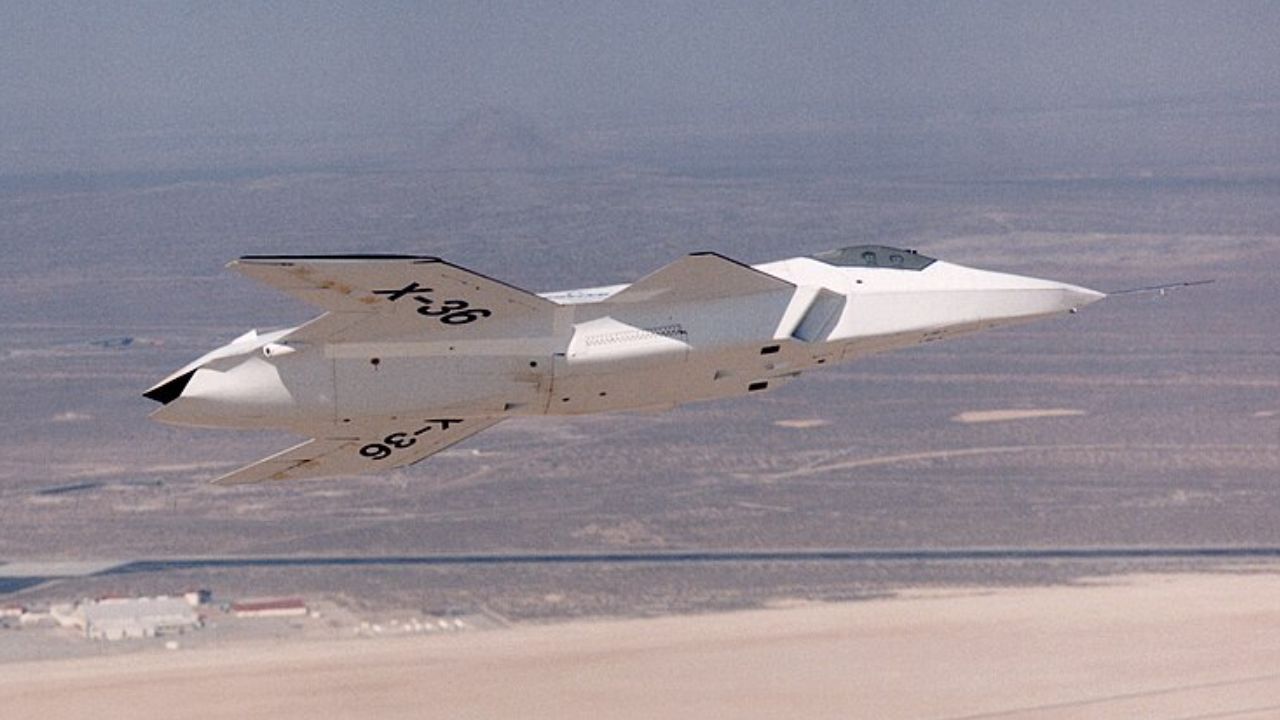
McDonnell Douglas / Boeing X-36 Tailless Fighter Agility Research Aircraft (U.S.)
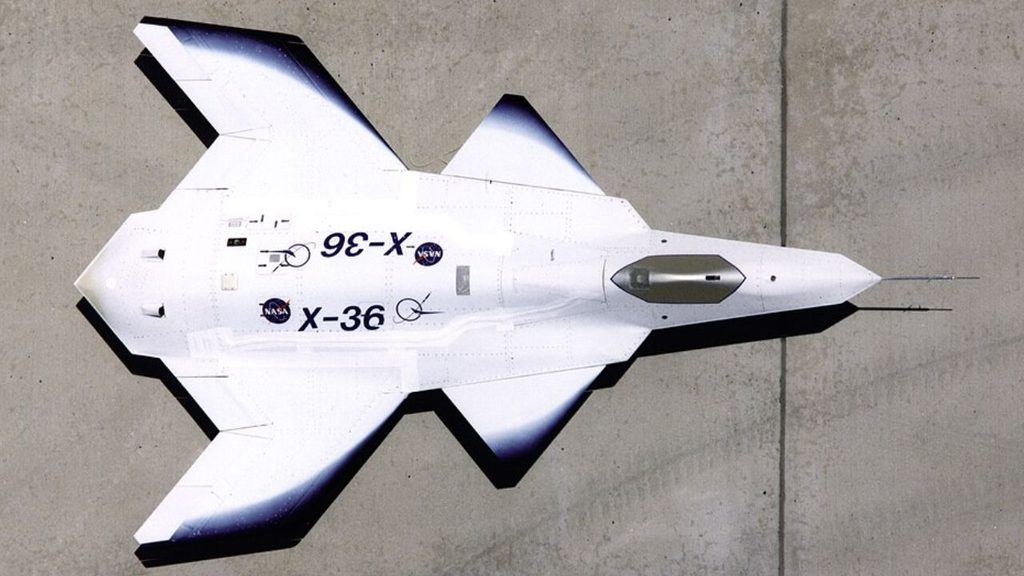
NASA describes the X-36 Tailless Fighter Agility Research Aircraft as a remotely piloted, tailless, “fighter-like” research jet built to demonstrate high agility without vertical tails, with a first flight on May 17, 1997. It’s important to keep the category straight: this was a subscale UAV demonstrator, not an operational fighter.
Its significance comes from the problem it targeted. Removing vertical tails is a major stability-and-control challenge, and NASA frames the X-36 as an agility research effort rather than a pure styling or stealth exercise. The broader takeaway is simple and practical: demonstrators like this let engineers test radical configurations at lower risk, then carry validated handling and control lessons forward.
Grumman X-29 (U.S.)
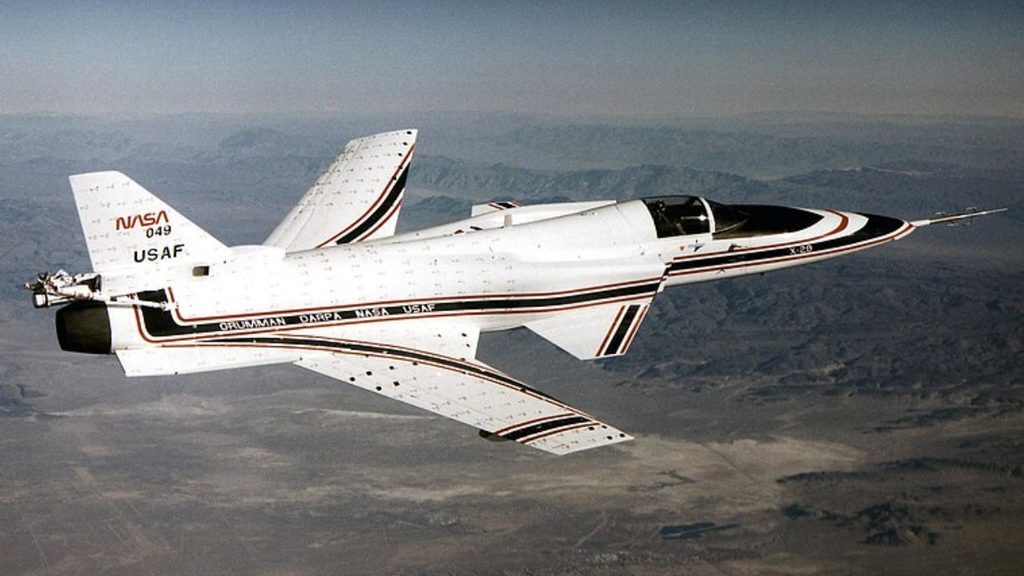
NASA’s X-29 demonstrator was a fighter-sized experimental aircraft built to test a radically forward-swept wing and the fly-by-wire control needed to manage inherent instability. The layout is striking because it breaks with the conventional fighter wing planform most people expect—and that visual difference reflects how unconventional the research goals were.
The X-29’s importance is tied to the pairing NASA emphasizes: ambitious aerodynamics and digital flight control working together. It’s also the kind of program many people know mainly from photos, which reinforces the point of this list—some of the most memorable experimental aircraft are physically rare and rarely encountered outside specific collections.
Mikoyan Project 1.44 / MiG 1.44 (Russia)
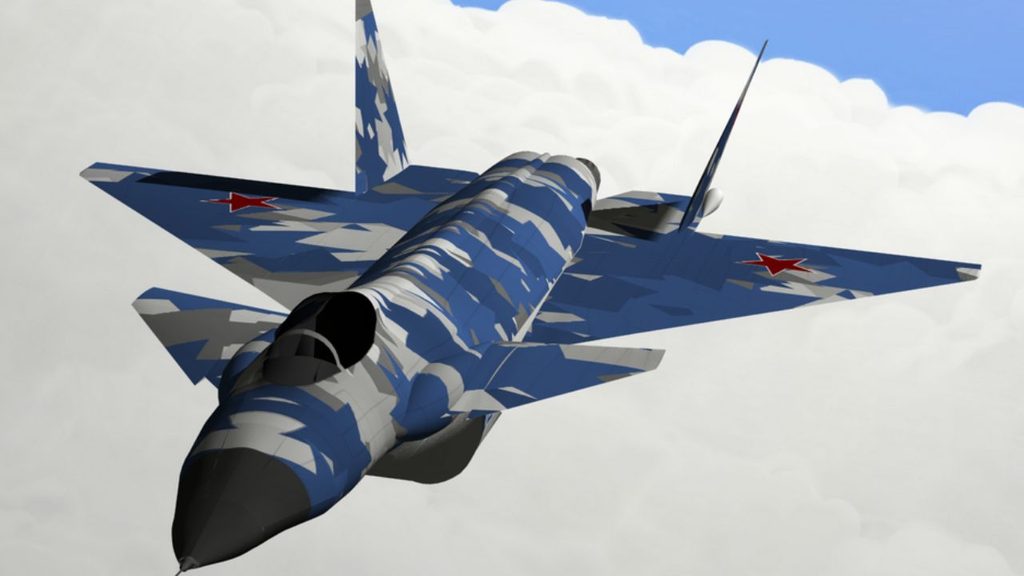
Mikoyan’s Project 1.44—often discussed as MiG 1.44 in open sources—is widely described as a late–Cold War/1990s-era advanced fighter technology demonstrator with extremely limited prototype-only visibility, per Wikipedia’s overview. For most readers, “never seen up close” is a realistic description of how distant this program remains from public access.
What it represents is as important as what can be verified: an attempt to pursue advanced fighter concepts during a difficult transition period, using a demonstrator to bridge ambition and feasibility. The key point to keep honest is ambiguity—open sources disagree on how many airframes existed and on what counts as 1.42 versus 1.44—so it’s better to acknowledge uncertainty than to force a single definitive narrative.
Sukhoi Su-47 “Berkut” (Russia)

The Sukhoi Su-47 “Berkut” is an experimental supersonic technology demonstrator with forward-swept wings that never entered serial production, and Wikipedia describes it as having a sole aircraft serving as the demonstrator. That combination—one airframe and a distinctive configuration—helps explain why it remains an aircraft most people will only ever see in select appearances or in documentation.
The Su-47 matters as a reminder of what demonstrators are for: learning and validation, not necessarily production. Because it is so singular in public discussion, it also attracts speculation; the safest way to understand it is as a research platform whose visibility and claims should be kept within what open sources can support.
Northrop–McDonnell Douglas YF-23 “Black Widow II” (U.S.)

The YF-23 “Black Widow II” was the losing prototype in the U.S. Advanced Tactical Fighter (ATF) competition against the YF-22, and the U.S. Air Force’s heritage media notes that two prototype air vehicles were built. Two prototypes from a pivotal competition naturally translates into limited opportunities for the public to see one up close outside museum settings.
Its continuing pull comes from what it symbolizes: a major “what if” in modern fighter history. At the same time, public debates about comparative performance—such as which contender was “stealthier” or “faster”—remain contested, so the most grounded takeaway is the confirmed prototype reality and the lasting significance of the ATF process itself.
Mitsubishi X-2 “Shinshin” / ATD-X (Japan)
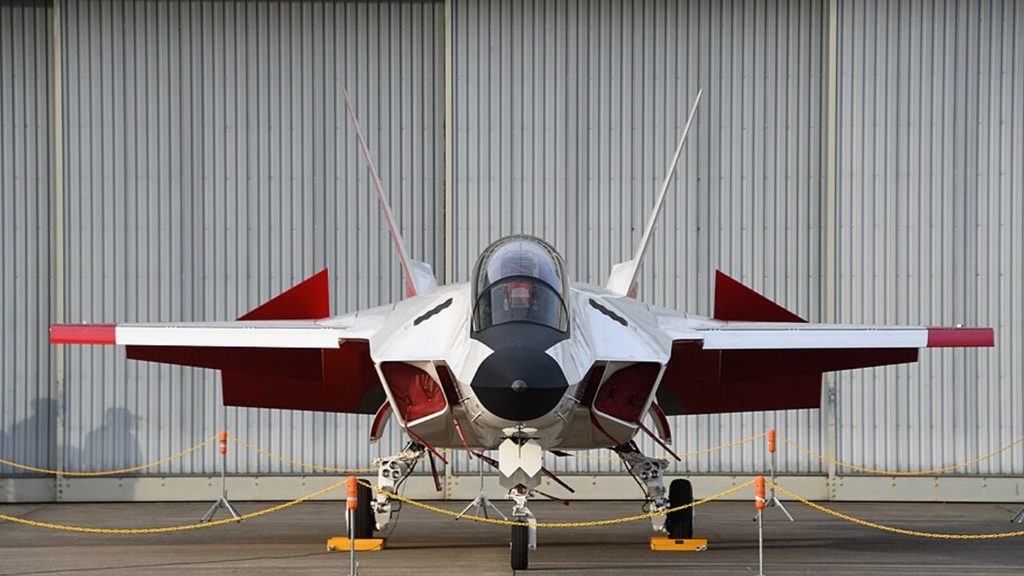
Japan’s Mitsubishi X-2 “Shinshin,” also known as ATD-X, is an advanced technology demonstrator for future fighter technology, with Mitsubishi Heavy Industries announcing its first flight on April 22, 2016. Because Japan rarely presents this kind of program in public, it fits naturally into the category of aircraft most readers will never encounter in person.
Its importance is in what the program framing makes clear: it is a demonstrator built to fly and test future-fighter-relevant technologies. Treating it accurately—as a technology demonstrator rather than an operational stealth fighter—keeps the story focused on what it credibly shows: a country proving concepts in the air to inform what comes next.
Taken together, these aircraft show how fighter evolution often proceeds: through tightly scoped experiments, limited-run prototypes, and—sometimes—intentional invisibility. If you’ve never seen one up close, that isn’t a failure of publicity. It’s often the result of how advanced aircraft development is structured in the first place.