
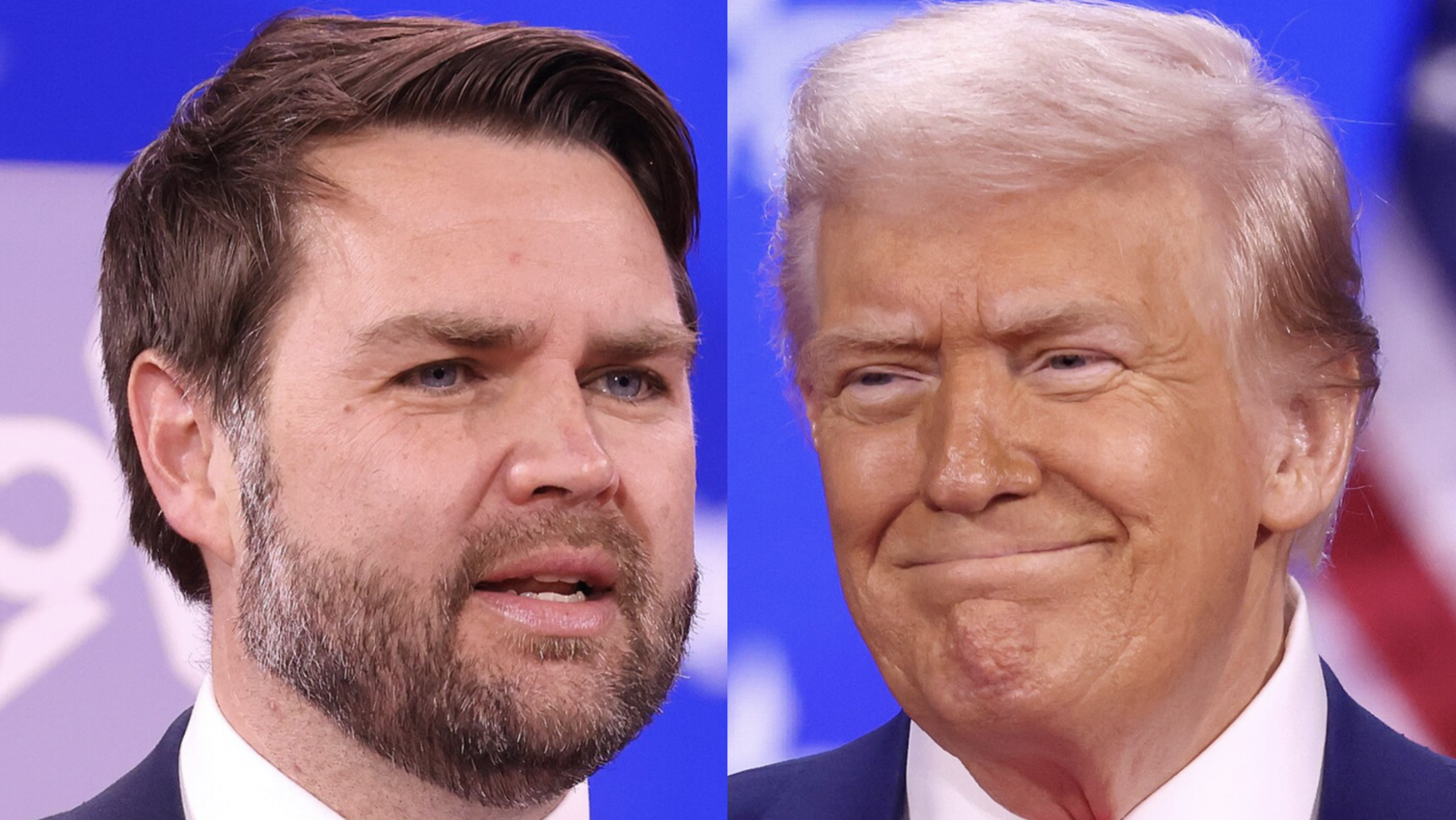
Vice President JD Vance defended the Trump administration’s strategy toward Iran’s nuclear program on Fox News on Saturday, framing the president’s approach as one built not for short-term political gain but for the safety of future American generations.
Speaking to anchors Rachel Campos-Duffy, Charlie Hurt, and Griff Jenkins, Vance addressed questions about whether the United States and Israel are pursuing divergent goals in the aftermath of the Islamabad Memorandum of Understanding, the 14-point framework signed earlier in June to end the 2026 Iran war. Asked whether Israel’s objective is regime change while Washington’s is narrower, Vance said he would not speak for the Israeli government but laid out, in detail, what President Donald Trump has directed his team to accomplish.
“We’re going to go after that enriched stockpile of uranium, we’re going to try to reset the situation that we have so that the Iranians don’t just have a destroyed nuclear program now, but so that we can say with some confidence they’re never going to rebuild that program,” Vance said.
The vice president then turned to the president’s personal framing of the issue, describing it as a matter that extends well beyond the current administration’s term in office. “The president, Rachel, comes back to this as you know, because you know him so well, constantly. Iran’s not going to have a nuclear weapon for the next two generations, he’s thinking about it for my kids’ sake, for our grandkids’ sake,” Vance said.
Vance described the administration’s posture as twofold, combining a hardened security objective with an open diplomatic door. He said the destruction of Iran’s nuclear infrastructure runs alongside a standing offer from Trump that the relationship between the two countries could change if Tehran alters its conduct. “And then at the same time, the president is also offering an outstretched hand saying if they change their behavior fundamentally, then the United States could have a different relationship with that country,” he said.
He characterized the structure of the agreement as a deliberate sequencing built around Iranian choices rather than American concessions made in advance. “So it really is a two-step process. There’s a fork in the road here. The United States wins either way, but I think what ultimately happens from here is very much up to the Iranians. Do they want to behave better? If so, great,” Vance said.
He added that Tehran’s refusal to reform would not leave Washington without leverage. “If they don’t want to behave better, the president of the United States still has a whole lot of options from here,” Vance said.
The remarks came as the administration works to implement the memorandum, which Pakistan’s Foreign Ministry has said will move into technical-level talks at the Bürgenstock resort in Switzerland on June 21, with mediators from Pakistan and Qatar joining U.S. and Iranian representatives. The memorandum followed the April 2026 Islamabad Talks, a 21-hour negotiating session led on the American side by Vance alongside special envoys Steve Witkoff and Jared Kushner, and on the Iranian side by parliamentary speaker Mohammad Bagher Ghalibaf and Foreign Minister Abbas Araghchi.
Trump and Iranian President Masoud Pezeshkian signed the memorandum remotely on June 17, after Vance announced on June 15 that representatives of both governments had digitally signed the document. The agreement opened a 60-day negotiating window, set to address the disposition of Iran’s enriched uranium stockpile and the reopening of the Strait of Hormuz to commercial shipping.
Vance’s comments on generational security echo statements he and other administration officials have made publicly about the stockpile being the central remaining issue in the negotiations, distinct from the military degradation of Iran’s nuclear sites that took place during the conflict itself. The vice president has said that destroying the program now does not by itself guarantee it cannot be rebuilt over a longer horizon, which he described as the reason the stockpile, rather than only the facilities, has become the focus of the technical talks.
The vice president’s appearance came amid continued scrutiny in Washington over the memorandum’s terms, including from members of his own party. Republican lawmakers, including Senate Armed Services Committee Chairman Roger Wicker, have raised concerns about provisions that could allow Iran to access significant financial benefits if it complies with the agreement’s terms over time.
Vance did not address those specific criticisms during this portion of the interview, instead focusing on the administration’s broader rationale for pursuing the deal: that even with diplomatic engagement underway, Iran’s nuclear weapons capability has been eliminated for the foreseeable future, with the administration’s stated aim being to extend that outcome indefinitely through verification and enforcement mechanisms built into the memorandum.