
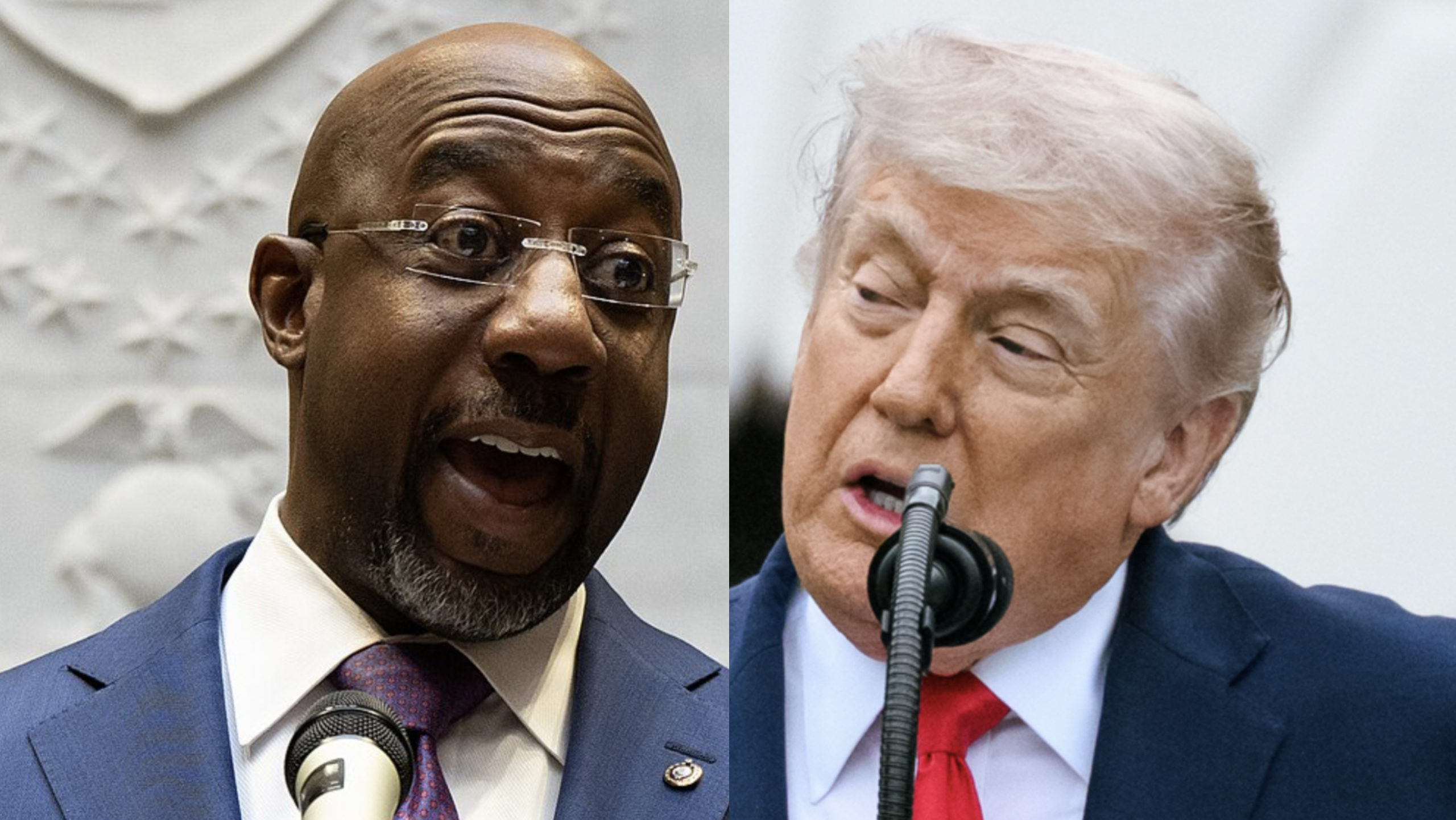
WASHINGTON — Georgia Sen. Raphael Warnock fired back at President Donald Trump on Sunday after the president told reporters he “loves” the inflation gripping the American economy, with the Democratic senator calling Trump “out of touch” and accusing him of deliberately making life more expensive for ordinary Americans.
Warnock posted the rebuke on X on June 10, 2026, in direct response to a clip of Trump speaking to reporters at the White House. In the exchange, a reporter had asked the president whether he was concerned about the latest inflation numbers released that morning. “No, I love it. I love the inflation,” Trump replied.
Warnock’s response was swift and pointed. “Can you be more out of touch?” the senator wrote. “It’s almost like this President is trying to make your life more expensive.”
A President Who “Loves” Inflation
Trump’s remarks came the same day the U.S. Bureau of Labor Statistics released its Consumer Price Index report for May 2026, which showed consumer prices had risen 4.2 percent over the prior 12 months — the highest annual inflation rate in more than three years. Energy prices jumped 3.9 percent in May alone, putting the 12-month energy increase at 23.5 percent. Gasoline prices were up 40.5 percent from a year earlier. Inflation has accelerated from an annual rate of 2.4 percent in January, driven largely by the energy shock tied to the ongoing U.S. military campaign against Iran and the disruption of global supply chains following the closure of the Strait of Hormuz.
Trump acknowledged at the White House that the inflation surge was tied directly to his decision to launch military operations against Iran, describing the economic pain as a deliberate and worthwhile trade-off for preventing Tehran from obtaining a nuclear weapon. He said he had warned top advisers — including Treasury Secretary Scott Bessent and National Economic Council Director Howard Lutnick — that the stock market could fall as much as 25 percent and oil could spike to $250 a barrel before ordering the strikes. “It was worth it to me,” Trump said. “It was worth it not to have a nuclear weapon.”
A Senate Voice Against the Iran War
For Warnock, Sunday’s rebuke was the latest in a sustained and public campaign against both the Iran war and what he has characterized as the Trump administration’s indifference to the economic toll borne by working Americans. Since Trump launched military operations in Iran in February 2026, the Georgia senator has been among the most vocal opponents of the conflict in the Senate.
In April 2026, Warnock filed a War Powers resolution on the floor of the U.S. Senate to force a vote to stop the Iran war, calling Trump a “warmonger president” who had “dragged us into this illegal, unwise war right on the heels of 20 years and more, in which the American people saw that in the Middle East, it’s easy to get into these wars; it’s difficult to get out.”
During remarks on the Senate floor before a War Powers vote in March 2026, Warnock stated that the administration had “no plan on how to get out, no clear rationale, no clear objectives, no plan for the day after decapitating the brutal leadership of an awful regime.”
Warnock Confronts Bessent on the Economy
Warnock carried his economic critique directly into the Senate hearing room just days before his Sunday post. During a Senate Finance Committee hearing on June 3, 2026, Warnock pressed Treasury Secretary Scott Bessent on the Trump administration’s handling of prices, recalling that Trump had previously graded his own economy “plus plus plus plus plus” — a declaration the senator said preceded the president sending “energy and gas prices soaring with this illegal war in Iran, a war that’s costing taxpayers billions of dollars, a billion dollars or more per day, turbocharging inflation.”
Warnock told Bessent directly: “Folks back at home in Georgia, whom I represent, are struggling to just make their lives work. And they know President Trump’s Iran war and the tariff taxes are only making things worse.”
In April 2026, Warnock questioned Kevin Warsh, Trump’s nominee to lead the Federal Reserve, about the state of the economy for ordinary Georgia workers, noting that Trump’s trade policies had cost Georgia families an extra $1,700 a year.
War Powers Resolutions and Republican Blockades
Warnock joined a wave of Democratic senators in April 2026 — including Jeff Merkley, Kirsten Gillibrand, Chris Van Hollen, Mark Kelly, and Andy Kim — in filing War Powers resolutions to force Senate votes to end the Iran war, adding to resolutions already filed by Sens. Cory Booker, Tim Kaine, Chris Murphy, Adam Schiff, Tammy Baldwin, and Tammy Duckworth.
Those resolutions have repeatedly failed to advance over Republican opposition. Senate Republicans blocked the vote in March 2026, continuing to give the president what Warnock characterized as “unchecked powers to wage war in Iran.” The Senate has now rejected Democratic War Powers efforts multiple times along largely party-line votes.
“The American People Are Clear”
At the heart of Warnock’s war opposition is a constitutional argument that Congress — not the president — holds the authority to declare war. “The declaration of war belongs to the Congress and not to the president,” Warnock has said, adding: “The American people are clear. They do not want this war.”
Sunday’s post landed as public frustration with the economic fallout from the conflict has mounted. A recent Fox News survey found that more than 70 percent of Americans believe the economy is getting worse, and consumer sentiment has fallen to a record low. In May 2026, the U.S. national debt held by the public surpassed $31 trillion, exceeding GDP for the first time since World War II.
Trump himself won the 2024 presidential election in large part on a pledge to reduce inflation and lower the cost of living. Since taking office, his approval rating on economic issues has declined sharply, with the Iran conflict and the resulting energy shock emerging as the primary drivers of the reversal. Trump has maintained that relief is coming, promising that inflation “will come down like a rock” once the conflict ends and predicting that gasoline prices will return to the $1.85-per-gallon levels he recalled seeing at Iowa stations before the war began.
Warnock, who faces Georgia voters again in 2028, has made the intersection of the Iran war and household economic pain a defining issue of his Senate tenure — and Sunday’s post made clear he intends to keep the two inseparable in the public debate.