
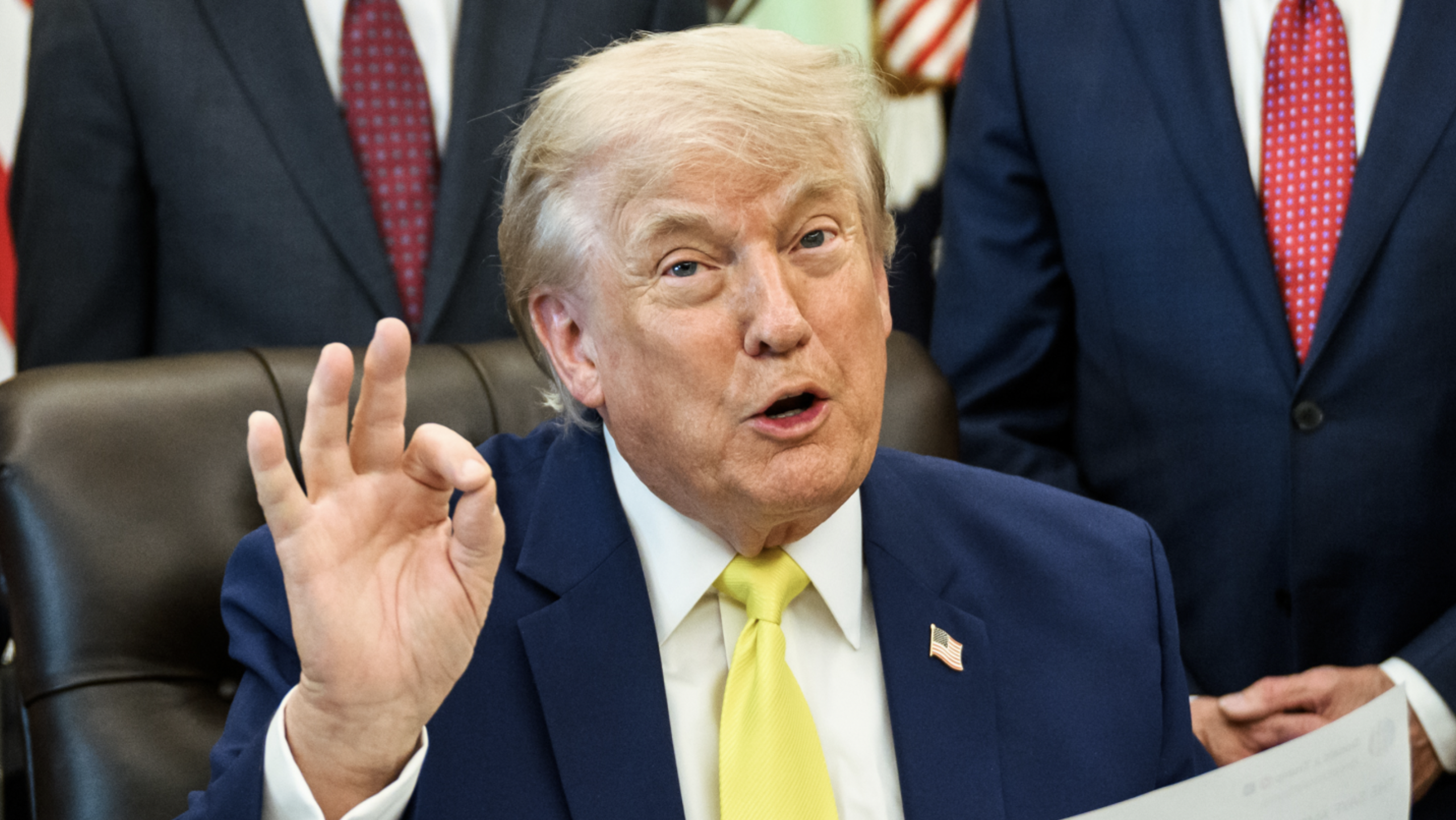
WASHINGTON — President Donald Trump on Wednesday said he “loves” the inflation gripping the American economy, brushing aside the release of a government report showing consumer prices rose at their fastest pace in three years and insisting the economic pain was a deliberate and worthwhile trade-off for preventing Iran from obtaining a nuclear weapon.
Asked by a reporter at the White House whether the latest inflation numbers concerned him and whether rising prices could become a political headwind, Trump was unequivocal. “The numbers were great,” he said. “You know what I really love? I love the inflation.”
A 4.2% Rate and a Three-Year High
The remarks came hours after the U.S. Bureau of Labor Statistics released its Consumer Price Index report for May 2026, showing that the all-items index increased 4.2 percent over the prior 12 months — the highest annual rate in more than three years, driven largely by a 3.9 percent jump in energy prices in May alone, which put the 12-month energy increase at 23.5 percent. Inflation has accelerated from an annual rate of 2.4 percent in January, driven largely by the energy shock stemming from the Iran war and the closure of the Strait of Hormuz, which has disrupted global supply chains and driven up prices on everything from gasoline to airfares. In its May report, the Labor Department said energy prices accounted for more than 60 percent of the monthly CPI increase, with gasoline prices jumping 40.5 percent from a year earlier.
“It Was Worth It to Me”
Trump acknowledged the inflation was tied directly to his decision to launch military operations against Iran, a choice he said he made with full awareness of the economic consequences. He described gathering his top advisers — including Treasury Secretary Scott Bessent, National Economic Council Director Howard Lutnick, and others — before ordering the strikes, warning them the stock market could fall as much as 25 percent and oil could spike to $250 a barrel. “I hate to do this to you guys, but Iran’s going to have a nuclear weapon very soon,” Trump said he told the group. “We have to go and attack.”
The president said he was satisfied with how the economic fallout materialized. “That’s why oil is $85 a barrel,” Trump said, framing the current price as a success compared to the $250 per barrel his advisers had warned against. “It was worth it to me. It was worth it not to have a nuclear weapon.” He added that inflation would fall sharply once the conflict ends: “It’s going to come down like a rock.”
Secret Oil Operations Now Public
In the same remarks, Trump disclosed for the first time that the United States has been covertly extracting large quantities of oil from Iranian-controlled territories as part of the ongoing conflict. “We’ve been taking out millions of barrels of oil. Nobody knows it,” Trump said. “Every night we took out oil.” He said he had refrained from making the operations public until now because Iranian forces had only recently detected them. “I wanted to say it so badly, but I didn’t want to ruin it,” Trump said of the secret campaign, which he credited with keeping global oil prices from spiraling to catastrophic levels. He also referenced a nighttime naval operation against Iranian shipping: “We took out the other night 22 ships late at night with no lights because they don’t have any radar because we blasted the crap out of it.”
Political Peril for Republicans
Trump’s “I love the inflation” declaration landed at a particularly sensitive moment for his party. Republicans fear that consumer angst over rising prices will hurt GOP lawmakers’ chances of retaining their slim majorities in both chambers of Congress in the November elections. The inflation surge has also upended expectations for the Federal Reserve’s interest-rate path — in January, economists had largely focused on when the Fed might next cut rates, but now the surge in prices, combined with a stronger labor market, has some analysts predicting that the central bank’s next move could instead be a rate hike. Fed officials are expected to leave borrowing costs unchanged at their next policy meeting on June 17 as they assess whether the inflationary spike will prove persistent.
A Familiar Disconnect
The comments drew immediate backlash and echoed a pattern that has defined Trump’s handling of the war’s economic fallout. Last month, Trump raised eyebrows with a similarly blunt dismissal of Americans’ financial hardship. “I don’t think about Americans’ financial situation,” Trump told reporters in May. “I think about one thing: We cannot let Iran have a nuclear weapon.”
Trump himself won the 2024 presidential election in large part on a promise to lower inflation and reduce the cost of living for American families. Since taking office, his approval rating on economic issues has declined significantly, with the Iran war and its resulting energy shock emerging as the primary driver of the reversal.
“The Worst Is Likely Still to Come”
Economists were less optimistic than the president about near-term relief. “Americans are getting squeezed financially by inflation that’s back at a 3-year high,” said Heather Long, chief economist at Navy Federal Credit Union. “The frustration for many Americans is that so many of the basics are up in price right now — gas, food, electricity, and medical care are all clear pain points that are above 3% inflation. Ending the war in Iran will help to moderate inflation, but the worst is likely still to come for rising food prices.”
Even if Trump and Tehran reach a deal soon, it is expected to take months to get supplies moving through the Strait of Hormuz, with disruptions expected to continue through 2026. And while Americans may be more insulated from fuel shocks than other nations, ongoing higher energy prices could dent consumer spending over time.
Trump closed out his inflation remarks with a promise tied to one of his signature campaign pledges, recalling a moment on a recent trip to Iowa. “Just before it started, I was in Iowa and we passed gas stations $1.85 a gallon,” Trump said of pre-war fuel prices. “And we’ll be back at those levels very soon.”