
The United States military launched retaliatory strikes against Iran on Tuesday after President Donald Trump announced that Tehran had shot down a U.S. Army AH-64 Apache helicopter patrolling over the Strait of Hormuz, marking a sharp new escalation in an already volatile conflict that has kept one of the world’s most critical waterways closed for months. The strikes, which U.S. Central Command confirmed began at 5 p.m. Eastern Time, were ordered directly by the Commander in Chief and further complicated already fragile diplomatic efforts aimed at ending the broader U.S.-Iran war.
Apache Downed Near Oman’s Coast
The U.S. Apache attack helicopter that crashed near the coast of Oman was brought down by an Iranian drone, according to two U.S. officials familiar with the Pentagon’s latest assessment. The drone involved in the incident is the same type Iran typically uses to target ships transiting the Strait of Hormuz, one official said, though the investigation had not yet determined whether Iran intended to use the drone to attack the helicopter. According to CENTCOM, the American AH-64 Apache had gone down “near the coast of Oman” on Monday evening at 7:33 p.m. ET.
Crew Rescued by Unmanned Surface Vessel
U.S. Central Command confirmed that two U.S. Army AH-64 Apache pilots were rescued near the Strait of Hormuz after their helicopter went down. The Apache was “patrolling regional waters” when the incident occurred, CENTCOM said. “The cause of the incident is under investigation,” it added. The rescue operation represented a landmark moment in military technology: the pair were rescued by an unmanned surface drone operated by a special department called Task Force 59, based within the U.S. Fifth Fleet in Bahrain. It was the first time a drone has been used for a water rescue, officials said. Rescue efforts were led by U.S. Naval Forces Central Command and the 82nd Airborne Division, with support from U.S. Air Force and Navy units including U.S. 5th Fleet’s Task Force 59, CENTCOM said. The two soldiers were rescued within approximately two hours and reported in stable condition.
Trump Announces the Shootdown, Vows a Response
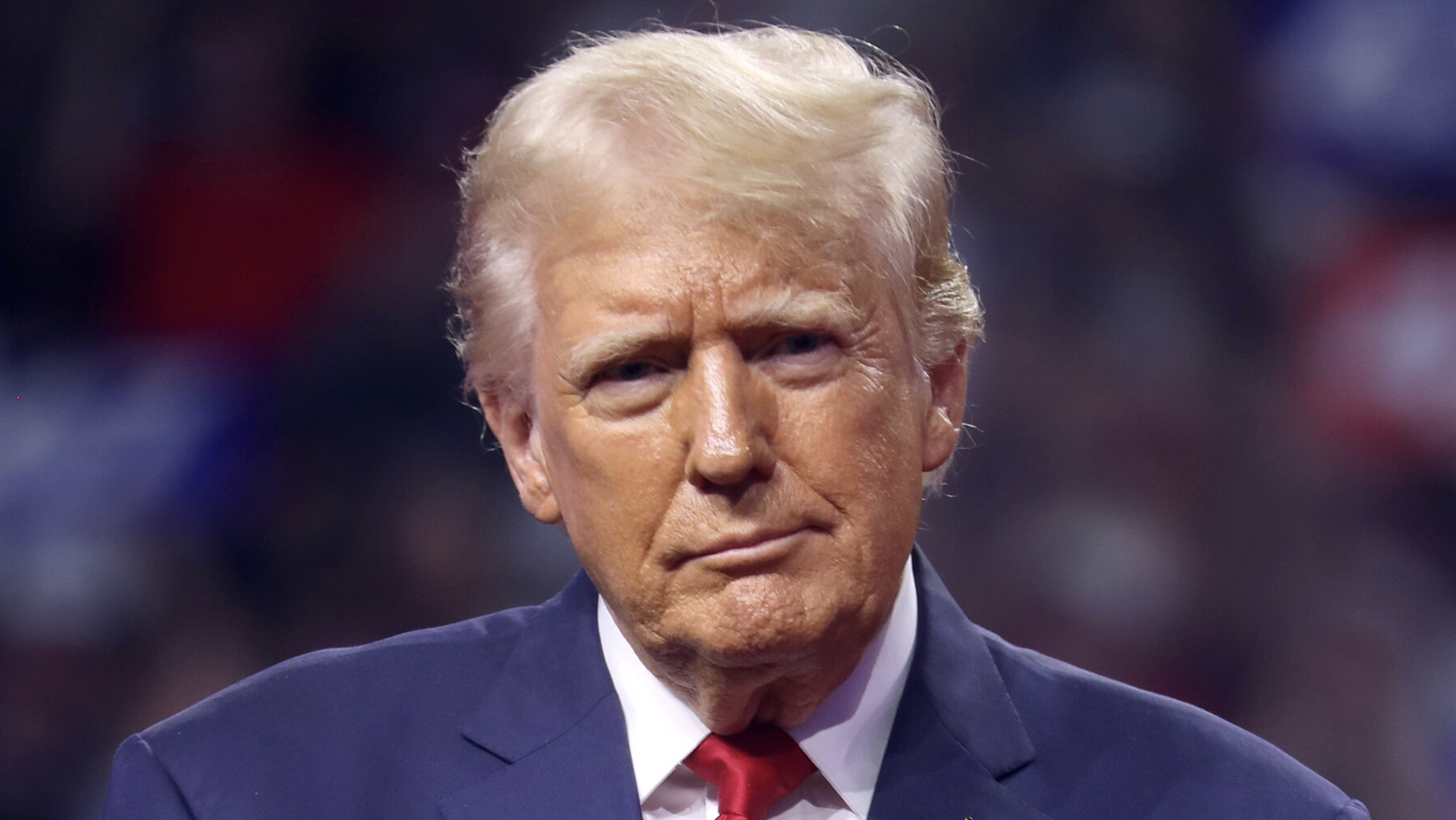
Trump revealed the shootdown in a social media post hours after U.S. Central Command said it was investigating the incident. “I have just been informed by our Great Military that last night the Iranians shot down one of our highly sophisticated Apache Helicopters while patrolling over the Strait of Hormuz,” the president wrote. “There were two pilots involved, both are safe and uninjured. Nevertheless, the United States must, of necessity, respond to this attack.” Trump later told The Wall Street Journal that the incident “wasn’t a big deal” and stressed that “the pilot is fine,” though CENTCOM’s more cautious assessment characterized the two soldiers as being in stable condition rather than uninjured.
CENTCOM Confirms Strikes Begin at 5 P.M. ET
Hours after Trump’s public announcement, the U.S. military moved to act. U.S. forces launched what officials described as “self-defense strikes” against Iranian targets on Tuesday evening after the Army Apache helicopter was shot down, according to U.S. Central Command. “The mission is a proportional response to unjustified Iranian aggression,” CENTCOM wrote on X, adding that the military operation began at approximately 5 p.m. ET at Trump’s direction. Explosions were reported in the southern Iranian city of Sirik as the U.S. military confirmed the strikes.
Iran Denies Responsibility, Warns Foreign Forces
Iran did not formally claim or deny responsibility for the Apache’s downing. Iran’s Foreign Minister Abbas Araqchi called on U.S. forces to withdraw from the region, saying, “The Strait of Hormuz is NOT international waters but shared between Iran and Oman, and located thousands of miles away from US shores. Maritime boundaries are crystal clear. Our Powerful Armed Forces are on constant alert for any violation of Iran’s airspace, land or waters.” Iranian media appeared to acknowledge the incident, with the semi-official Mehr News Agency reporting that no claim of responsibility had been made by Iran, and the Revolutionary Guard had yet to issue a statement.
Peace Deal Prospects Complicated Further
Trump said late Monday night, after leaving an NBA Finals game in New York City, that the two sides were in the final stages of a “very, very good deal” that would stop Iran from getting nuclear weapons and fully reopen the Hormuz Strait “immediately upon signing.” Such a deal could be signed “in two or three days,” Trump added. But he has repeatedly claimed throughout the war, which crossed the 100-day mark on Sunday, that the U.S. and Iran were on the cusp of signing a deal. No deal has emerged. Trump has said any peace deal must ensure Iran cannot develop a nuclear weapon, while Iran’s demands include the lifting of international sanctions, the release of billions of dollars in frozen assets, and formal recognition of its control of the strait.
The Hormuz Chokepoint
The Strait of Hormuz remains at the center of the conflict’s economic stakes. Before the war, the strait carried approximately a fifth of the world’s crude oil and liquefied natural gas. Iran has maintained a stranglehold on the strait while Washington has imposed its own blockade of Iranian ports. U.S. Energy Secretary Chris Wright said on Tuesday that ship traffic through Hormuz is rising “very meaningfully,” but cautioned it would take many months to return to normal energy flows once the war concludes.
Israel Strikes Tyre, Lebanon Conflict Deepens
In a parallel front, a fragile ceasefire between Israel and Iran appeared to be holding Tuesday after a dramatic escalation Sunday into Monday, with the two countries trading strikes. Israel simultaneously struck the historic port city of Tyre in southern Lebanon, killing at least eight people — the deadliest strike on the city since fighting erupted in Lebanon in early March when Hezbollah launched rockets at Israel. Israel has maintained that its Lebanon campaign should be treated separately from any U.S.-Iranian ceasefire, a position that has hindered Trump’s broader peace efforts, as Tehran has long insisted that any deal with Washington must include an end to the fighting in Lebanon.
Trump Warns Netanyahu
The Lebanese front has drawn direct warnings from Trump himself. Trump told Axios on Monday that he warned Israeli Prime Minister Benjamin Netanyahu against returning to war with Iran, saying, “I said, ‘Bibi, you better be careful, or you will be on your own very soon.'” Despite that warning, Israel has not halted its Lebanon campaign, which has killed thousands of people since it began. Hezbollah has also continued its attacks, and in northern Israel on Tuesday, Israeli troops operating near Lebanon’s border killed one person after coming under fire, the military said.
A Conflict Past the 100-Day Mark
The broader conflict, which passed the 100-day mark on Sunday, shows little sign of resolution despite repeated claims from Washington of imminent breakthroughs. Iran and Israel exchanged airstrikes earlier in the week, killing two people in Tehran, before both sides stepped back from the immediate exchange. The price of oil fell and markets recovered amid the pause in fighting, though analysts remain cautious about the durability of any lull. With a downed American helicopter, fresh U.S. military strikes, and no signed agreement, the path toward a durable settlement remains as uncertain as at any point since a tenuous ceasefire took effect in early April.