
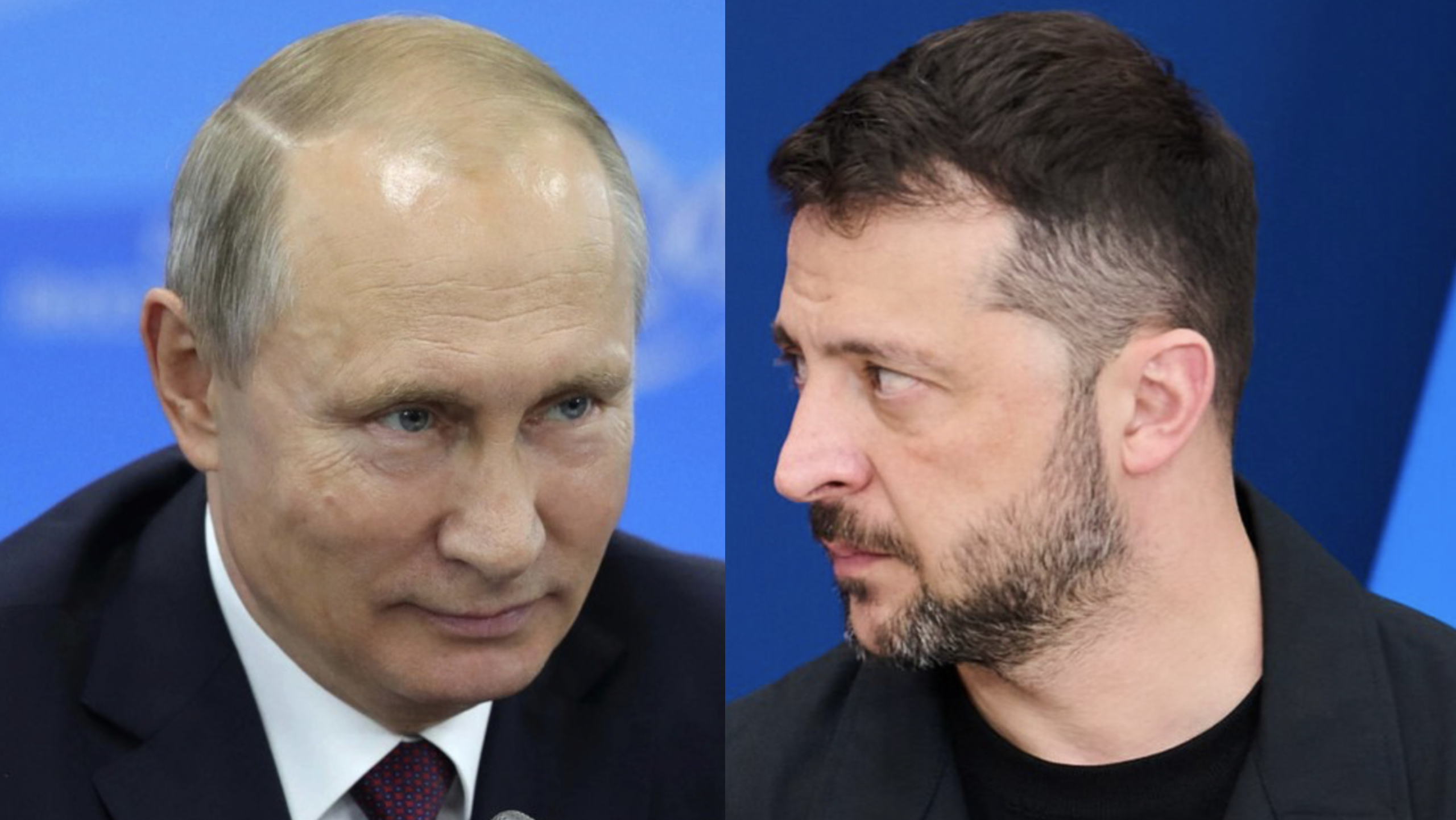
Vladimir Putin arrived at Russia’s premier annual economic showcase in St. Petersburg on Friday having already been handed the most direct diplomatic challenge of the war: a lengthy, deeply personal open letter from Ukrainian President Volodymyr Zelenskyy proposing a face-to-face summit, a full ceasefire for the duration of negotiations, and an all-for-all prisoner of war exchange. Putin’s answer, delivered on stage before an audience of global business and political leaders, was unambiguous. Asked whether he would meet the Ukrainian leader, Putin said: “I don’t see any point for now.”
The dismissal came at the plenary session of the 29th St. Petersburg International Economic Forum — the so-called “Russian Davos” — held under the theme “Pragmatic Dialogue: the Path to a Stable Future.” Speaking at the flagship annual event, Putin said he saw “no point in meeting” Zelenskyy and added: “First, let experts work, work something out, and then we can meet to sign things.” The remark reflected a position Putin has maintained throughout the war: that a leaders’ summit should come only at the final stage of a process, not as its starting point.
The Letter That Arrived on the Eve of Russia’s Economic Showcase
Zelenskyy published his open letter on Thursday, June 4, simultaneously on his official X account and on the website of the Office of the President of Ukraine. It was addressed directly and personally to Putin, proposing a meeting in a neutral third country — specifically naming Switzerland, Türkiye, or the Arab world — and offered to begin with a full ceasefire along the current front line for the duration of any negotiations. Zelenskyy also called for an immediate all-for-all exchange of prisoners of war, framing the gesture as a natural “prologue to ending the war.” The letter was sent via diplomatic channels to Russia as well as to countries including the United States, and was published in full on the Ukrainian president’s website.
The Drone Strike Context
The timing of the letter was deliberate and unmistakable. One day before Zelenskyy published it, Ukrainian long-range drones struck an oil terminal in St. Petersburg and set it ablaze — in the same city hosting Putin’s forum, and in the same city where Putin was born. Zelenskyy opened the letter by making that connection explicit, writing to Putin directly: “Now, the overwhelming majority of Ukrainians view it positively that our long-range drones paid a visit to the opening of your forum in St. Petersburg, covering a distance of more than 1,000 kilometers. As you know very well, that distance is not the limit of our capabilities.” Putin, for his part, acknowledged the drone threat at the forum, saying of Ukrainian strikes that had reached deep into Russia: “To our regret, some of them break through.”
Putin Calls the Letter Rude and Insincere
Putin did not limit his response to the question of whether he would meet Zelenskyy. He also assessed the letter itself, telling the audience he found it hostile in tone. “This letter contains some rather rude remarks,” Putin said. “Was it a way to create the conditions for a face-to-face meeting or a way not to set up a face-to-face meeting? I think it was the second.” The Kremlin leader’s characterization framed Zelenskyy’s proposal not as a genuine diplomatic overture but as a public relations maneuver designed to place the blame for the absence of talks on Moscow. Russian nationalists had similarly dismissed Zelenskyy’s letter earlier on Friday as a publicity stunt designed to stir up discontent inside Russia rather than end the war.
Zelenskyy Had Anticipated the Moscow Offer
Zelenskyy appeared to have anticipated exactly how Moscow would respond. The Kremlin’s initial reaction on Thursday evening — before Putin had even been formally shown the letter — was to say that Zelenskyy was welcome to come to Moscow. Kremlin spokesman Dmitry Peskov was quoted by state media as saying, “Zelensky can come at any time to Moscow.” Zelenskyy addressed that offer directly in the letter, writing: “After these 26 years, there is nothing for a Ukrainian leader to do in your capital — just as there is nothing for a Russian leader to do in Kyiv,” making clear that a meeting on Russian soil was not on the table. Putin has maintained throughout the conflict that he would only meet Zelenskyy to finalize an already agreed deal, rejecting calls for a summit before that stage.
A Sweeping Indictment Across Thousands of Words
The letter itself was among the most extensive and pointed documents Zelenskyy has ever directed at Putin personally. It argued that Russia’s military position is deteriorating steadily, citing battlefield casualty figures Zelenskyy said Ukraine has confirmed with video evidence — more than 30,000 Russian soldiers killed and seriously wounded in May alone, at a killed-to-wounded ratio of 63 to 37 percent that he called unsustainable for any 21st-century army. He charged that Russia had been reduced to an unprecedented dependency on North Korea and China, writing that Putin was “the first ruler of Russia to turn to Pyongyang for assistance” and was now “fully dependent on China — also for the first time in Russia’s history.”
The Age Remark and Putin’s Response
Among the letter’s more striking passages, Zelenskyy wrote that “after 26 years in power, age is beginning to take its toll” on Putin and that “with time, the fatigue with you will only grow.” Putin, who is 72, addressed the remark at the forum. He said “the most important thing is whether you are capable of functioning properly, doing your job properly,” and noted that some of his colleagues and other political figures were older than him. The exchange illustrated the degree to which Zelenskyy’s letter was designed as much for an international and Russian domestic audience as for Putin himself.
Hardline Stance the Day Before
Putin’s refusal to meet Zelenskyy was consistent with the posture he had projected in the 24 hours preceding the forum’s plenary session. In a meeting with international media at the forum on Thursday, one day before his stage remarks, Putin reiterated that Russian forces were advancing on the battlefield every day. He did not soften that position upon receiving Zelenskyy’s letter. He did, however, acknowledge U.S. President Donald Trump’s peace efforts, saying Trump’s proposals could end the fighting — but only if Kyiv was ready to compromise. Russia has maintained throughout the war that Ukraine must abandon its hopes of joining NATO, agree to a reduced standing military, and make major land concessions. Both sides continue to accuse the other of refusing to come to the table on meaningful terms.
Trump Weighs In From Washington
The United States reaction was notably more encouraging of direct contact between the two leaders. When asked about Zelenskyy’s letter while taking questions in the Oval Office, President Donald Trump said: “I’m glad that they’re maybe talking about meeting. I think we had a lot to do with it,” and added, “I think it would be great if they met. They should — get it done.” Trump also said he was grateful to Putin for his efforts regarding the war but acknowledged there was “work to do.” U.S.-led diplomatic efforts, which had accelerated following Trump’s inauguration in January 2025, have appeared to stall significantly since the American and Israeli strikes on Iran in late February of this year.
Zelenskyy’s Vision for a Peace Framework
In the letter, Zelenskyy laid out a specific vision for how any peace process should be structured, insisting that European nations — not just the United States — must be at the table as genuine security guarantors. He wrote that “since the war is taking place in Europe, and since Ukraine needs security guarantees, while you also seek security guarantees for yourself, it would be logical to involve those who can genuinely serve as guarantors.” He also directly referenced the Alaska talks — believed to refer to Trump-era diplomacy conducted in Anchorage — writing that “Ukrainian and European issues are not decided in Anchorage.” The letter explicitly rejected the model of indirect shuttle diplomacy, arguing that a direct face-to-face summit was the only format that could produce a durable agreement, citing the failure of the Minsk accords as evidence.
The Backdrop: A War Now in Its Fifth Year
Zelenskyy’s letter and Putin’s rejection of it arrive with the conflict now deep into its fifth year, with front lines dominated by drone warfare that have barely shifted while both militaries absorb enormous losses. The Russian military has continued to launch large-scale attacks on Ukrainian cities. The most recent major bombardment, on June 2, was described by Ukrainians as among the most intense they have endured in years of warfare — six people were killed in Kyiv, 16 were killed in Dnipro, and dozens more were wounded. On Thursday alone, at least 12 people were killed and dozens more injured in Russian attacks across Ukraine, according to Ukrainian authorities.
Zelenskyy Acknowledges the Shift in U.S. Focus
One of the more revealing elements of the letter was Zelenskyy’s direct acknowledgment that Washington’s attention has shifted away from Ukraine. Writing that “the United States is fully focused on the issue of Iran, and it would be wrong to simply wait until the war in Europe returns to the center of its attention,” Zelenskyy framed Ukraine’s diplomatic push as a self-driven initiative rather than one dependent on American mediation. The framing carried a clear message: Kyiv intends to push toward a resolution on its own terms, with or without the United States in the lead. Ukraine has rejected all calls to cede territory to Russia, especially land it has not completely lost to Russian troops during the course of the war.
“Ukraine Will Continue Fighting for Its Existence”
Zelenskyy closed his letter not with an appeal but with a warning, writing directly to Putin: “If you do not personally come to the conclusion that it is time to end this war, Ukraine will continue fighting for its existence. We will have those who support us. But you, too, will have to fight much harder for your own existence — not Russia’s, but your own. And this is not a threat from me or from Ukraine. It is a fact of Russian history that you know well: when Russia grows tired, change comes.” With Putin’s dismissal at the St. Petersburg forum now on the record, and U.S. diplomatic bandwidth stretched thin by the Iran conflict, the question of whether any path toward direct negotiations exists — or whether the war simply grinds forward into 2027 as Zelenskyy’s own intelligence assessments suggest Putin is planning — now stands as one of the most consequential open questions of the conflict.