
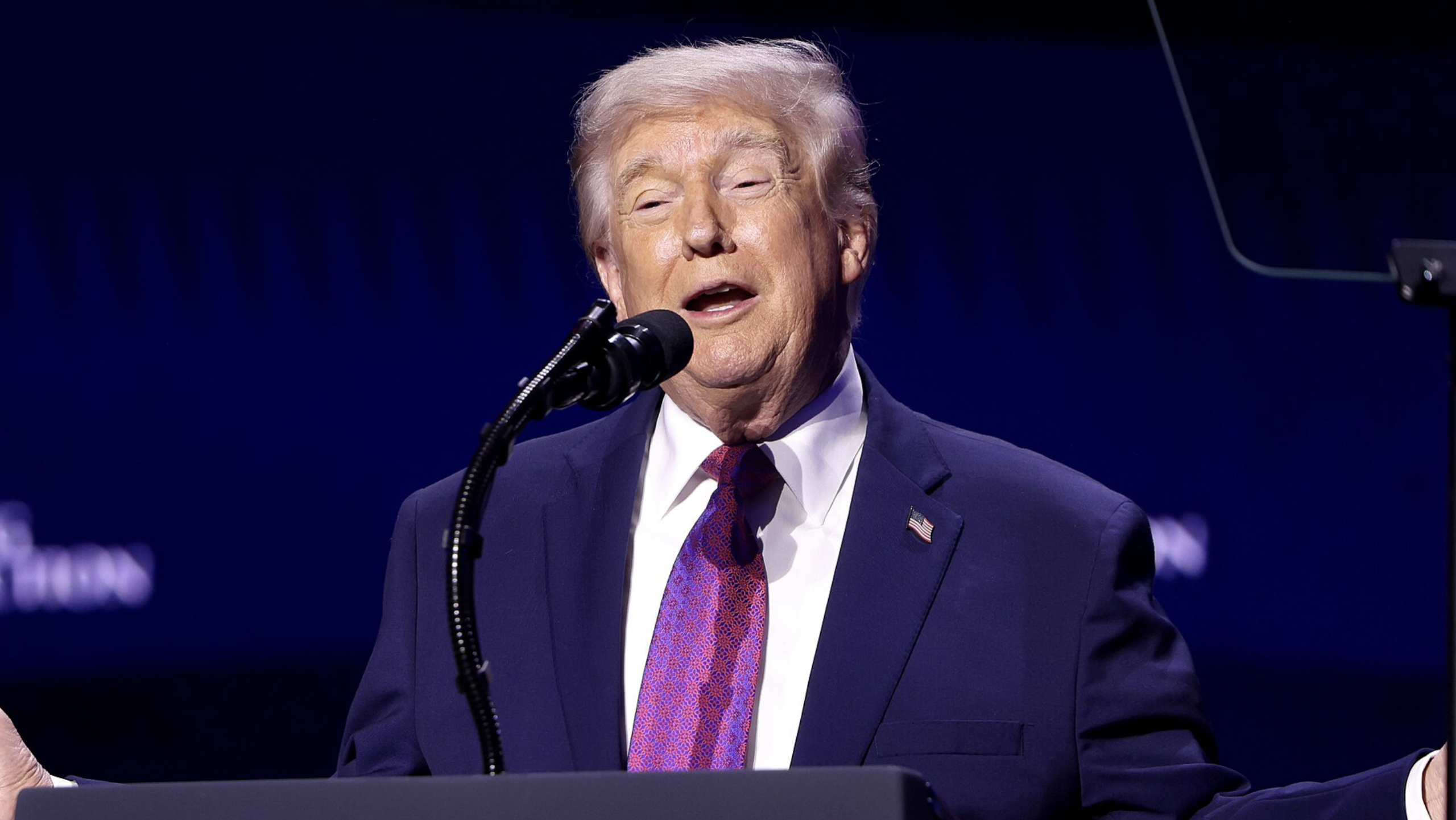
President Donald Trump announced Monday that he had personally brokered a halt to hostilities between Israel and Hezbollah, claiming in a Truth Social post that direct phone calls with Israeli Prime Minister Benjamin Netanyahu and indirect communications with Hezbollah representatives had pulled the region back from the brink of a major new escalation — all while Iranian ballistic missiles were being shot down over Kuwait and thousands of civilians were fleeing Beirut in fear of imminent bombardment.
“I had a conversation with Bibi Netanyahu today, asking him not to go into a major raid of Beirut, Lebanon. He turned his Troops around. Thank you Bibi!” Trump wrote on June 1, 2026. “I also had a conversation with Representatives of the Leaders of Hezbollah, and they agreed to stop shooting at Israel, and its soldiers. Likewise, Israel agreed to stop shooting at them. Let’s see how long that lasts — Hopefully it will be for ETERNITY!”
A Day of Cascading Threats
The announcement came at the end of one of the most volatile days in the broader regional conflict that has engulfed the Middle East since U.S. and Israeli forces began military operations against Iran in February. The day had opened with stark warnings from multiple directions. Israeli Prime Minister Benjamin Netanyahu had ordered strikes on Hezbollah-controlled areas in the southern suburbs of Beirut, known as Dahiya, after the Iran-backed group launched more than 20 attacks on Israeli military targets on Sunday and Monday, including rockets and missiles aimed at several Israeli cities. Netanyahu had stated plainly: “There will be no situation in which Hezbollah attacks our cities and our citizens, and its terrorist headquarters in Beirut, in Dahiya, will remain out of bounds.”
Netanyahu’s Response and the Limits of the Deal
At the same time, the United States military intercepted two Iranian ballistic missiles targeting American forces based in Kuwait, U.S. Central Command announced Monday morning. The interception occurred at 11 p.m. Sunday with no American personnel harmed. “U.S. Central Command remains vigilant and will continue to protect our forces from Iranian aggression while supporting the ongoing ceasefire,” the military command posted on X.
Despite Trump’s announcement, Netanyahu’s subsequent public statement struck a more cautious tone. Rather than confirming a new ceasefire outright, the Israeli prime minister said he had told Trump that “if Hezbollah doesn’t cease its attacks on our cities and civilians — Israel will strike terror targets in Beirut,” and added that “this position of ours remains.” He further stated that the Israeli military “will continue to operate as planned in southern Lebanon.” The statement, which came roughly two hours after Trump’s post, reinforced the perception among Israeli officials that the arrangement had been shaped heavily by Washington’s influence. Two Israeli officials told Reuters that Israel would be waiting for Trump’s final approval before any operation in Beirut’s southern suburbs.
Lebanon and Hezbollah Signal Acceptance
Lebanon’s embassy in Washington said in a statement Monday that Hezbollah had accepted a U.S. proposal for a mutual cessation of hostilities that would be extended to encompass all Lebanese territory. The statement, shared by the Lebanese presidency, said the arrangement would first see Israel refrain from striking Beirut’s southern suburbs in exchange for Iran-backed Hezbollah halting its attacks against Israel. Hezbollah itself did not immediately issue a formal public statement on Trump’s announcement, but Hezbollah lawmaker Hassan Fadlallah told the group’s Al-Manar broadcaster that Hezbollah would support a full ceasefire across all Lebanon as a precursor to the withdrawal of Israeli troops, and said the group would watch whether a cessation of hostilities took hold in the coming days.
Parliament Speaker Nabih Berri, a prominent Lebanese politician who has acted as an intermediary between Hezbollah and the United States, also signaled Hezbollah’s readiness. Berri’s top advisor Ali Hamdan confirmed that Berri had informed Trump’s administration of Hezbollah’s readiness for a ceasefire with Israel and that it had promised to guarantee that it would be implemented.
Iran’s Threat to Talks and the Strait of Hormuz
Adding to the day’s volatility, Iran moved to complicate the broader diplomatic picture. Iranian state media outlet Tasnim News Agency reported that Iran’s negotiating team would halt all diplomatic communications with U.S. negotiators until Israel ceases operations in Lebanon and Gaza. Iranian Foreign Minister Abbas Araghchi had argued on social media that the existing ceasefire framework between Iran and the United States already covered Lebanon: “The cease-fire between Iran and the U.S. is unequivocally a cease-fire on all fronts, including in Lebanon.” Iran’s semiofficial Tasnim News Agency, which is affiliated with the Islamic Revolutionary Guard Corps, also reported that Tehran would seek to close the Strait of Hormuz in response to Israeli military actions, sending oil prices surging — though comments from senior Iranian officials on social media did not indicate any imminent move to withdraw from peace talks with Washington.
Trump Pushes Back, Says Talks Are Continuing
Trump addressed the Iranian threat to negotiations directly, posting on Truth Social that talks with Iran were continuing and urging critics to stand down. “Just sit back and relax, it will all work out well in the end — It always does!” he wrote in an earlier Monday post, claiming that Iran “really wants” a deal and suggesting that pressure from both Republicans and Democrats had complicated the negotiating process. Trump has repeatedly framed the ongoing U.S.-Iran conflict, which began in February, as one he intends to end through diplomacy, and has claimed that American military operations have significantly degraded Iran’s capabilities — a characterization that U.S. intelligence assessments have not fully supported, noting Iran still retains significant missile stockpiles.
Thousands Flee Beirut
On the ground in Lebanon, the day’s events had already driven mass displacement before Trump’s announcement brought any relief. Thousands of civilians fled Beirut’s southern suburbs, where Israeli bombardment had been threatened. The kinetic exchanges between the U.S. and Iran came as Israel ramped up its military offensive in Lebanon, adding to a near-constant cycle of evacuation that residents of Dahiya have been forced to endure for nearly three years of conflict. Lebanon’s President Joseph Aoun addressed the diplomatic effort: “Some regrettably consider negotiation to be surrender. It is not that, nor is it a concession. It is a solution to stop wars with the least possible harm.”
The Fragile History Behind the Deal
While the U.S. had brokered a ceasefire in Lebanon in April that had been extended several times, Israel and Hezbollah had continued to exchange daily fire during that period, while the Israeli military largely refrained from targeting Beirut at Washington’s request. The latest Israel-Hezbollah war escalated in March, after Hezbollah began firing on Israel in solidarity with Iran, days after U.S. and Israeli forces began bombing Iran. The United Nations Security Council called an emergency session to discuss Lebanon on Monday afternoon, underscoring the international alarm at how quickly the situation had deteriorated and how close the region had come to a major new front opening in Beirut itself.
A Self-Described Diplomatic Win
Monday’s events represent one of the most public displays of Trump’s personal style of conflict diplomacy — direct phone calls, public credit-taking, and an unambiguous sense of urgency telegraphed through social media. The Truth Social post, signed “President DONALD J. TRUMP,” framed the outcome as a product of personal relationships and direct negotiation. Whether the arrangement holds, or joins the long list of prior Lebanon ceasefires that have collapsed under renewed fire, remains to be seen. As Trump himself acknowledged: “Let’s see how long that lasts.”