
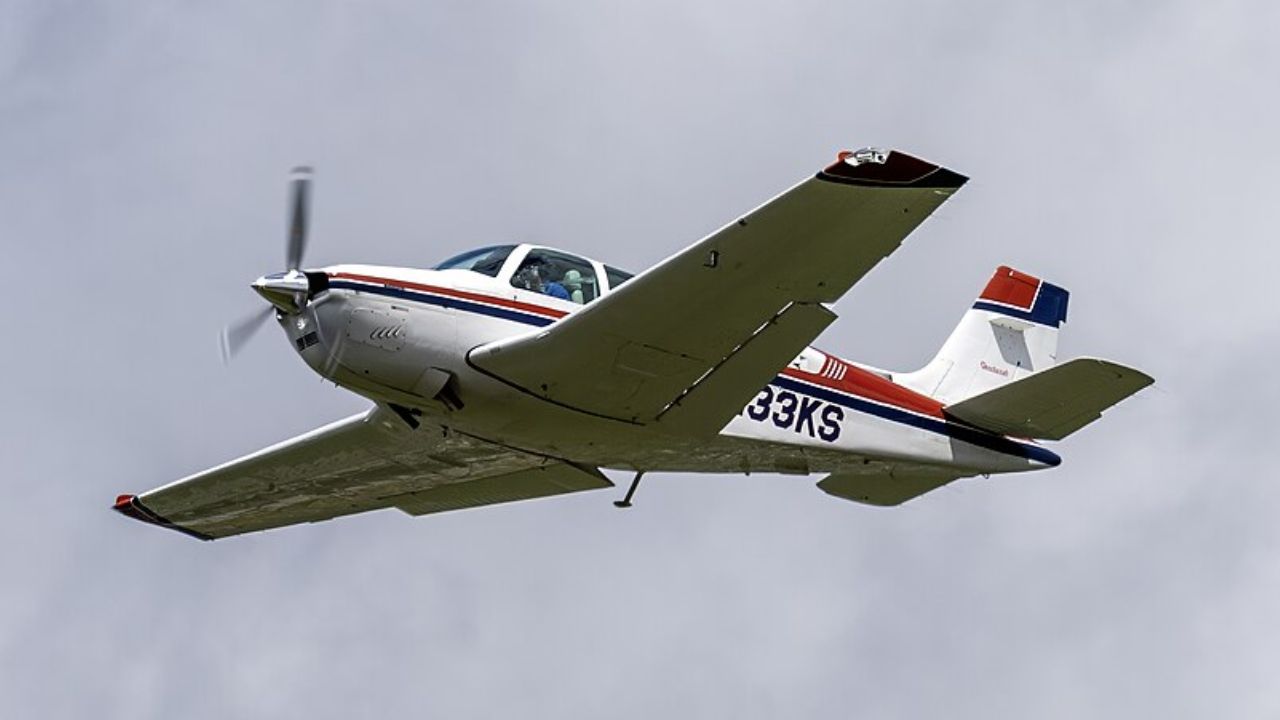
Some airplanes make headlines with speed records, celebrity owners, or flashy new tech. The Beechcraft Bonanza did something sneakier: it just kept showing up, year after year, decade after decade, carrying families, business travelers, and weekend pilots with a steady, confident competence. In an industry that loves reinvention, the Bonanza’s biggest flex might be simple longevity.
First introduced in the immediate post–World War II boom, the Bonanza became a symbol of modern personal aviation—sleek, fast for its class, and comfortable enough that you didn’t feel like you were commuting in a lawn chair. And while plenty of competitors came and went, the Bonanza kept evolving without ever losing its basic identity. Quietly, it turned into one of the longest-running production lines in general aviation.
A postwar airplane with big ambitions
When Beechcraft brought the Bonanza to market in 1947, the timing was perfect. Thousands of newly trained pilots were coming home, and American industry was ready to sell them something better than the rugged trainers they’d flown in uniform. The Bonanza was pitched as a high-performance, personal traveling machine—an airplane you could actually use to go places, not just circle the local airport.
It also looked the part. Early Bonanzas were clean and modern, and they didn’t hide their ambition under boxy shapes or bargain-basement interiors. In a world where a lot of private planes still felt like utilitarian gear, the Bonanza felt a little bit like a sports sedan with wings.
The V-tail that became a calling card
Ask almost anyone to picture a classic Bonanza and they’ll probably imagine the V-tail. Officially, it was a design choice aimed at reducing drag and smoothing out the airplane’s lines, but culturally it became something more: a signature. It was distinctive enough that you could spot it on a ramp and know immediately what you were looking at.
Of course, the story of the V-tail also includes a lot of hangar-talk folklore—some of it fair, some of it overcooked. Like any aircraft, it demanded proper training, correct loading, and disciplined maintenance. Over time, Beechcraft refined the line, and later variants would move to conventional tail designs, but the V-tail era cemented the Bonanza’s place in aviation imagination.
Why it lasted when others didn’t
There’s no single trick to staying in production for generations, but the Bonanza had a few advantages that compounded over time. The airframe offered a blend of speed, range, and comfort that hit a sweet spot for owners who wanted serious travel capability without stepping up into twins or turboprops. It could be used as a practical tool, not just a hobby.
Beechcraft also treated the Bonanza like a platform rather than a one-and-done product. Updates arrived in ways that mattered to pilots—improved systems, avionics, useful comfort upgrades—without turning the airplane into a totally different machine every few years. It’s the aviation equivalent of a long-running car model that keeps getting better brakes and smarter dashboards while still feeling familiar behind the wheel.
A reputation built on real-world traveling
What made the Bonanza beloved wasn’t just the spec sheet; it was the way it fit into people’s lives. Owners used them for business hops between small airports, family trips that skipped airline schedules, and those “we can make it home tonight” dashes that only a capable personal airplane can pull off. If you talk to longtime pilots, you’ll hear the same theme: the Bonanza is a traveling airplane, not a compromise.
It also developed an ecosystem—maintenance expertise, parts support, training pathways, owner communities—that reinforced its staying power. When an airplane becomes common enough, it gets easier to keep it flying, which makes it more attractive to buy, which makes it even more common. It’s a virtuous cycle, and the Bonanza has been riding it for a long time.
The straight-tail era and the modern Bonanza identity
While the V-tail grabs attention, the Bonanza story doesn’t end there. Beechcraft introduced straight-tail versions that broadened the line and gave buyers another option, and those models helped carry the Bonanza name into more modern eras of regulation, avionics, and customer expectations. Over the years, the airplane’s “feel” stayed recognizable even as the details changed.
Today’s Bonanza wears modern glass avionics and benefits from decades of incremental engineering. But it’s still fundamentally a comfortable, high-performance single-engine airplane built for people who want to go places. That continuity is part of what makes the design such an outlier in an industry where product lines often disappear or get rebooted under new names.
Not just an airplane, but a yardstick
In general aviation, the Bonanza became a benchmark—an airplane other manufacturers had to account for when they pitched new high-end singles. It wasn’t always the cheapest or the simplest, but it represented a certain promise: solid build quality, respectable speed, and a cabin that didn’t punish you for being human-shaped. When people debated what “serious personal airplane” meant, the Bonanza was usually in the conversation.
That status also means it shows up in pilot aspirations. Plenty of aviators learn in basic trainers, rent for years, and keep a mental list of “someday” airplanes; the Bonanza has lived on that list for generations. It’s not rare in the way exotic aircraft are rare, but it carries a kind of prestige that’s earned rather than advertised.
Longevity in aviation is never automatic
Keeping any aircraft design alive across decades isn’t just a matter of nostalgia. Regulations change, materials and manufacturing evolve, and buyers expect new safety features and modern cockpit technology. For a manufacturer, it’s often simpler to start over with a clean-sheet design—until you remember that clean-sheet designs cost a fortune, take ages, and don’t always win the market’s trust.
The Bonanza benefited from something that’s hard to manufacture on purpose: accumulated confidence. Pilots knew how it handled, mechanics knew how to maintain it, and the airplane had a long history of doing ordinary missions reliably. That kind of trust is like compound interest; it builds quietly, then suddenly it’s a major reason the product still exists.
A quiet success story that keeps flying
The Bonanza’s endurance isn’t about a single headline moment. It’s about thousands of routine flights that went right: business meetings made on time, family vacations that started at a local runway, sunset trips that reminded someone why they learned to fly in the first place. The airplane didn’t need to be loud about its achievements, because its owners did the talking every time they kept choosing it.
In the end, the Bonanza’s story feels almost unglamorous—until you realize that staying useful for this long is the glamorous part. Aviation is full of brilliant designs that flashed and faded. The Bonanza just kept going, which might be the most impressive performance metric of all.