
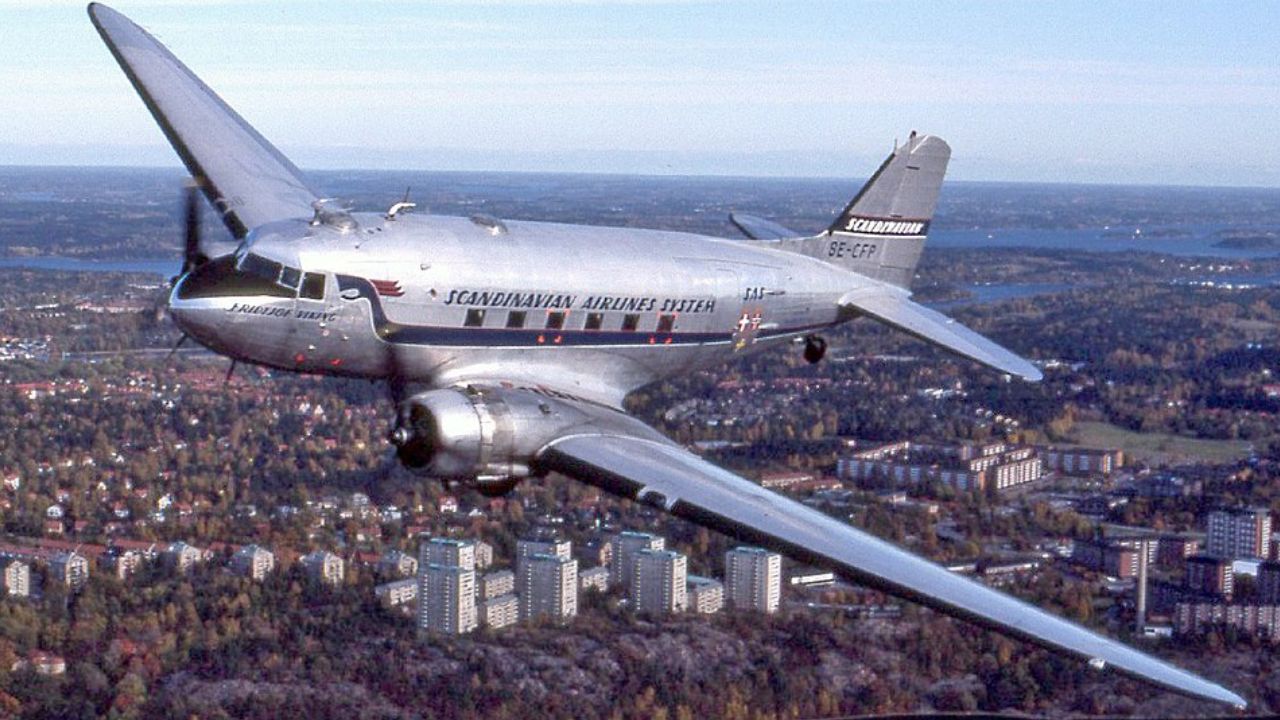
There are airplanes that have a moment, and then there are airplanes that refuse to leave. The Douglas DC-3 is firmly in the second camp, a machine that first flew in the 1930s and still shows up today in corners of the world where reliability matters more than glamour. While plenty of rivals came and went with shinier specs, the DC-3 kept doing the job—often in places with rough runways, limited tools, and no patience for drama.
Ask pilots, mechanics, or aviation historians why it lasted, and you’ll hear a lot of answers. But they tend to circle back to the same theme: this airplane was built like it expected to be worked hard. And it was right.
A tough airframe that didn’t mind getting used
The DC-3’s basic structure is a big part of the story. It wasn’t designed as a delicate showpiece; it was designed to haul people and cargo day after day, with the kind of repetitive stress that quietly ruins lesser machines. Strong wings, a sturdy fuselage, and a layout that could take punishment gave it a reputation for being “forgiving,” even when operated far from ideal conditions.
That durability mattered because the airplane quickly found itself everywhere—airlines, militaries, remote outposts, and cargo operators. Not every landing was smooth, not every runway was paved, and not every maintenance hangar had perfect lighting and every specialty tool. The DC-3’s heavy-duty approach gave it margin, and margin is what keeps aircraft in service long after trends move on.
Designed for real-world maintenance, not just the brochure
Longevity isn’t just about surviving flight loads; it’s also about being easy to keep flying. The DC-3 earned a kind of blue-collar respect because mechanics could actually work on it without needing a small army of computers or rare parts shipped from across the planet. When something needed attention, it was generally accessible and understandable, which sounds boring until you’re stranded somewhere remote with cargo that must move today.
That practicality created a feedback loop. Operators liked the airplane because it was maintainable, so more DC-3s stayed in service, so parts networks and expertise stayed alive, so it remained maintainable. Plenty of competitors were technically impressive, but if they were harder to support, they aged out faster.
Powerplants built for grit and routine
The DC-3’s classic twin radial engines weren’t just powerful for their time; they were also well-suited to the maintenance culture of the mid-20th century. Radials have their quirks—oil stains are practically part of the aesthetic—but they were widely understood and supported for decades. For operators, that meant predictable upkeep and a strong chance of finding someone who knew the engine’s personality.
It also meant the DC-3 could keep working even as aviation moved through waves of change. As newer aircraft arrived with different systems and training requirements, the DC-3’s familiar mechanical DNA kept it approachable. In aviation, “approachable” often translates to “still earning money.”
Simple systems, fewer surprises
One reason old designs can survive is that they don’t ask for much. The DC-3 doesn’t rely on layers of complex automation to function; it leans on robust fundamentals. That simplicity reduces the number of things that can fail in weird, cascading ways—and it makes troubleshooting more straightforward when problems do show up.
Operators also appreciated that the airplane could be modified and adapted without turning into an engineering science project. Over the decades, many DC-3s were converted for cargo, fitted for specialized missions, or updated with improved avionics and safety gear. The core design had enough flexibility to keep up with changing needs without losing its identity.
It wasn’t just strong—it was useful
Durable aircraft still have to be practical, and the DC-3 nailed the basics: solid range, respectable speed for its era, and a cabin that could be configured for passengers or freight. It could move people comfortably compared with many earlier airliners, and it could carry cargo efficiently once airlines and governments realized how valuable that was. That kind of versatility is a survival trait.
The airplane also handled shorter or rougher fields better than many larger, more specialized transports that came later. That kept it relevant in remote regions where infrastructure grew slowly. When your runway is more “flattened dirt” than “airport,” rugged usefulness beats sleek performance every time.
War accelerated the legend
If the DC-3 had only been a successful civilian airliner, it might still be famous—but World War II supercharged its legacy. The military version, widely known as the C-47 and by other designations, put the design through a brutal, real-world stress test: heavy loads, fast turnarounds, harsh environments, and constant demand. It wasn’t a gentle retirement plan.
When the war ended, a huge number of these aircraft remained, along with trained crews and a global maintenance ecosystem. That post-war availability helped the DC-3 spread even further into commercial and utility roles. In a way, the DC-3 didn’t just survive the competition; it multiplied.
Competitors came with trade-offs the DC-3 avoided
Aviation innovation is relentless, and plenty of aircraft tried to outperform the DC-3 on paper. Some were faster, some carried more, and some introduced more modern systems. But speed and sophistication can come with higher operating costs, fussier maintenance, or stricter infrastructure requirements, especially in the mid-century transition period.
The DC-3 sat in a sweet spot: capable enough to be useful, rugged enough to be dependable, and economical enough to justify keeping it around. That combination is hard to beat, even if the cabin styling doesn’t scream “luxury.” It’s the aircraft equivalent of a well-made work boot: not flashy, but it’ll still be there when you need it.
Still flying because people still need what it offers
Today, the DC-3’s presence is smaller, but it’s not just a museum piece. Some aircraft still operate in cargo, special missions, and heritage flights, often maintained by teams who know the type intimately. In regions with limited infrastructure, the same traits that made it famous—toughness, adaptability, and serviceability—remain valuable.
It’s also become a symbol of an era when designers were solving problems with metal, margins, and mechanical common sense. That doesn’t mean newer aircraft aren’t brilliant—they are—but the DC-3’s staying power is a reminder that “better” isn’t always “longer-lasting.” Sometimes the winning strategy is simply being built to work, every day, for decades, without complaining too much.