
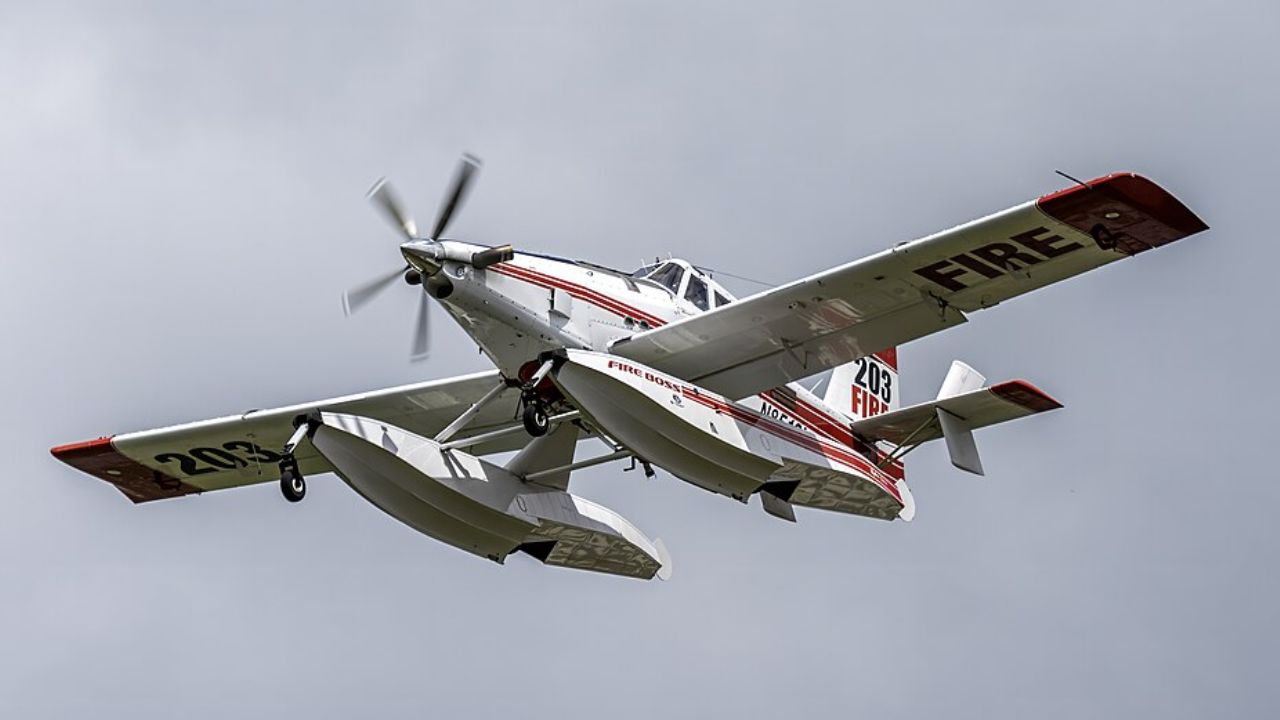
Most airplanes spend their lives doing one thing really well: carrying people, hauling cargo, or zipping around at impressive speeds while making the rest of us look slow. The Air Tractor AT-802 didn’t get that memo. It built a reputation by showing up to the kinds of missions that make other aircraft politely back away and suddenly “remember” they have a scheduling conflict.
Originally born from the tough, practical world of agricultural aviation, the AT-802 grew into something much bigger. It became a workhorse for firefighting, border surveillance, and utility work in places where runways are more of a suggestion than a guarantee. If you’ve ever wondered what “blue-collar airplane” looks like, this is it.
A crop duster that refused to stay in its lane
The AT-802 is part of Air Tractor’s long line of agricultural aircraft, built for spraying fields hour after hour without drama. Farmers and operators liked it because it was simple, rugged, and made to be maintained in the real world—often far from fancy hangars. Its big hopper and no-nonsense design meant it could cover a lot of ground quickly.
Then people started noticing something: this thing wasn’t just good at farm work, it was good at “hard work.” It could lift heavy loads, handle low-level flying, and keep going in heat, dust, and turbulence that would make a more delicate airplane complain. And once you’ve got an airframe that sturdy, it’s only a matter of time before someone asks, “Could it do… this?”
Built like a pickup truck—because it basically is one
From the outside, the AT-802 looks purposeful: a big single-engine turboprop with a wide stance and a wing built to carry weight, not win beauty contests. That’s not shade—function is the whole point. It’s designed to take punishment from rough strips, repeated takeoffs and landings, and the constant cycle of load, fly, drop, repeat.
In everyday terms, the AT-802 is the aircraft equivalent of a heavy-duty pickup with a reinforced suspension and a reliable engine that doesn’t mind long days. It’s not trying to be sleek. It’s trying to show up, do the job, and be ready for another one before lunch.
Firefighting: where the AT-802 became a household name in the air
One of the AT-802’s most famous second careers is aerial firefighting, especially in the “Single Engine Air Tanker” (SEAT) role. Instead of water-bombing like a scooper or dropping massive loads like the biggest tankers, SEATs focus on fast response and precision. They’re often the first aircraft on scene, buying time before bigger resources arrive.
The AT-802 can be configured to carry a serious load of water or fire retardant for its size, and it can put that load exactly where crews need it. It’s not glamorous work. It’s low altitude, smoky visibility, hot updrafts, and tight turns near terrain—basically the aviation version of trying to thread a needle while someone’s waving a hair dryer in your face.
Fast turnaround, small runways, and “get it done” logistics
Fire operations love aircraft that can operate close to the action, and that’s where the AT-802 shines. It can work from smaller airfields and reload quickly, meaning more drops per hour when every minute matters. The math is simple: even if a plane carries less per trip, speed and proximity can win the day.
That flexibility also makes it attractive in rural regions and remote areas. You don’t always have a big tanker base nearby, and you can’t always wait for one. The AT-802 is the kind of aircraft that shows up early, stays late, and doesn’t complain about the parking situation.
Not just fires: patrol, surveillance, and “eyes in the sky” work
Another surprising niche for the AT-802 has been surveillance and patrol. With the right sensor packages, communications gear, and endurance planning, it can loiter for long stretches while carrying equipment that would overwhelm smaller airframes. The basic appeal is the same as in firefighting: it’s a stable platform, it hauls a useful load, and it can operate from places that aren’t exactly airline-friendly.
That’s led to roles like border monitoring, wildlife protection support, and general reconnaissance in regions that need a tough aircraft more than they need a fast one. It’s not trying to outrun anybody. It’s trying to stay on station, keep watch, and be affordable enough that it can fly often instead of sitting around waiting for the “perfect” mission.
A platform that invites customization
What makes the AT-802 especially adaptable is how welcoming it is to modifications. The core airframe is strong, the payload capacity is generous, and the mission profile—low and slow with lots of takeoffs and landings—pairs well with different equipment packages. Swap tanks, add sensors, adjust avionics, reinforce what needs reinforcing, and suddenly you’ve got a new tool for a new problem.
In aviation, that kind of flexibility is gold. A lot of aircraft are amazing but picky, like a high-performance sports car that hates potholes. The AT-802 is more like, “Sure, toss that gear in the back—where are we going?”
Pilots talk about it like a dependable coworker
Ask around in communities that fly these aircraft, and you’ll hear a pattern: respect. Not the “wow, look at that speed” kind, but the “this thing will bring you home” kind. Operators value predictable handling, solid performance, and systems that don’t feel fragile when the day gets ugly.
It also helps that the mission is tangible. Whether it’s protecting crops, slowing a wildfire, or supporting operations on the ground, you can see the results. There’s a certain satisfaction in flying an airplane that’s less about prestige and more about practical impact.
Why the AT-802 stands out in a world full of specialists
Aviation is full of specialists: airliners optimized for efficiency, fighters optimized for performance, business jets optimized for comfort. The AT-802 made its mark by being a generalist in the most demanding way possible. It didn’t become famous by doing easy missions in perfect weather; it got noticed by thriving in messy, time-sensitive work where conditions are rarely ideal.
And maybe that’s the secret to its reputation. The AT-802 isn’t the plane you choose because you want attention at the airport café. It’s the plane you choose when you need a tool that can handle heat, dust, weight, and urgency—and still be ready to fly again tomorrow.