
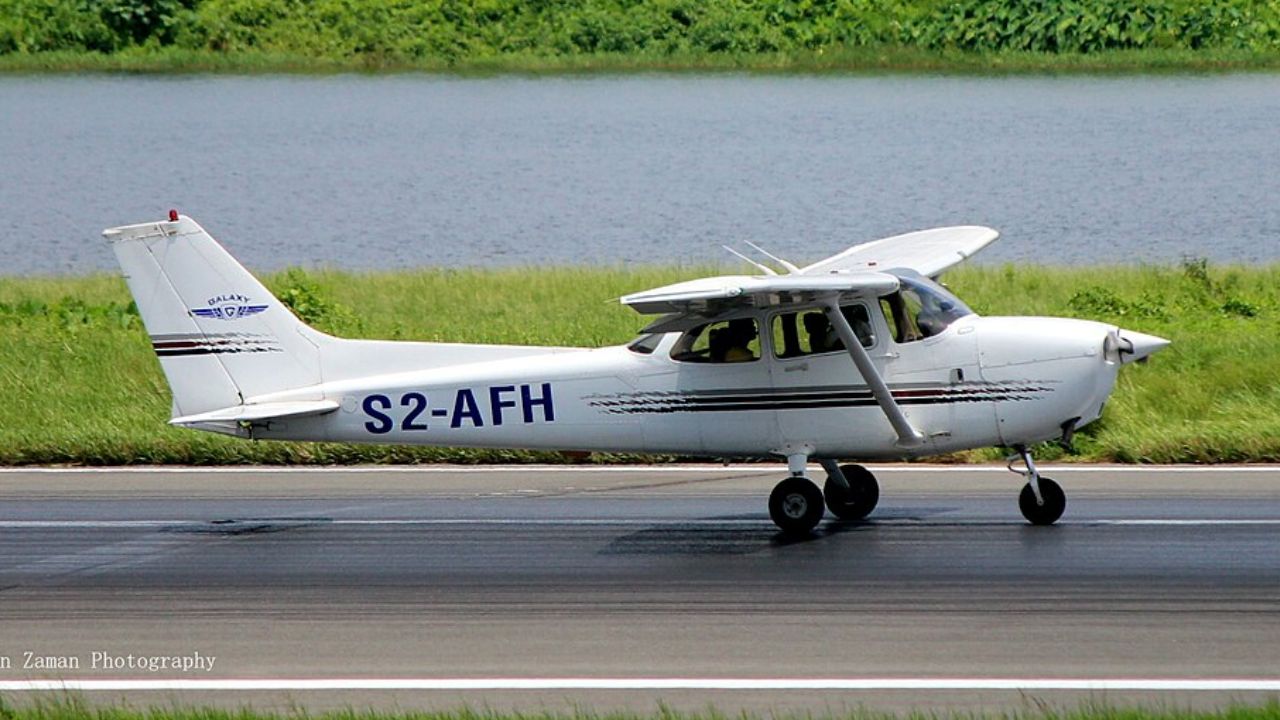
Walk onto almost any small airport and you’ll probably see one: high-wing, tricycle gear, a cabin that feels like a sensible car from a simpler era. The Cessna 172 Skyhawk isn’t flashy, and that’s kind of the point. For decades, it’s been the airplane countless pilots first trusted with the scary-fun job of leaving the ground on purpose.
Flight schools keep buying them, owners keep flying them, and mechanics keep nodding approvingly at how straightforward they are. It’s a rare aircraft that’s both a cultural icon and a daily tool, like a good pickup truck that also happens to have its own chapter in aviation history. The Skyhawk earned its reputation the slow, honest way: by showing up, starting up, and getting the job done.
A trainer that behaves like a patient instructor
The 172’s magic trick is that it doesn’t try to surprise you. Its handling is stable, predictable, and forgiving, which is exactly what you want when you’re learning to juggle airspeed, altitude, radio calls, and the sudden realization that clouds don’t come with guardrails. The high wing helps with visibility downward and offers a natural sense of “hang under the wing” stability.
That stability isn’t just comforting—it’s practical. A steady platform makes it easier to learn the fundamentals: trim, coordinated turns, slow flight, stalls, and landings that don’t feel like guessing. Students can focus on building good habits instead of wrestling the airplane like it’s trying to win an argument.
Reliability as a design philosophy, not a marketing line
The headline feature of the Skyhawk has always been reliability, and it shows in the everyday details. The airplane is simple enough to maintain without needing a wizard on staff, yet robust enough to handle the hard life of training—repeated takeoffs, imperfect landings, and hours of touch-and-goes. If airplanes had employee records, the 172 would be the one with near-perfect attendance.
Its piston engines—most commonly from the Lycoming family in many later models—are known for being durable when maintained properly. Systems are straightforward, parts are widely available, and mechanics have been seeing Skyhawks long enough that “mystery problems” are less common than in newer, rarer types. For a flight school, that predictability is money in the bank and fewer canceled lessons on the schedule.
Why flight schools fell in love (and never really stopped)
Training airplanes need to live in a weird middle ground: easy to fly, cheap-ish to run, tough, and safe. The 172 hits that balance better than almost anything else. It’s comfortable enough for longer lessons, stable enough for early students, and capable enough for cross-country flying once the basics click.
Insurance and standardization play a role, too. The Skyhawk’s track record gives schools confidence, and its familiarity makes it easier to train instructors, write syllabi, and keep operations consistent. When your business depends on predictable outcomes, “boring” starts to sound like a compliment.
A cockpit that aged with the times
Another reason the 172 stayed relevant is that it didn’t get stuck in one era. Early Skyhawks were classic “steam gauge” machines, with round dials and radios that could make you appreciate modern technology in about five minutes. Over time, the model evolved with improved avionics, better ergonomics, and updates that helped it keep pace with changing training requirements.
Many modern 172s can be found with glass cockpits, GPS navigation, and autopilots that make cross-country training more realistic for today’s airspace. That’s important because student pilots aren’t just learning to fly; they’re learning to manage information, communicate, and navigate in a system that’s increasingly tech-heavy. The 172 became a bridge between “stick and rudder” skills and real-world flying.
Safety, by the numbers and by feel
No trainer is risk-free, and flying will always demand respect. But the 172’s overall safety reputation comes from a combination of forgiving flight characteristics and the way it’s used: lots of repetition, lots of instructor oversight, and a long history of refining training practices around it. In stalls, for instance, the Skyhawk tends to give plenty of warning and behaves predictably when properly coordinated.
The high-wing design also lends itself to decent glide characteristics and a reassuring view of the world below when you’re picking out fields during emergency training. And while jokes about “the door popping open on climb-out” have been around forever, it’s also a classic training moment: fly the airplane first, then deal with the surprise. The 172 teaches priorities the way real flying does—calmly, and sometimes with a little humility.
Not fast, not fancy, and somehow that’s the point
If you measure airplanes by speed, the Skyhawk isn’t going to impress your stopwatch. But training isn’t about racing; it’s about building judgment and consistency. The 172’s modest performance gives students time to think, plan, and correct, which is a gift when you’re learning.
It’s also efficient in the ways that matter to regular people. Fuel burn is reasonable for what it does, and it can haul a couple of people and bags for weekend trips without feeling like you’re pushing the limits every time. Many pilots train in a 172 and then keep flying one because it fits real life: burgers, beaches, and the occasional “look at that sunset” detour.
Mass production and a huge support network
Part of the Skyhawk story is scale. With tens of thousands built across decades, the 172 became not just an airplane but an ecosystem. There’s a deep pool of instructors who know its quirks, mechanics who can diagnose it quickly, and owners who can find advice (and parts) without turning it into a scavenger hunt.
That network matters more than people think. It means upgrades are available, maintenance knowledge is widespread, and used-aircraft buyers aren’t stepping into the unknown. In aviation, familiarity reduces friction, and the 172 has familiarity in bulk.
A cultural icon that never stopped being useful
The Cessna 172 is one of those machines that became part of the background of general aviation. It’s the airplane in countless first-solo photos, the one parked outside flight schools in every season, and the one that quietly takes families on their first small-airplane trip. You don’t have to be an aviation nerd to recognize its silhouette, and you definitely don’t have to be one to appreciate what it did for pilot training.
Its success isn’t tied to a single breakthrough feature so much as a steady accumulation of good decisions: stable handling, simple systems, practical performance, and a design that’s tough enough for the training grind. Built for reliability, it became the default answer to a hard question: what airplane can you trust to teach people how to fly, day after day, year after year? For a lot of the world, the answer has been the Skyhawk—still humming along, still doing its job, still making pilots.