
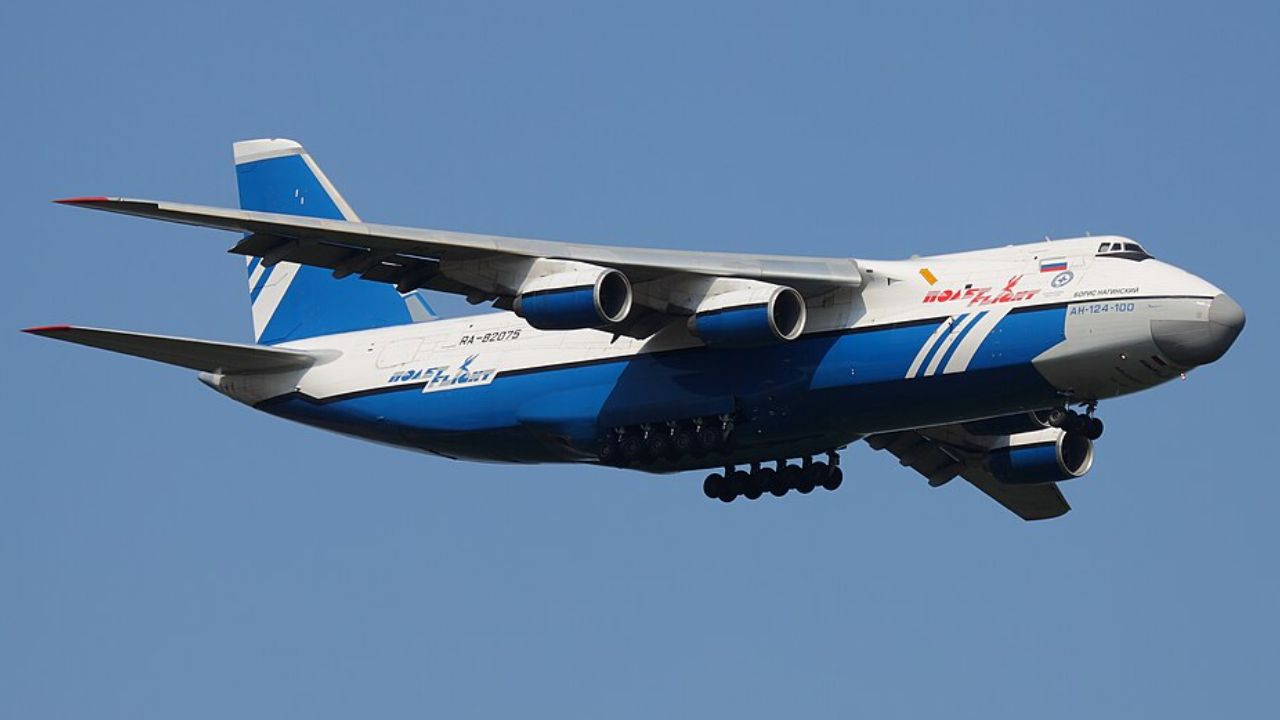
When people talk about truly gigantic airplanes, the Antonov An-124 “Ruslan” tends to come up fast. It’s not because it’s flashy or sleek. It’s because this aircraft made a career out of doing the jobs that made other cargo planes politely back away.
Over decades of service, the An-124 built its reputation the old-fashioned way: by showing up, lifting absurdly heavy payloads, and getting them where they needed to go. From emergency deliveries to industrial mega-moves, it became a familiar name to anyone who’s ever had to ship something that doesn’t fit on a normal plane—or a normal road.
A cargo plane that looks like it means business
The An-124 is hard to miss. It’s enormous, with a tall T-tail, a chunky fuselage, and a nose that can swing open like a giant hinged lid. If you’ve ever seen one parked on the ramp, you know the vibe: “I’m here for the heavy stuff.”
That design isn’t just for drama. The opening nose and built-in loading gear were created so the aircraft could move outsized cargo quickly, even when ground equipment was limited. It’s the kind of practical engineering that wins fans in logistics circles.
Why heavy payloads turned into global respect
Plenty of airplanes can carry cargo, but the An-124 carved out a special lane by lifting items that are not merely heavy, but awkward, tall, wide, and stubborn. Think industrial generators, oil and gas equipment, rail parts, huge vehicles, and sensitive machinery that can’t be taken apart. When something is both massive and urgently needed, this aircraft becomes a very persuasive option.
Its payload capacity and cavernous cargo hold made it a go-to for outsized air freight, especially for loads that would take weeks to move by sea or would require complicated disassembly. In real-world logistics, time is money—and sometimes it’s safety, too. The An-124’s ability to shrink timelines from “someday” to “this week” is a big part of why it earned respect far beyond aviation geek circles.
Built for the job: clever loading tricks
One of the An-124’s most appreciated features is how it loads. The nose opens, the aircraft can “kneel” by lowering its front landing gear, and cargo can roll straight in. For heavy equipment on wheels or pallets that need careful handling, that’s a big deal.
It also has onboard cranes and winches on many configurations, which means it can be more self-sufficient than you’d expect for something that looks like a small building with wings. That matters when you’re delivering into airports that may not have specialized cargo tools waiting on the tarmac. The plane brings some of its own muscle, which is honestly a pretty good personality trait.
From industry to emergencies, it’s been the “how else would you move that?” aircraft
The An-124’s reputation wasn’t built on one headline moment. It came from repeat performances across industries: energy projects, mining operations, aerospace moves, and large-scale infrastructure builds. If a factory line was stalled because one critical component was stuck on another continent, airlift could be the difference between a minor delay and a financial nightmare.
Humanitarian and emergency logistics also helped cement its global standing. When urgent cargo needs to cross oceans fast—medical supplies, relief equipment, temporary shelters—the same capabilities that help industry can help people. Big payload, quick turnaround, and flexible loading can make a surprisingly human impact.
A familiar sight in the oversized cargo world
For years, operators used the An-124 as a workhorse for charter heavy lift. It became a known quantity to freight forwarders and project managers: expensive, yes, but sometimes the only aircraft that made the plan possible. And when you’re trying to move a single piece of equipment that costs millions and can’t be delayed, “expensive” becomes a relative term.
That reliability—plus the aircraft’s proven ability to haul unusual loads—created a kind of trust. Not romantic trust, more like the trust you have in a battered toolbox that’s saved you on every big job. It might not be pretty, but it gets results.
The shadow of geopolitics and the reality of limited supply
In recent years, the An-124’s story has been shaped as much by politics and fleet availability as by engineering. Sanctions, airspace restrictions, and shifting global relationships have affected where and how some aircraft can operate. At the same time, the number of available An-124s has never been huge, and keeping any aging heavy-lift fleet in top condition takes real resources.
That scarcity has only underlined what the world already knew: there aren’t many true substitutes. Other cargo aircraft can do impressive work, but the combination of payload, volume, and loading flexibility is rare. When a tool is unique, you feel its absence more sharply.
How it compares to other giants without starting a playground argument
Yes, there are other big cargo aircraft, and they’re excellent at what they do. But the An-124’s niche has often been about outsized, heavy pieces that don’t fit neatly into standard air freight patterns. It’s the plane you call when the cargo is too heavy for one option and too bulky for another.
Even among aviation fans, the conversation sometimes turns into “which is bigger” or “which is best,” as if airplanes are trading cards. In the real shipping world, the question is simpler: can it carry the thing, can it load the thing, and can it land where it needs to land? The An-124’s long history of “yes” answers is the reason it’s so widely respected.
Respect earned one oversized shipment at a time
The An-124 didn’t become famous because it was trendy. It became famous because it repeatedly solved problems that looked unsolvable on a spreadsheet. Every successful delivery of a turbine, a satellite component, or a massive industrial module added another quiet point to its résumé.
And that’s the heart of it: heavy payloads didn’t just make the An-124 impressive, they made it useful in a way the whole world could appreciate. When an aircraft becomes synonymous with “we can still make this happen,” respect follows naturally. Sometimes it’s not about being the newest machine in the sky—it’s about being the one that can carry the weight, literally and figuratively.