
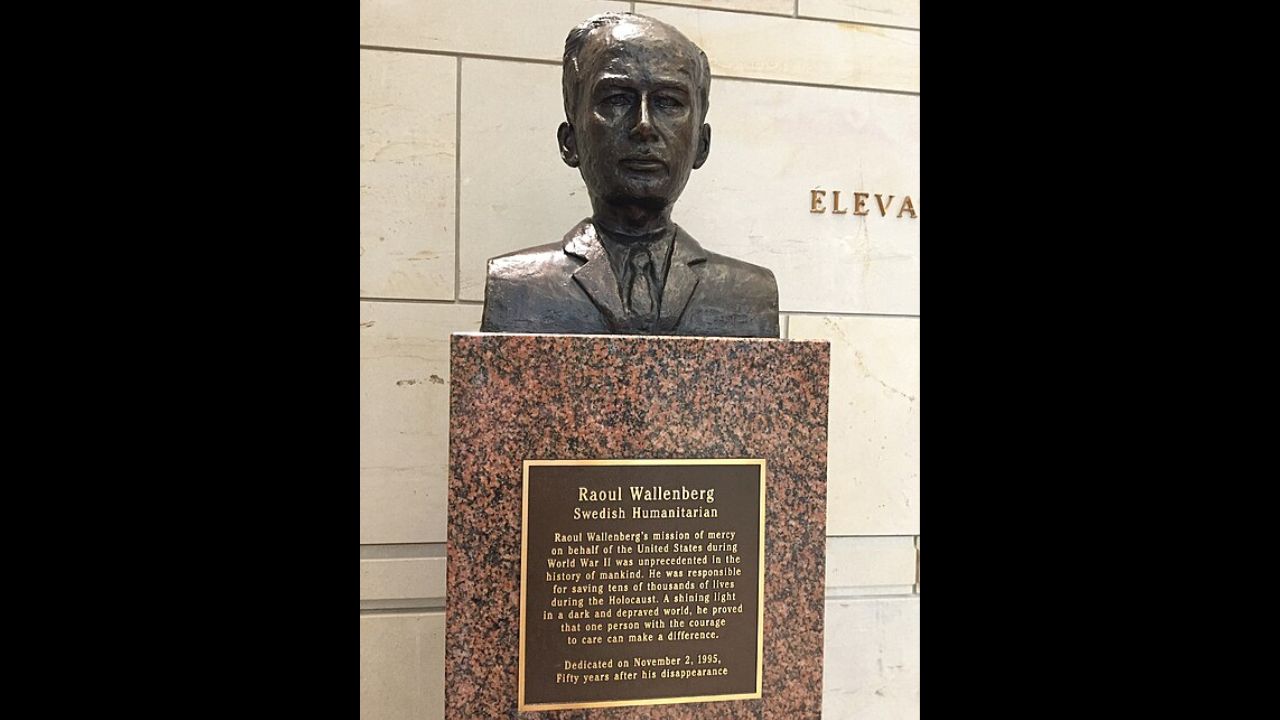
Raoul Wallenberg, a Swedish diplomat stationed in Budapest during World War II, became a beacon of hope for thousands of Hungarian Jews facing persecution by the Nazis. Through the issuance of protective documents, Wallenberg orchestrated one of the most daring rescue missions of the Holocaust, saving countless lives from the horrors of the Holocaust.
The Early Life and Career of Raoul Wallenberg
Raoul Wallenberg hailed from a prominent Swedish family, known for their success in banking and diplomacy. Born in 1912, his upbringing in a family deeply rooted in public service and international affairs profoundly shaped his worldview. Wallenberg attended the University of Michigan, where he studied architecture—a field that honed his analytical skills and creativity. This diverse education, combined with his family background, laid the foundation for his humanitarian vision and commitment to helping others.
Wallenberg’s appointment as a Swedish diplomat in Hungary came in 1944, a pivotal moment that set the stage for his life-saving mission. Tasked with protecting Swedish interests in Budapest, Wallenberg was quickly drawn into the plight of Hungarian Jews who were being systematically targeted under Nazi rule. Leveraging his diplomatic position, he devised strategies to protect them from persecution, using his family’s influence and his own ingenuity.
In this endeavor, the War Refugee Board played a critical role. Established by the United States in 1944, this organization provided financial and logistical support to efforts aimed at rescuing Jews in occupied Europe. The Board’s backing empowered Wallenberg to act decisively, offering him resources and a network to realize his mission. This collaboration exemplified the impact of international cooperation in humanitarian efforts during times of crisis.
The Situation in Hungary During World War II
During World War II, Hungary found itself increasingly under the influence of Nazi Germany, leading to a surge in anti-Semitic policies and actions. The political climate was volatile, with Jews facing escalating persecution. As the war progressed, the Hungarian government aligned more closely with Nazi directives, culminating in the mass deportations of Jews to concentration camps. The situation was dire, with over 400,000 Hungarian Jews deported to Auschwitz by mid-1944.
The Rise of the Arrow Cross Party in Hungary marked a turning point in the country’s descent into chaos and brutality. This far-right fascist party, led by Ferenc Szálasi, seized power in October 1944, unleashing a reign of terror against Jews and other minorities. The Arrow Cross Party’s collaboration with the Nazis resulted in widespread atrocities, including mass shootings and forced marches, drastically worsening the plight of Hungarian Jews.
Amidst this turmoil, the urgency for international intervention became ever more apparent. The Arrow Cross Party’s brutal tactics and the ongoing deportations highlighted the critical need for swift action to prevent further atrocities. Wallenberg, understanding the gravity of the situation, recognized that time was of the essence. His mission was not just a diplomatic assignment but a race against time to save as many lives as possible before it was too late.
Issuing Protective Passports: A Bold Strategy
Wallenberg’s strategic use of Schutz-Passes was nothing short of ingenious. These protective documents were designed to look official, bearing the Swedish colors and emblems, and promised the bearers protection from deportation. By leveraging his diplomatic status, Wallenberg convinced the Nazi and Hungarian authorities to recognize these passes as legitimate, thereby offering a lifeline to thousands of Jews.
His diplomatic maneuvers were as daring as they were effective. Wallenberg engaged in relentless negotiations, often putting himself at risk, to ensure that the Schutz-Passes were honored. He met with high-ranking Nazi officers and Hungarian officials, using a combination of persuasion, bluff, and sheer determination to secure their cooperation. Wallenberg’s ability to navigate the treacherous political landscape was crucial to the success of his rescue mission.
Beyond issuing protective passports, Wallenberg expanded his efforts to include the establishment of “safe houses” throughout Budapest. These shelters, marked with Swedish flags, provided refuge to Jews fleeing persecution. By converting buildings into these sanctuaries, Wallenberg created a network of protection that extended beyond mere documentation. His comprehensive approach to safeguarding Jews demonstrated his unwavering commitment to saving lives, even in the face of overwhelming adversity.
Challenges and Risks Faced by Wallenberg
Despite his diplomatic immunity, Wallenberg faced constant threats from both the Nazis and Hungarian authorities. His actions were under constant scrutiny, and he was well aware that any misstep could result in his arrest or assassination. The Nazis, in particular, viewed his efforts with suspicion and hostility, making his mission fraught with danger. Wallenberg’s courage in the face of such opposition remains one of the defining aspects of his legacy.
Operating with limited resources and under immense time pressure, Wallenberg had to be exceptionally resourceful. The War Refugee Board’s support was invaluable, but the scale of the crisis in Hungary meant that resources were always stretched thin. Wallenberg had to make quick decisions, often relying on his wits and the goodwill of others to sustain his operations. The urgency of the situation demanded rapid action, and Wallenberg rose to the challenge with remarkable resolve.
The personal sacrifices Wallenberg made were profound. He put his own life on the line repeatedly, driven by a moral imperative to save others. His eventual disappearance in January 1945 remains one of the great mysteries of World War II. Captured by Soviet forces, Wallenberg’s fate is still unknown, though it is widely believed that he died in a Soviet prison. His sacrifice underscores the personal cost of his humanitarian mission and the risks he willingly embraced.
Legacy and Impact of Wallenberg’s Actions
The impact of Wallenberg’s interventions is best exemplified by the estimated 100,000 lives he saved. Survivors’ testimonies and historical accounts attest to the profound difference his efforts made during one of history’s darkest periods. Wallenberg’s actions provided a glimmer of hope amidst the despair, demonstrating the power of individual courage and determination in the face of evil.
In recognition of his heroic deeds, Wallenberg has been posthumously honored worldwide. From being named an honorary citizen of the United States, Canada, and Israel to receiving numerous awards and commemorations, his legacy is celebrated across the globe. These honors reflect the enduring gratitude and admiration for his selfless actions during the Holocaust.
Wallenberg’s legacy continues to inspire humanitarian efforts today. His story serves as a powerful reminder of the impact one person can have in the fight against injustice. Organizations and individuals committed to human rights and humanitarian aid look to Wallenberg as a role model, drawing inspiration from his courage and compassion. The ongoing recognition of his contributions ensures that his spirit lives on, motivating future generations to stand up for what is right.
For more on Wallenberg’s lasting influence, visit Gariwo and delve into the extensive coverage by the BBC. His remarkable life and the lives he touched continue to resonate, offering lessons in courage and humanity that are as relevant today as they were during World War II.