
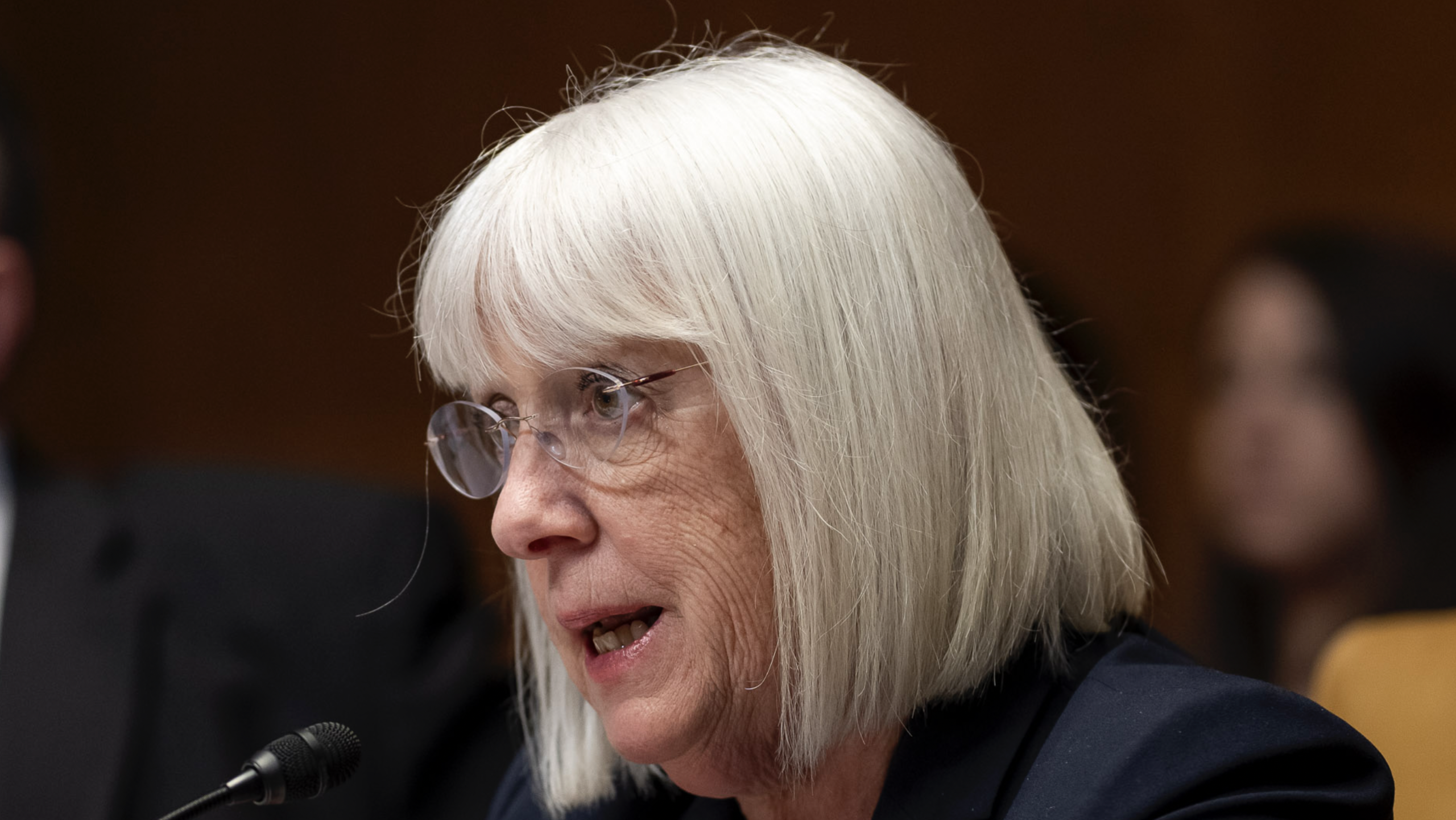
U.S. Senator Patty Murray sharply criticized President Donald Trump on Friday over what she described as the escalating cost of the U.S. military campaign in Iran, accusing the administration of prioritizing war spending over domestic needs and citing “tens of billions” in taxpayer funds directed toward the conflict.
In a post on X on May 2, 2026, Murray wrote: “Trump has spent TENS OF BILLIONS of your tax dollars on his war of choice with Iran. Republican logic: always money for war, never any to help working families put food on the table or get health care.”
Murray’s comments come as debate intensifies in Washington over the financial and political costs of the Iran conflict, which has become a central issue ahead of upcoming U.S. elections. Her remarks frame the war as both a fiscal burden and a political fault line between Republicans and Democrats over domestic priorities.
According to a senior Pentagon official speaking earlier this week, the U.S. military campaign in Iran has cost $25 billion so far, marking the first official estimate of the operation’s price tag. The figure has become a focal point in congressional scrutiny of war spending.
Jules Hurst, performing the duties of comptroller, told the House Armed Services Committee that much of the spending has gone toward munitions. However, he did not fully detail what was included in the estimate, nor whether it accounted for projected reconstruction and repair of damaged U.S. military infrastructure in the Middle East.
Lawmakers from both parties have pressed the Pentagon for clearer accounting. Representative Adam Smith, the top Democrat on the House Armed Services Committee, said in response to the briefing: “I’m glad you answered that question. Because we’ve been asking for a hell of a long time, and no one’s given us the number.”
The Pentagon’s $25 billion estimate has drawn additional attention due to comparisons with other federal spending priorities. The figure is roughly equivalent to the entire annual budget of NASA, underscoring the scale of military expenditures tied to the conflict.
At the same time, uncertainty remains over how the total cost has been calculated. A separate source previously told Reuters that the first six days of the war alone were estimated to have cost at least $11.3 billion, suggesting wide variability in early accounting.
The war has also become increasingly intertwined with domestic economic concerns. Inflationary pressures and rising consumer prices have been a recurring theme in public polling, with fuel costs drawing particular attention following disruptions in global energy shipments linked to the conflict.
According to the American Automobile Association, average U.S. gasoline prices recently reached their highest level in nearly four years, adding to broader concerns about affordability for American households.
Public opinion data has also reflected declining support for the conflict. A recent Reuters/Ipsos poll found that just 34% of Americans approve of the U.S. military action in Iran, down from 36% in mid-April and 38% in mid-March.
Defense Secretary Pete Hegseth has defended the campaign’s costs, arguing before lawmakers that the operation is necessary to prevent Iran from obtaining a nuclear weapon. “What would you pay to ensure Iran does not get a nuclear bomb? What would you pay?” he said during testimony, while also criticizing Democratic opponents of the war.
The military operation, launched on February 28 under U.S. Central Command, has involved sustained air, sea, and land-based strikes targeting Iranian military infrastructure. Officials have described it as one of the largest regional concentrations of U.S. military power in recent years.
According to CENTCOM, the campaign has included strikes on command and control centers, missile sites, air defenses, and military infrastructure, with extensive use of advanced aircraft and naval assets deployed across the region.
The conflict has also prompted broader strategic deployments, including aircraft carriers, bombers, fighter jets, and missile defense systems positioned throughout the Middle East as part of ongoing operations.
Political analysts say the war has become a defining issue in the current election cycle, with Democrats seeking to link military spending and rising prices to voter concerns about affordability, while Republicans emphasize national security objectives.
Murray’s remarks reflect that broader messaging strategy, focusing on the contrast between wartime expenditures and domestic economic pressures as debate over the Iran campaign continues in Congress and among voters heading into the election season.