
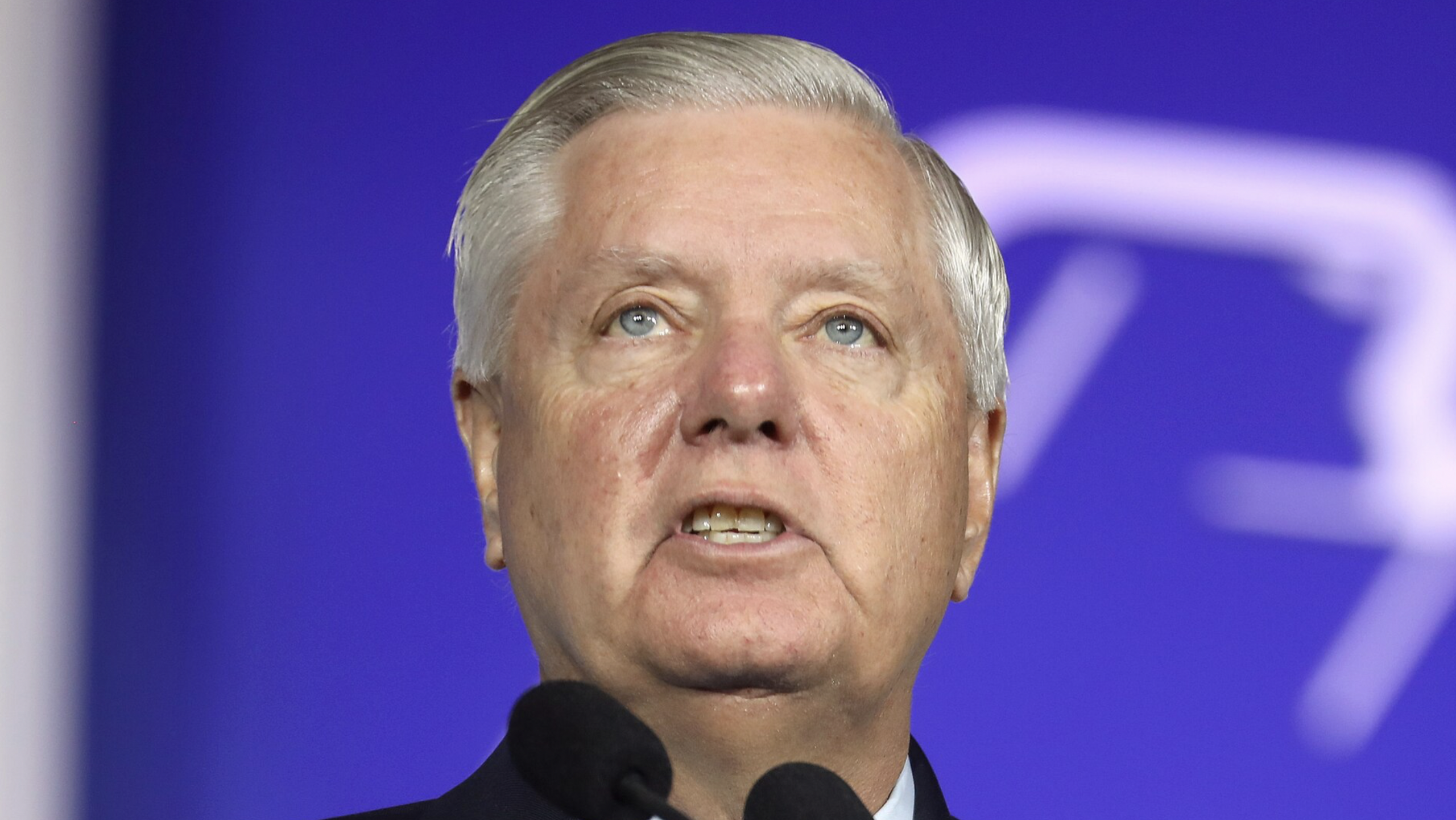
Lindsey Graham said on April 27, 2026, during a news conference, that legislation will be introduced to authorize $400 million for construction of a presidential ballroom that he argued is directly tied to national security needs in the wake of an armed attack at the White House Correspondents’ dinner. Graham framed the proposal as a response to what he described as growing security risks when large numbers of senior U.S. officials gather in unsecured venues, saying the incident underscored the need for a hardened, purpose-built facility on White House grounds.
Graham outlined the legislative plan and its scope, saying, “We’re going to introduce legislation that would authorize $400 million to be spent to secure the pre to build the presidential ballroom. Underneath there will be a lot of military stuff. There will be a Secret Service annex. And we’ve paid for it by offsetting it with custom fees, but the estimate is 332 million. We’re going to do 400 million because I think it’s probably going to take more. Private donations can be used, but I think they should be used for buying China and stuff like that. Underneath this ballroom will be infrastructure that is national security centric. The ballroom itself will avoid the dilemma of having to leave the White House grounds with future presidents and this president going downtown in a place that’s less secure. President Trump said to me this morning, excuse me, yesterday, ‘We need the ballroom not just for me, but for future presidents.’ He literally could have left his bedroom, walked out the back of the White House, and been at the ballroom. That’s what needs to happen when you have a thousand or 2,000 people gathered in today’s environment. And the sooner we get the ballroom built, the more hardened it is, the better for the country. So I hope and pray that most people in the Senate after Saturday night will support this bill.”
Graham and other supporters of the measure emphasized that the proposed ballroom would not function solely as an event space but would include embedded security infrastructure, including military and Secret Service facilities beneath the structure. He also described the funding approach as combining federal offsets with user fees and allowing for private donations, while stressing that the core justification for the project is national security rather than ceremonial use.
The push for legislation came directly after an armed man opened fire during the White House Correspondents’ dinner in Washington, an incident that forced the evacuation of President Donald Trump and senior administration officials. The attack prompted renewed scrutiny of security arrangements for high-profile government gatherings.
Graham linked that incident to his argument for constructing a secure ballroom on White House grounds, saying the event demonstrated the vulnerability of holding major government functions in commercial venues. He argued that a dedicated facility would eliminate the need for presidents and officials to travel offsite for large gatherings, stating that such movement creates unnecessary risk in the current security environment.
The senator also said he expected support in the Senate and urged expedited consideration of the proposal, noting that he had discussed the plan with Senate leadership and other lawmakers. He characterized the legislation as relevant to future administrations as well as the current presidency, and said he believed the urgency had increased following the weekend’s events.
The proposal comes amid broader political attention on White House security and infrastructure following the attack, as well as ongoing legal and political debate over the proposed ballroom project itself, which has faced litigation and criticism over its scope and approval process. Graham and allies have argued that the recent security breach reinforces the need to advance construction quickly, while opponents have raised questions about funding mechanisms and executive authority over White House alterations.