
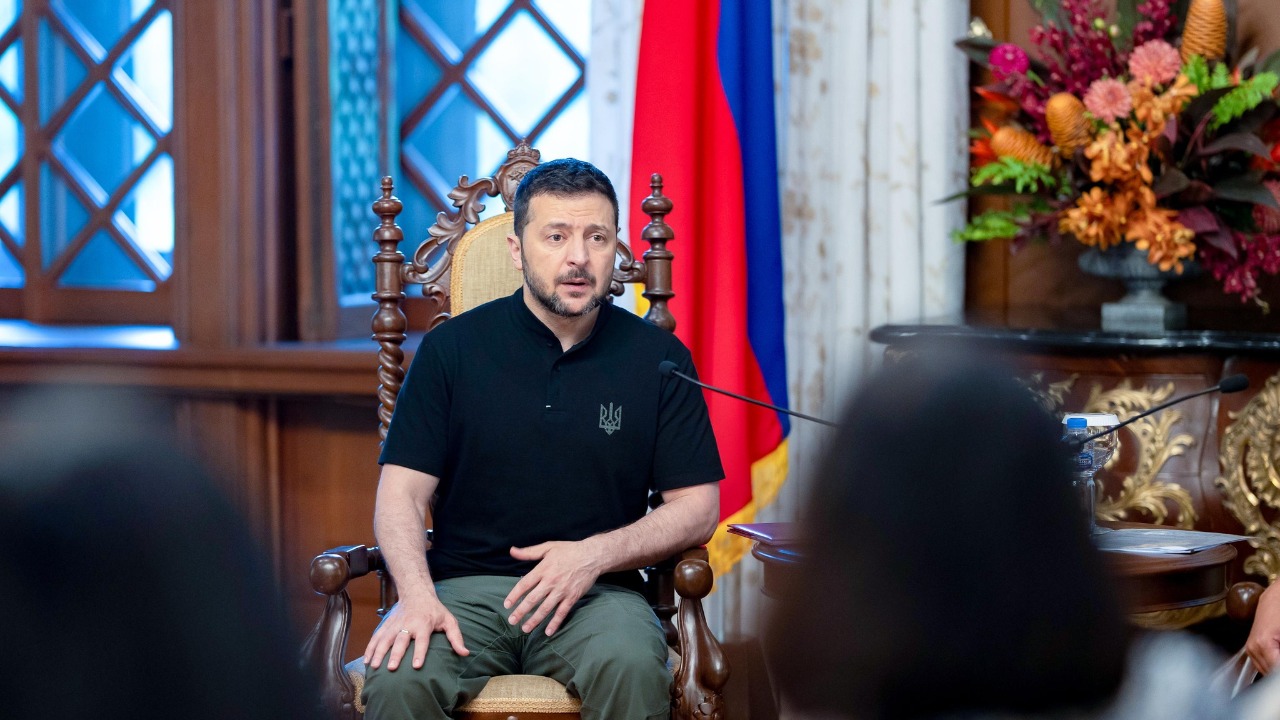
Volodymyr Zelenskiy has accused Russia of quietly supplying Iran with Shahed attack drones and battlefield intelligence, a charge that links the war in Ukraine directly to strikes on United States forces in the Middle East. The allegation suggests that Moscow is not only importing Iranian hardware for its own campaign, but also exporting lethal expertise and equipment that could widen the conflict far beyond Europe.
By tying Russian support for Iran to attacks on US bases, Zelenskiy is trying to reframe Ukraine’s struggle as part of a single, interconnected confrontation with Russia, Iran, and their partners, rather than a regional dispute on Europe’s eastern flank.
From battlefield partner to weapons broker
According to Zelenskiy, Russia has shifted from being a customer of Iranian drones to a supplier that now helps Iran acquire and use Shahed systems against American targets.
In a recent address, he claimed that Russia supplied Iran with Shahed drones that were then used in attacks on US bases in the Middle East, describing a two-way pipeline of technology and tactics between Moscow and Tehran.
He argued that this cooperation has evolved into a broader security partnership in which Russian intelligence services share targeting data and operational know-how with Iranian forces.
Ukrainian officials have framed this as evidence that the same Shahed family of drones that terrorizes Ukrainian cities is now part of a shared arsenal used to pressure the United States and its partners in the region.
Shahed drones and the Middle East front
Shahed drones, often used as low-cost loitering munitions, have already become a defining feature of Russia’s air campaign against Ukraine.
Zelenskiy now contends that similar Shahed models are being transferred in the opposite direction, with Russia supplying Iran with drones and intelligence support for attacks on US positions in the Middle East.
He has linked those weapons directly to strikes on American bases, arguing that Russian technicians and advisers help Iran adapt the drones to local conditions and bypass some Western defenses.
That accusation, if accurate, would mean that Moscow is not only undermining sanctions on Tehran but is actively assisting operations that target US personnel.
In parallel, reporting on the Russian‑Iranian relationship has described a pattern in which Moscow initially relied heavily on Iranian Shahed systems for its own war, then invested in domestic production lines that now manufacture Shaheds on Russian territory.
According to one account, Russia now manufactures, which gives it surplus capacity that can be directed to partners such as Iran.
This shift from dependency to self‑sufficiency is central to Zelenskiy’s warning that Russia has become a hub for drone proliferation rather than a mere consumer.
Framing a shared threat to Washington
For Zelenskiy, the strategic point is not only that Russia and Iran cooperate, but that their cooperation directly affects American troops and interests.
He has argued that Ukraine is effectively confronting the same Shahed threat on its own territory that US forces face at bases across the Middle East, and that those fronts should be treated as a single security challenge.
In an appeal aimed squarely at Washington, he has warned that every Russian advance in drone warfare eventually finds its way into Iranian hands, and that any delay in countering Moscow in Ukraine risks empowering Tehran elsewhere.
One report quoted him as saying that Russia is providing Iran with Shahed drones used against US bases, and that this support is part of a wider effort to test Western air defenses and political resolve.
Coverage of his remarks has emphasized that Defense Secretary Pete Hegseth has argued that the Trump administration is tracking Russian‑Iranian contacts and following the transfer of these drones, which places the issue squarely on the agenda of US domestic debate over support for Ukraine.
Ukraine’s pitch: experience as a global asset
At the same time that he accuses Russia of arming Iran, Zelenskyy is trying to present Ukraine as part of the solution to the drone threat that now spans multiple regions.
During a recent visit to the United States, he said that Ukrainian expertise in countering Shahed attacks can help protect civilian and critical infrastructure far beyond Ukraine’s borders.
He highlighted that Ukrainian expertise helps civilian and critical infrastructure, and that partners already seek their help on drone defense.
Rustem Umerov, identified as the head of Ukraine’s National Security and sector in the reporting, has been part of that pitch, presenting Ukraine as a testbed for air defense systems and early warning networks that could later be adapted to shield US facilities in the Middle East from Shahed attacks.
By drawing this line from Kyiv to American bases, Ukrainian officials hope to convince skeptical lawmakers that aid to Ukraine is not charity but an investment in wider US security.
Telegram diplomacy and domestic audiences
Zelenskiy has also used social media and messaging platforms to amplify his accusations against Russia and Iran for domestic and foreign audiences.
In one message on Telegram, cited in coverage of his remarks, he described Russian support for Iran as part of a larger axis that includes other authoritarian states and warned that each successful drone strike on US assets strengthens that axis.
His office has used similar language on X, where the official account has shared statements that frame Ukraine as a frontline state defending not only its own cities but the broader international order.
One such post, shared by Zelenskyy, stressed cooperation with partners on air defense and highlighted Ukraine’s role in helping defend against Iranian drones.
Iran, Russia, and a widening network
Reports that Zelenskyy has accused Russia of supplying Iran with drones for strikes have appeared alongside references to other flashpoints, including Korean troop deployments in Russia, that suggest a growing network of military cooperation among states at odds with the West.
According to one analysis, Zelenskyy claims that Russia is conducting strikes while also drawing attention to Korean troop deployments in Russia, which he presents as part of a pattern of authoritarian states pooling capabilities.
He has argued that this pattern should change how Western governments think about risk, since technology shared in one theater can quickly appear in another.
In his telling, the Shahed drones that began as a bilateral arrangement between Russia and Iran have already become a regional menace, and could in time be exported further afield.