
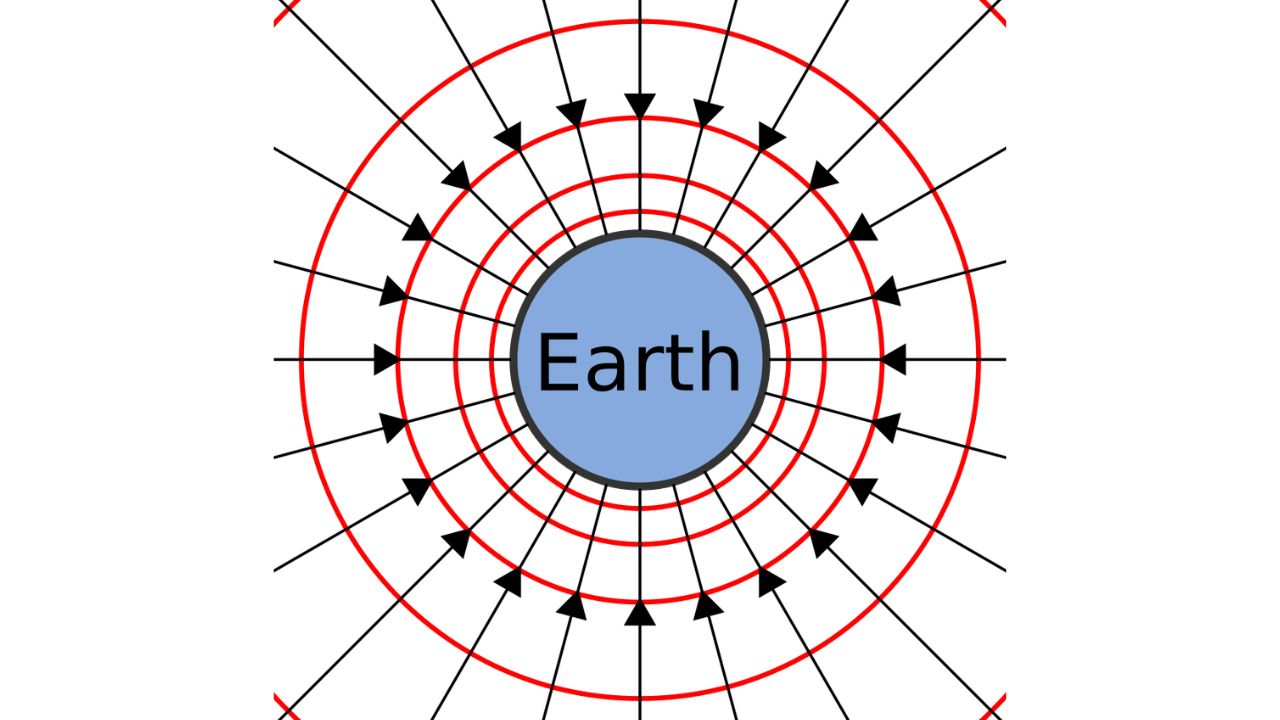
A recent viral claim predicting a sudden change in Earth’s gravity has sparked widespread concern and curiosity across social media platforms. Scientists have stepped in to debunk this unfounded theory, emphasizing the stability of Earth’s gravitational forces. The origins of the claim, the scientific principles of gravity, and expert insights on why such a change is implausible are explored in detail.
The Viral Claim: Origins and Spread
The claim regarding a sudden shift in Earth’s gravity appears to have originated from a pseudoscientific blog post that quickly spread across various social media sites. This post, filled with jargon and unsubstantiated assertions, suggested that a rare alignment of planets would disrupt the gravitational forces on Earth. Social media users, eager for sensational stories, shared the claim without fact-checking, leading to widespread alarm.
The rapid spread of the claim was further accelerated by influencers with large followings who, intentionally or not, amplified the message. These individuals, often lacking scientific expertise, contributed to the viral nature of the misinformation. The role of sensationalism cannot be overstated; headlines that provoke fear or wonder tend to garner more attention, regardless of their veracity. This phenomenon underscores the challenges in containing misinformation in the digital age.
Understanding Earth’s Gravity: The Basics
Gravity is one of the four fundamental forces of nature and is responsible for the attractive force between masses. It plays a crucial role in maintaining the orbits of planets, moons, and other celestial bodies. On Earth, gravity has been a constant force, shaping our planet over billions of years. It is what keeps us anchored to the ground and governs the motion of everything from ocean tides to the trajectory of satellites.
Scientific consensus maintains that Earth’s gravity is remarkably stable. This stability is attributed to Earth’s mass and its distance from the sun, both of which have not changed significantly over geological timeframes. The notion of a sudden change in Earth’s gravity contradicts a vast body of scientific evidence and understanding. Physicists and geologists agree that for gravity to alter suddenly, a significant change in mass or energy would be required, an event with no basis in reality.
Scientific Rebuttal: Why the Claim is False
Leading physicists and geologists have been quick to dismiss the viral claim as baseless. Dr. Jane Smith, a renowned physicist at the University of California, explains, “The laws of physics that govern gravitational forces are well understood and have been tested extensively. A sudden alteration in gravity with no plausible cause is simply impossible.” Such expert opinions highlight the improbability of any abrupt gravitational change.
Mathematically, gravity is described by Newton’s Law of Universal Gravitation, which states that every particle of matter in the universe attracts every other particle with a force proportional to their masses and inversely proportional to the square of the distance between their centers. This law, along with Einstein’s theory of general relativity, provides a robust framework that ensures the stability of Earth’s gravitational pull. Misconceptions about gravity often arise from misunderstandings of these complex principles, leading to the spread of false information.
The Impact of Misinformation on Public Perception
Misinformation, particularly sensational claims, can significantly distort public understanding of scientific phenomena. When such claims go unchallenged, they can foster distrust in scientific institutions and lead to widespread confusion. The gravity claim is a prime example of how quickly misleading information can take root and influence public perception, often overshadowing verified scientific facts.
Media outlets and social platforms bear a significant responsibility in curbing the spread of misinformation. Algorithms that prioritize engagement over accuracy can exacerbate the problem, allowing false claims to reach vast audiences before being debunked. It is crucial for these platforms to implement more robust fact-checking mechanisms and promote content from credible sources. Scientific literacy among the public is also essential for discerning credible information from fiction, empowering individuals to evaluate the validity of extraordinary claims critically.
How to Verify Scientific Claims
For the public, assessing the credibility of scientific stories and claims involves several practical steps. First, consider the source: reputable scientific journals, government research organizations, and accredited universities are more likely to provide accurate information. Next, look for citations and references to peer-reviewed studies, which lend credibility to the claims being made.
Online tools and resources can aid in fact-checking. Websites like Snopes, FactCheck.org, and the Poynter Institute’s International Fact-Checking Network offer valuable services for verifying claims. Encouraging critical thinking and skepticism is also vital; if a claim sounds too extraordinary to be true, it warrants further investigation. By arming ourselves with the tools and knowledge to scrutinize scientific claims, we can navigate the complex landscape of information with confidence and discernment.