

Amphibious assault ships are vital components of naval fleets around the world, designed to handle high-risk deployments and provide critical support during military operations. These ships carry troops, equipment, and aircraft, allowing for strategic projection of power and rapid response capabilities. Let’s dive into seven notable amphibious assault ships that are built for these challenging missions.
USS Wasp (LHD-1)

The USS Wasp is the lead ship of its class and has been serving the United States Navy since 1989. It supports a wide range of military operations, including amphibious assaults, humanitarian aid, and disaster relief missions. The Wasp can carry a combination of Marine Corps personnel, helicopters, and vertical takeoff and landing aircraft such as the F-35B Lightning II.
One of the ship’s notable deployments was in 2018 when it was stationed in the Indo-Pacific region to strengthen maritime security and promote stability. The USS Wasp continues to play a critical role in U.S. naval strategy, offering flexibility and power projection in high-risk areas.
USS America (LHA-6)
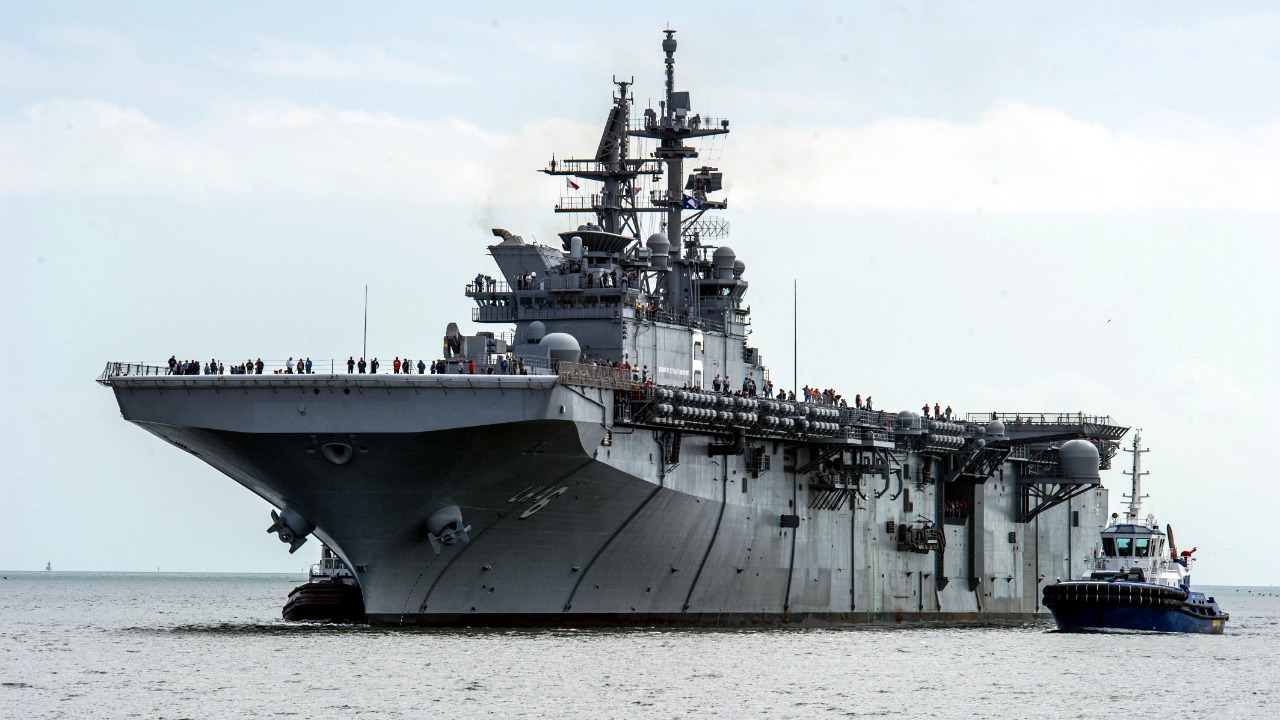
The USS America is the first of the America-class amphibious assault ships, entering service in 2014. Unlike traditional amphibious assault ships, it lacks a well deck, focusing instead on aviation operations. This design choice enhances its capability to support a larger number of aircraft, including the MV-22 Osprey and F-35B Lightning II.
Stationed in the Pacific Fleet, USS America is pivotal in maintaining a U.S. presence in the Asia-Pacific region. Its advanced aviation facilities allow it to support a range of missions, from combat operations to humanitarian assistance, making it a versatile asset in high-risk deployments.
HMS Ocean (L12)

Commissioned in 1998, HMS Ocean served as the United Kingdom’s flagship amphibious assault ship until its decommissioning in 2018. It was designed to transport troops and equipment for amphibious assaults and also served as a helicopter carrier with facilities to operate a variety of helicopters.
HMS Ocean played a crucial role during operations in Libya in 2011, as well as providing humanitarian assistance in the Caribbean following hurricanes. Although it has been retired, its legacy continues to influence the design and operational strategy of future Royal Navy vessels.
JS Izumo (DDH-183)

Japan’s JS Izumo is the lead ship of its class and was commissioned in 2015. Initially classified as a helicopter destroyer, the ship has since been modified to operate F-35B fighters, enhancing its capabilities as a multi-purpose vessel. It serves as a key component of Japan’s maritime self-defense forces.
The Izumo has been deployed in various international joint exercises and maritime security operations, showcasing Japan’s commitment to regional stability. Its ability to project power and support humanitarian missions makes it a valuable asset in high-risk scenarios.
Mistral-class Amphibious Assault Ships

The Mistral-class ships are a series of amphibious assault ships operated by the French Navy. Known for their versatility, these ships can carry troops, vehicles, and helicopters, and are equipped with a well deck for launching landing craft. They have been deployed in numerous international missions, including operations in the Middle East and Africa.
France’s Mistral-class ships have also participated in humanitarian missions, such as providing aid in the aftermath of natural disasters. Their ability to operate autonomously for extended periods makes them indispensable in high-risk environments.
HMAS Canberra (L02)

The HMAS Canberra is one of two Canberra-class landing helicopter docks in the Royal Australian Navy. Commissioned in 2014, it is capable of deploying a battalion-sized force along with their equipment and vehicles. The ship also boasts a ski-jump ramp for launching helicopters and future fixed-wing aircraft.
The Canberra has been involved in humanitarian and disaster relief operations, notably after Cyclone Winston in Fiji. Its flexibility and capability to conduct a wide range of operations make it a crucial asset for Australia’s defense and international commitments.
ITS Cavour (C 550)
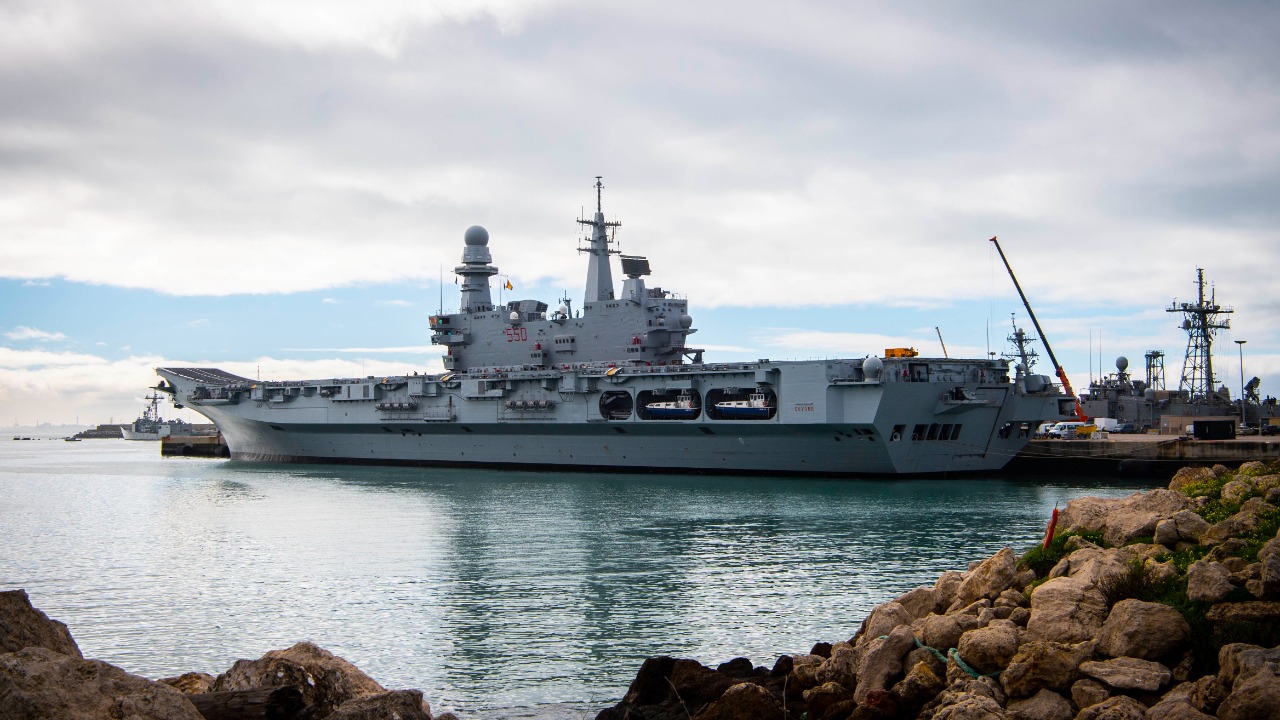
The Italian Navy’s ITS Cavour is an aircraft carrier with amphibious capabilities, commissioned in 2008. It supports a wide range of operations, from power projection and air defense to humanitarian missions and disaster relief. The ship can carry a mix of helicopters and fighter jets, including the F-35B.
ITS Cavour has participated in NATO exercises and operations in the Mediterranean, demonstrating Italy’s naval capabilities and commitment to international security. Its multi-role capacity equips it to handle high-risk deployments effectively, ensuring readiness for diverse operational demands.