

Some submarines are secret because of what they carry. A rarer—and strategically important—group is secret because of what it does: work on or near the seabed, where activity is difficult to monitor and easy to deny. In these cases, the platforms and operations are “known to exist,” but many details about missions, methods, and outcomes remain withheld, fragmentary, or publicly unspoken.
The examples below are ones where open sources describe a real platform or operation while also emphasizing that much of the record remains classified or only partially documented. That gap between acknowledgment and detail is the point: these are undersea assets whose public reputations are shaped as much by what cannot be confirmed as by what can.
American submarine NR-1 (DSV NR-1)

DSV NR-1 was a one-off U.S. Navy nuclear-powered deep-submergence “engineering/research” submarine. At the same time, multiple accounts also tie its real workload to sensitive seabed recovery and intelligence tasks. CBS News, via AP reporting, and Wikipedia describe NR-1 as a niche capability that could do things a conventional submarine could not—while leaving much of its operational use opaque. That opacity is part of why it fits here: several NR-1 missions reportedly stayed classified, and records requests have been described as coming up empty or withheld, leaving only partial public fragments.
Its most distinctive feature was practical, not just dramatic: a nuclear-powered mini-sub that could operate on the seafloor. In straightforward terms, that kind of platform is well suited to searching for, inspecting, and potentially recovering objects where depth and discretion are the limiting factors. When missions remain classified and documentation is limited, it becomes difficult to separate confirmed history from inference—exactly the dynamic that makes NR-1 notable.
USS Jimmy Carter (SSN-23) — Seawolf-class with Multi-Mission Platform
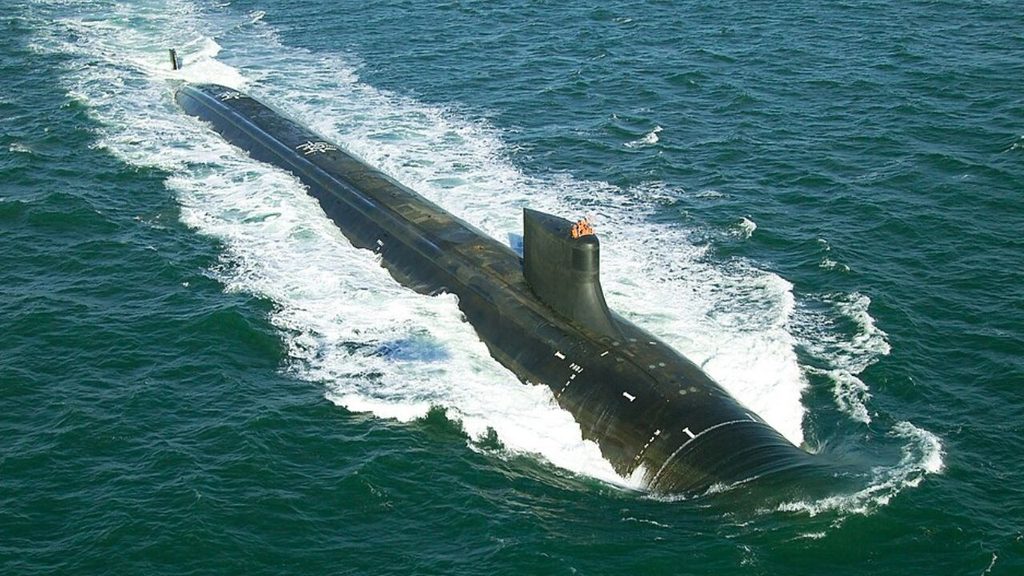
USS Jimmy Carter is the uniquely modified Seawolf-class attack submarine that was lengthened and fitted with a “Multi-Mission Platform” intended for special missions. RAND’s MG608, the U.S. DOE “Gray Book” (2025), and The War Zone converge on the same general picture: official and semi-official references emphasize advanced technology and a special-mission role while keeping operational details classified. The capability is acknowledged in broad terms, but the specifics are not.
That silence is why the submarine is so often discussed as a high-end special-mission platform. The public record supports the existence of a distinctive configuration and an associated classified mission set, even if it does not spell out how the platform is used or where. For planners and analysts, a purpose-built “multi-mission” modification signals that certain undersea tasks are important enough to merit dedicated hardware—and continued secrecy.
USS Parche (SSN-683)

USS Parche was a heavily modified Sturgeon-class attack submarine that became famous for Cold War clandestine operations, often linked in public discussion to undersea cable work. Wikipedia explicitly states that much of Parche’s operational history involved clandestine missions and that the majority of those missions remain classified. That combination—public acknowledgment paired with a long-standing wall of withheld detail—is characteristic of submarines tied to “national mission” activity rather than routine fleet operations.
One of the few unambiguous public signals is Parche’s reputation as one of the most decorated U.S. submarines. Awards alone do not reveal what happened, but they can indicate the scale and significance of work that is not described in public. The lingering classification also suggests that some aspects of Parche’s activities remain sensitive well after the Cold War, even if the broad idea of clandestine undersea operations is widely understood.
USS Halibut (SSGN/SSN-587)

USS Halibut was a unique U.S. nuclear submarine that evolved over time—converted from its original guided-missile role into a special operations platform and publicly connected to cable-tap operations. Wikipedia describes the broad outline of “special operations missions,” and El País discusses the Ivy Bells context in which undersea cable access became strategically significant. Even with those references, granular mission information remains limited, leaving Halibut as a clear example of a platform whose existence and general purpose are known, while key operational details remain thin.
Halibut matters in this list because it illustrates a broader pattern: major naval assets can be repurposed into intelligence tools whose influence is not well captured by what is publicly documented. The public record supports the idea of special operations and cable-related activity, but it does not provide a full accounting of what was done, how it was done, or how often—precisely the gap implied by “still largely classified.”
Russian submarine “Losharik” (Project 10831 / AS-31)

Russia’s “Losharik” (Project 10831 / AS-31) is a deep-diving nuclear special-mission submarine associated with GUGI, the country’s secretive deep-sea directorate. Wikipedia and the Jamestown Foundation both frame it in “top secret” terms, and Russian authorities are described as treating key details as state secrets. The result is a platform that is widely discussed but still only partially documented in public—an especially sensitive topic following the 2019 accident.
Losharik belongs alongside the U.S. examples for a simple reason: it represents the same strategic interest in deep-sea access paired with tight operational secrecy. Even without publicly available mission logs, the combination of deep-diving capability and unusually guarded information signals that Russia treats seabed activity as a national-level concern, with implications for how others assess risk around cables, sensors, and other undersea systems.
Kashalot-class special-purpose submarine (Project 1910 “Uniform”)

The Kashalot-class special-purpose submarines (Project 1910 “Uniform”) are Soviet/Russian deep-diving, special-purpose nuclear submarines that open-source analysis often links to seabed and special operations roles. The program is identified and discussed, but the open record remains thin on specific missions, producing a “known hulls, unknown work” dynamic that aligns closely with the headline.
The larger point is continuity. When a class exists and is persistently associated with special-purpose deep-sea activity, yet its mission history remains difficult to pin down, outside observers have to plan around uncertainty. In practical terms, that uncertainty can be as consequential as confirmed detail—because it suggests a sustained capacity for undersea work that is intentionally kept out of public view.