
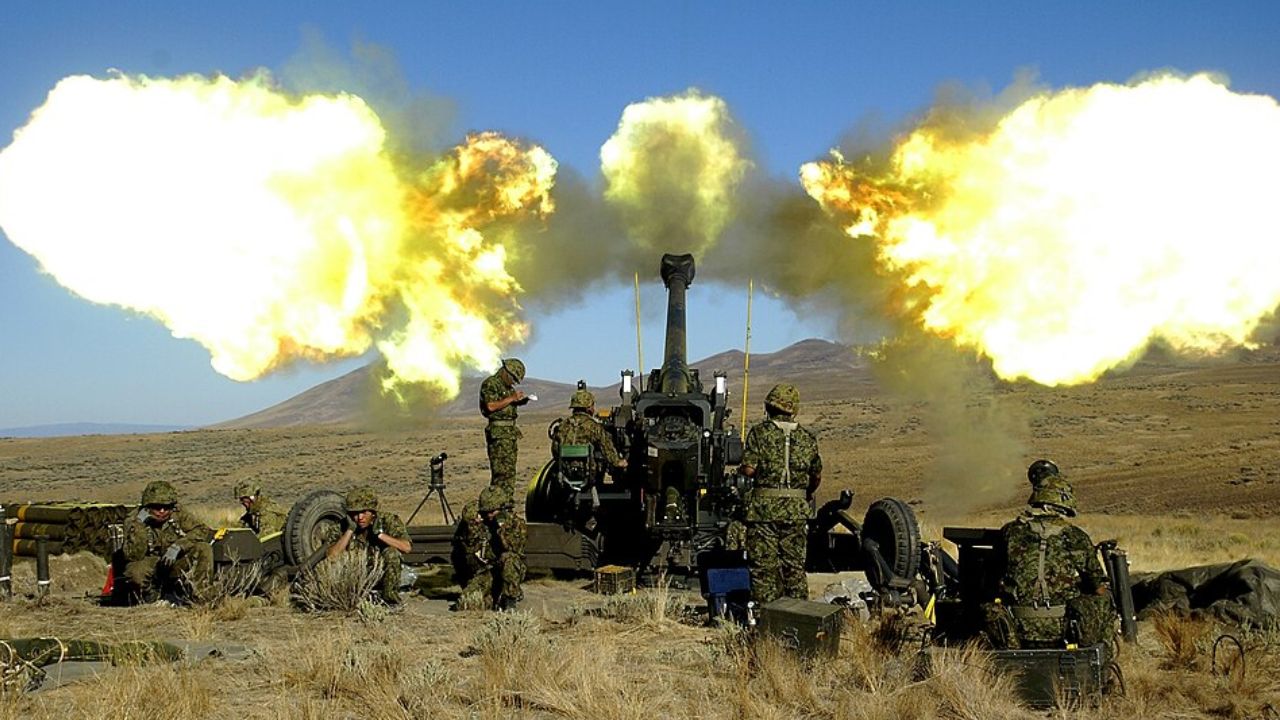
Wars end. Budgets swing. Armies modernize—at least on paper. Yet certain howitzers refuse to disappear, lingering in inventories, getting repurposed for domestic tasks, or resurfacing via transfers and reactivated stocks. The common thread is basic practicality: if a gun works, fits existing ammunition and training pipelines, and can be moved into position without exotic support, it can outlast the conflict—and even the era—that first brought it to prominence.
Below are specific systems that illustrate that “built for one war, still useful long after” pattern, using only the sourcing described in the provided context. Where status is uncertain, this article treats “in service” as “reported in service,” because documentation and definitions vary by country.
M114 155 mm howitzer (U.S.)
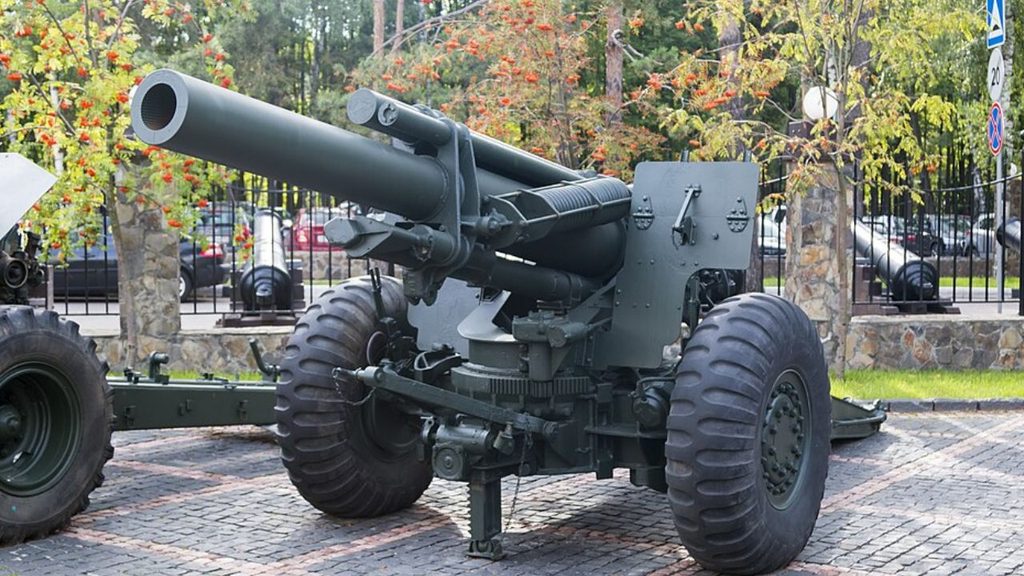
The M114 is a U.S. 155 mm towed howitzer defined by World War II persistence. Wikipedia describes it as designed in 1939–1941 and introduced during WWII, and also notes that the M114A1 “remains in service in some countries.” That combination—WWII origin with a reported postwar afterlife—is exactly what makes it a longevity benchmark.
Its significance isn’t that it represents the newest way to fight, but that straightforward, conventional artillery can remain useful when budgets tighten or replacement programs slip. The key caveat is documentation: operator and status claims can be uneven, so it’s best framed as “reported in service” unless confirmed by a national defense inventory.
M101 105 mm howitzer (a.k.a. M2A1/M101) (U.S.)
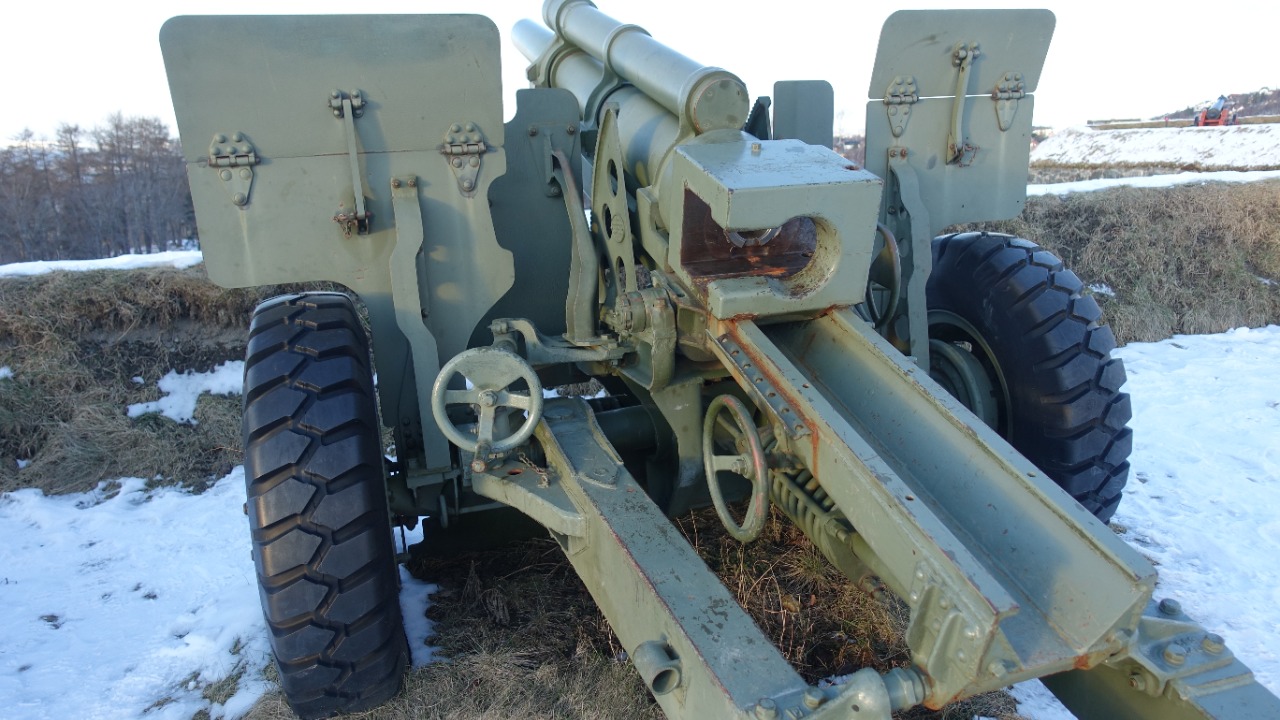
The M101 is the classic WWII light howitzer story: widely fielded, widely exported, and kept around because it remained serviceable. A U.S. Army page from a Rock Island Arsenal tour ties the weapon to its WWII-era M2A1/M101 identity and notes that it was retained in limited U.S. service for avalanche control—a niche role far removed from its original battlefield mission. Few examples illustrate “outliving the war” more clearly than a combat howitzer kept for a domestic safety task.
More broadly, the M101’s staying power shows how older systems can remain attractive to forces that already have training, maintenance routines, and institutional familiarity in place. The same Army-sourced note underscores its foreign footprint, but current operator lists and quantities can be inconsistently documented, so the safest claim is continued use or holdings in various countries rather than precise, up-to-the-minute prevalence.
M198 155 mm towed howitzer (U.S.)
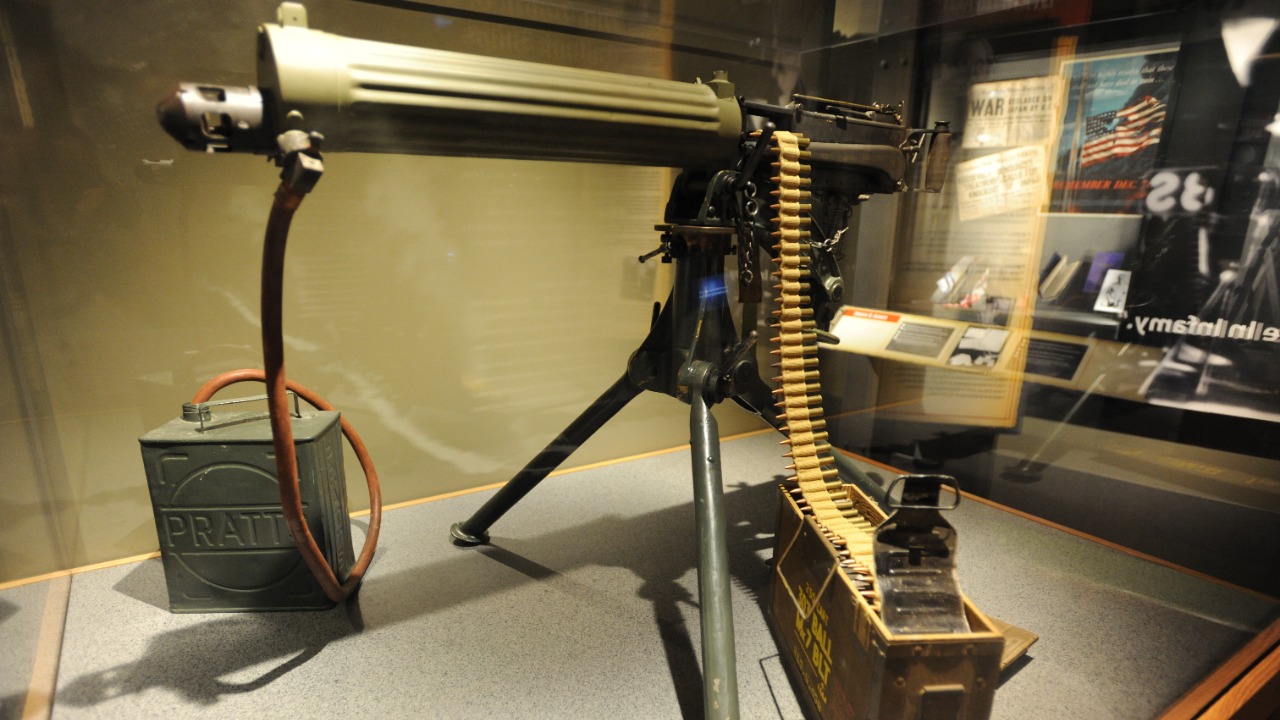
The M198 is a later-generation U.S. 155 mm towed howitzer with a different longevity arc: it outlasted its “modern” moment by continuing on after U.S. retirement. The U.S. Army notes that while the M198 has been phased out of U.S. inventories, it “remains in service with other nations today,” explicitly naming Thailand, Brazil, and Pakistan.
The takeaway is that retirement by the original user does not automatically mean a system has no remaining military value. Depending on the country, “in service” can range from active employment to reserve or mobilization stocks, so it’s best not to overstate how prominently it features on any given front. Even so, the M198 is a clean example of a weapon with an export afterlife that extends its relevance well beyond the period it was designed to serve.
FH70 155 mm towed howitzer (UK/Germany/Italy joint project)
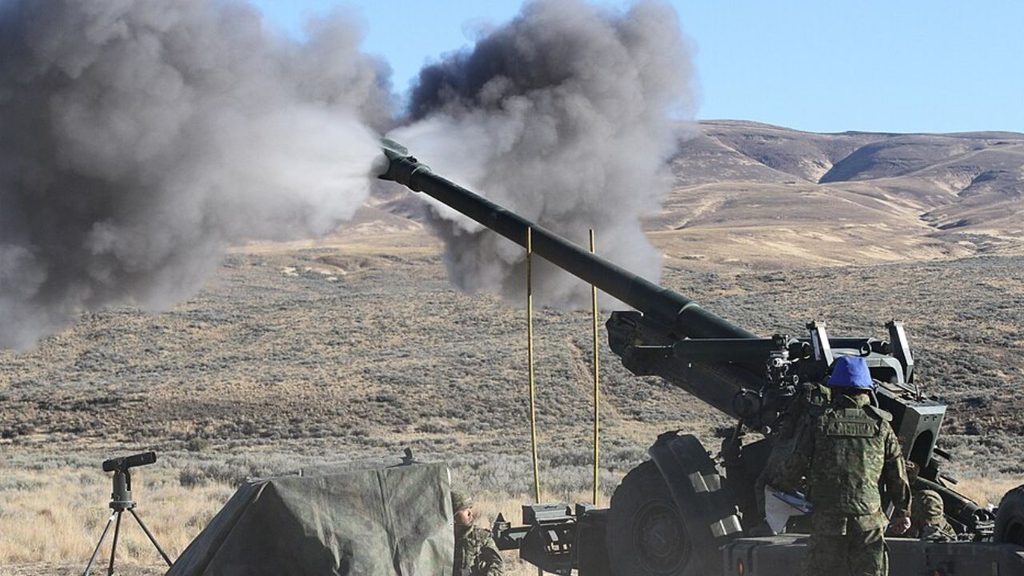
The FH70 is a 1970s-era, tri-national NATO howitzer developed by the UK, Germany, and Italy—and it remains current enough to intersect with today’s security needs. Janes reports that the FH70 “is now only in active service with the Italian Army,” while other FH70s have been transferred to Ukraine. That captures two realities at once: a narrowing active user base, and wartime demand strong enough to draw older guns back into the fight through donations.
What this demonstrates is longevity through usefulness, not ubiquity. Transfer to a war zone signals that stockpiled artillery can quickly become strategically relevant again when new production cannot fill gaps fast enough. At the same time, a transfer should not be treated as proof of long-term, sustained frontline service for every donated unit; it is better described as continued utility than guaranteed durability.
2A36 Giatsint-B 152 mm (USSR/Russia)

The 2A36 Giatsint-B is a late–Cold War Soviet towed 152 mm artillery piece often described as a “field gun,” even though it fits the broader practical category of towed systems used for indirect fire. Wikipedia places its entry into Soviet service in the 1970s and documents use by both sides following Russia’s 2022 invasion of Ukraine. In other words: the USSR is gone, but the weapon remains relevant enough to appear in a modern high-intensity war.
Its continuing presence matters because it shows how older, stored equipment can be reintroduced when conflicts expand faster than newer systems can be produced or replaced. To keep the description precise and avoid taxonomy disputes, it’s best framed as a “towed 152 mm field gun” while still acknowledging its role alongside other towed artillery used in contemporary combat.
2A65 Msta-B 152 mm (USSR/Russia)
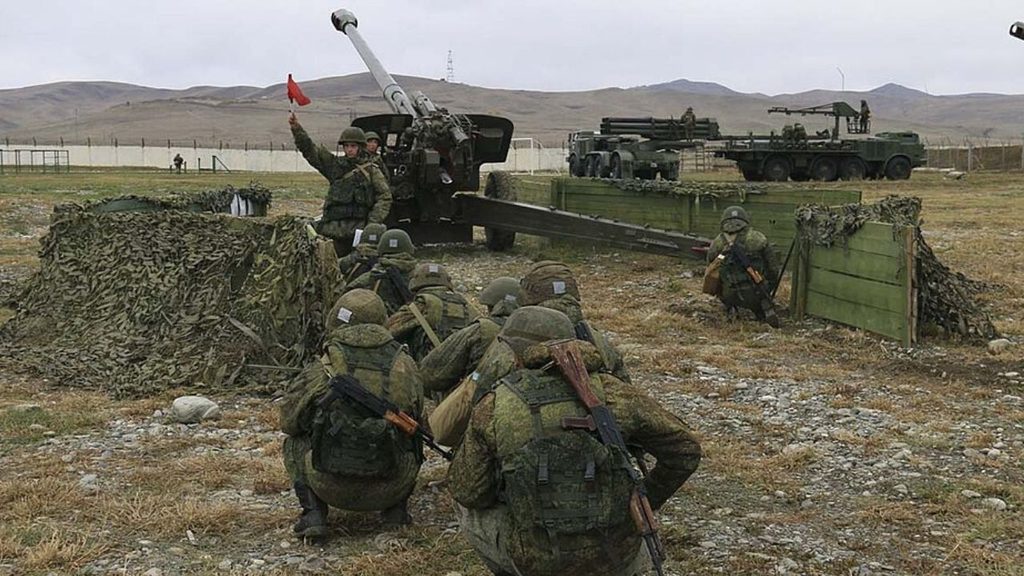
The 2A65 Msta-B is a late-Soviet towed 152 mm howitzer that demonstrates post–Cold War staying power. Wikipedia states it has been fielded since at least 1987 and that “as of 2022” it is currently in service with Russian artillery units, along with several other countries. That explicit “as of 2022” language makes it an unusually straightforward example of long-lived service.
The larger point is that relevance in artillery often comes from fit—doctrine, logistics, ammunition availability, and maintenance capacity—not from age alone. As with other systems discussed here, it’s important not to infer exact frontline quantities from “in service” language without an authoritative inventory; the supported claim is continued service status, not a specific level of battlefield prominence.