
Military aviation has always been at the forefront of technological innovation, pushing the boundaries of aerodynamics and engineering. Some aircraft designs, however, stand out due to their unusual and unconventional appearances. Here, I take a look at ten military aircraft that have gained notoriety for their unique designs and the fascinating stories behind them.
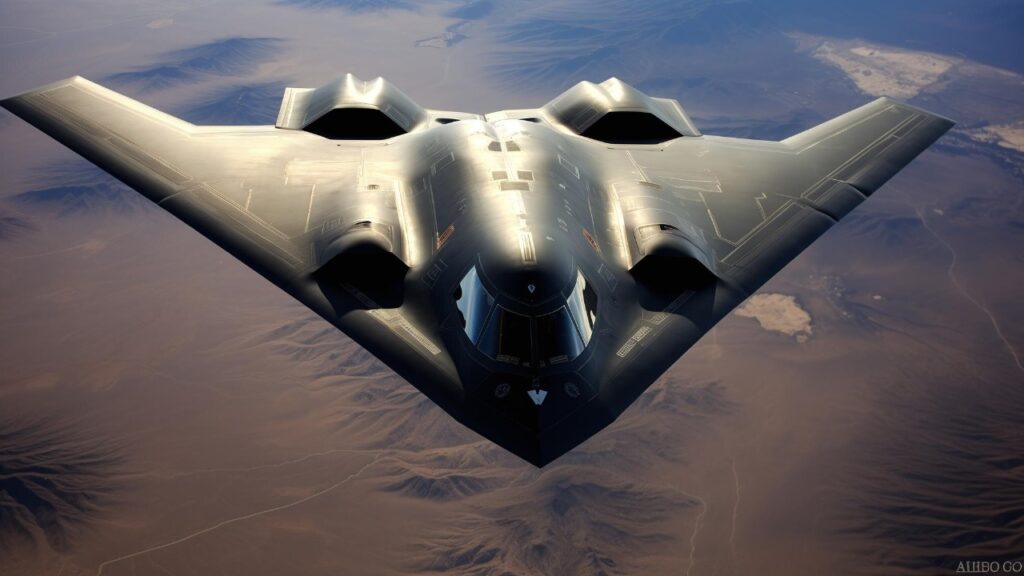
Northrop Grumman B-2 Spirit

The Northrop Grumman B-2 Spirit, often called the Stealth Bomber, is one of the most recognizable aircraft due to its flying wing design. Developed during the Cold War, the B-2 was designed to penetrate dense anti-aircraft defenses. Its unique shape minimizes radar cross-section, making it nearly invisible to enemy radar systems. First introduced in 1989, the B-2 Spirit remains a vital part of the United States’ strategic bomber fleet.
The B-2’s design was revolutionary, incorporating advanced technologies in stealth materials and jet propulsion. With a wingspan of 172 feet and a cost of over $2 billion per aircraft, the B-2 is a testament to cutting-edge military aviation technology. It has seen action in various conflicts, including Kosovo, Iraq, and Afghanistan, demonstrating its versatility and effectiveness.
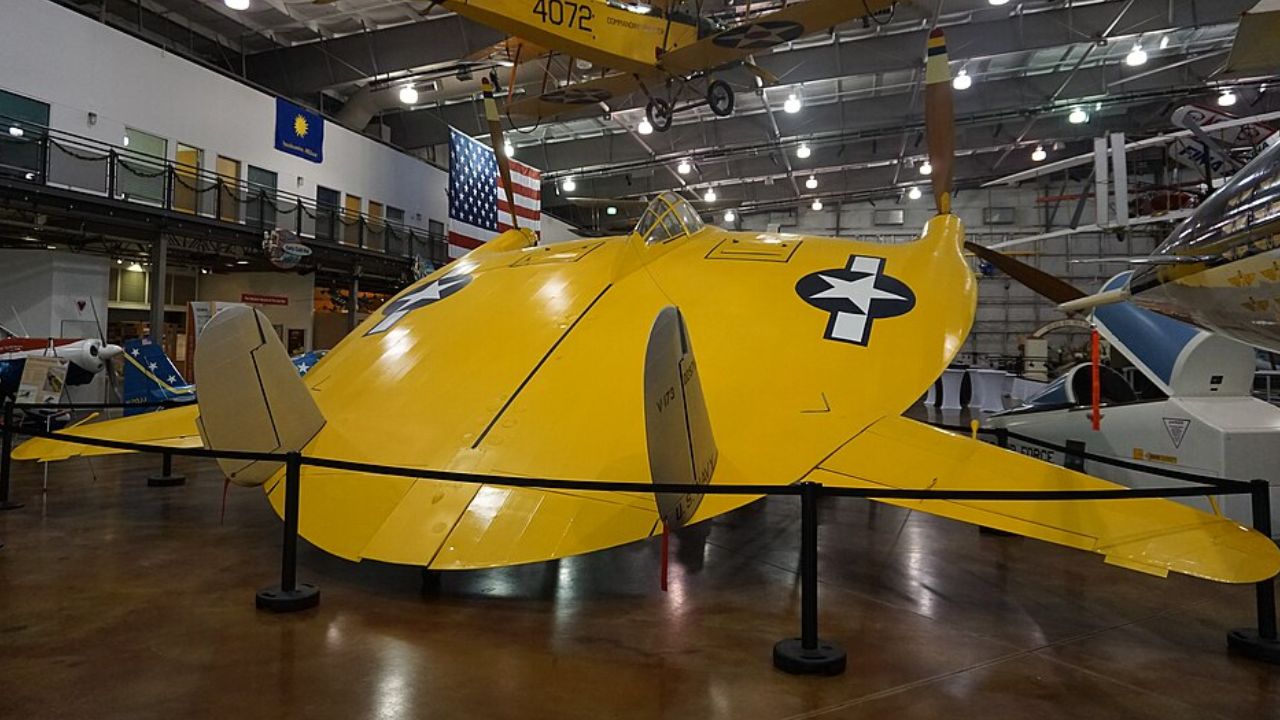
Vought V-173 “Flying Pancake”

The Vought V-173, nicknamed the “Flying Pancake,” was an experimental aircraft developed during World War II. Its most distinctive feature is its circular, flat body, which earned it its culinary moniker. The V-173 was designed to test the feasibility of a circular wing for achieving high lift at low speeds.
Built primarily of wood and fabric, the V-173 was powered by two radial engines with large propellers. Despite its unconventional design, it demonstrated excellent low-speed handling and short takeoff capabilities. Although it never saw combat, the “Flying Pancake” provided valuable data for future aircraft designs.
Lockheed Martin F-117 Nighthawk
The Lockheed Martin F-117 Nighthawk is another iconic stealth aircraft known for its unusual angular design. Introduced in 1983, the F-117 was the world’s first operational stealth aircraft, designed for precision strikes against high-value targets. Its faceted surfaces were intended to deflect radar waves, significantly reducing its visibility on radar screens.
The Nighthawk was shrouded in secrecy for much of its early existence, only being publicly acknowledged in 1988. It played a crucial role in the Gulf War and other conflicts, showcasing its ability to evade detection while delivering pinpoint strikes. Despite being retired in 2008, the F-117 remains an enduring symbol of stealth technology.
Sukhoi Su-47 Berkut

The Sukhoi Su-47 Berkut is a Russian experimental fighter aircraft known for its distinctive forward-swept wings. This design choice was intended to provide superior maneuverability and handling at supersonic speeds. The Su-47 first took to the skies in 1997, serving primarily as a technology demonstrator.
Despite its futuristic appearance, the Su-47 faced challenges in moving beyond the prototype stage, largely due to financial constraints and the complexity of its design. Nevertheless, the insights gained from the Berkut have informed the development of other Russian fighter projects, including the Su-57.
North American XB-70 Valkyrie
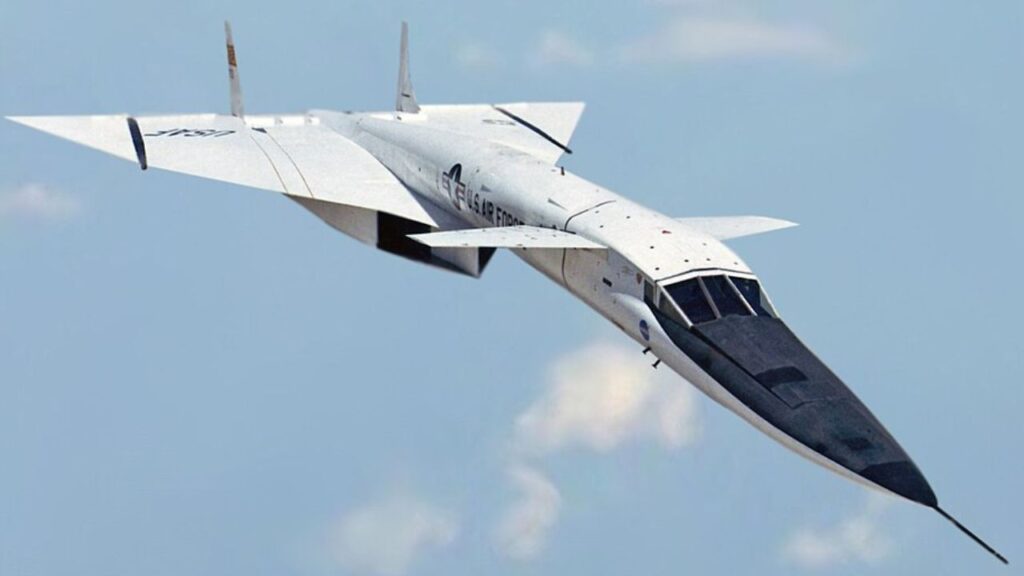
The North American XB-70 Valkyrie was a supersonic strategic bomber developed during the 1960s. Its sleek, delta-wing design and six powerful engines allowed it to cruise at speeds over Mach 3. The Valkyrie was intended to outrun enemy interceptors and missile defenses during its missions.
Only two prototypes of the XB-70 were built, and the program was eventually canceled due to advancements in missile technology and the high cost of production. Despite its short-lived career, the Valkyrie’s design and engineering innovations have had a lasting impact on aerospace technology.
McDonnell XF-85 Goblin

The McDonnell XF-85 Goblin was an experimental fighter designed to be carried inside a bomber’s bomb bay. Its compact, egg-like shape was intended for deployment as a “parasite fighter,” providing protection for bomber formations from enemy aircraft. The XF-85 was developed during the late 1940s amidst concerns over bomber vulnerability.
Although the Goblin was never operationally deployed, it represented an innovative approach to aerial warfare. Testing revealed significant challenges with docking and stability, leading to the project’s cancellation. The XF-85 remains a fascinating example of mid-20th-century aircraft experimentation.
Grumman X-29

The Grumman X-29 was an experimental aircraft known for its forward-swept wings and advanced composite materials. Developed in the 1980s, the X-29’s design aimed to explore new aerodynamic concepts, particularly in terms of agility and control at high speeds.
Equipped with a digital fly-by-wire control system, the X-29 was able to maintain stability despite its unconventional wing configuration. Although it never entered production, the insights gained from the X-29’s test flights have influenced modern fighter aircraft design and control systems.
Convair B-36 Peacemaker

The Convair B-36 Peacemaker was a massive strategic bomber that served as a deterrent during the early Cold War. Its most unusual feature was its six pusher propeller engines, complemented by four jet engines in later models. With a wingspan of 230 feet, it was the largest mass-produced piston-engine aircraft ever built.
The B-36 was designed to carry nuclear weapons over intercontinental distances without refueling. Despite its size, it played a crucial role in maintaining the strategic balance during its service with the United States Air Force from 1949 to 1959.
Horten Ho 229

The Horten Ho 229 was an experimental German jet-powered flying wing developed during World War II. Its design was intended to achieve high speed and low radar visibility. The Ho 229’s sleek, tailless design was revolutionary for its time, reflecting an early understanding of stealth principles.
Although only a few prototypes were built, the Ho 229 has captured the imagination of aviation enthusiasts with its futuristic appearance and innovative design. It laid the groundwork for later developments in stealth technology, influencing the design of post-war aircraft.
Boeing X-32

The Boeing X-32 was a contender in the Joint Strike Fighter competition, ultimately won by the Lockheed Martin F-35. Its design featured a distinctive delta wing and a large air intake, which gave it a unique, somewhat unconventional appearance. The X-32 was developed in the late 1990s as part of an effort to create a versatile multirole fighter.
Despite its innovative approach to vertical takeoff and landing capabilities, the X-32 was not selected for production. However, the lessons learned from its development have contributed to advancements in aircraft design and technology.