
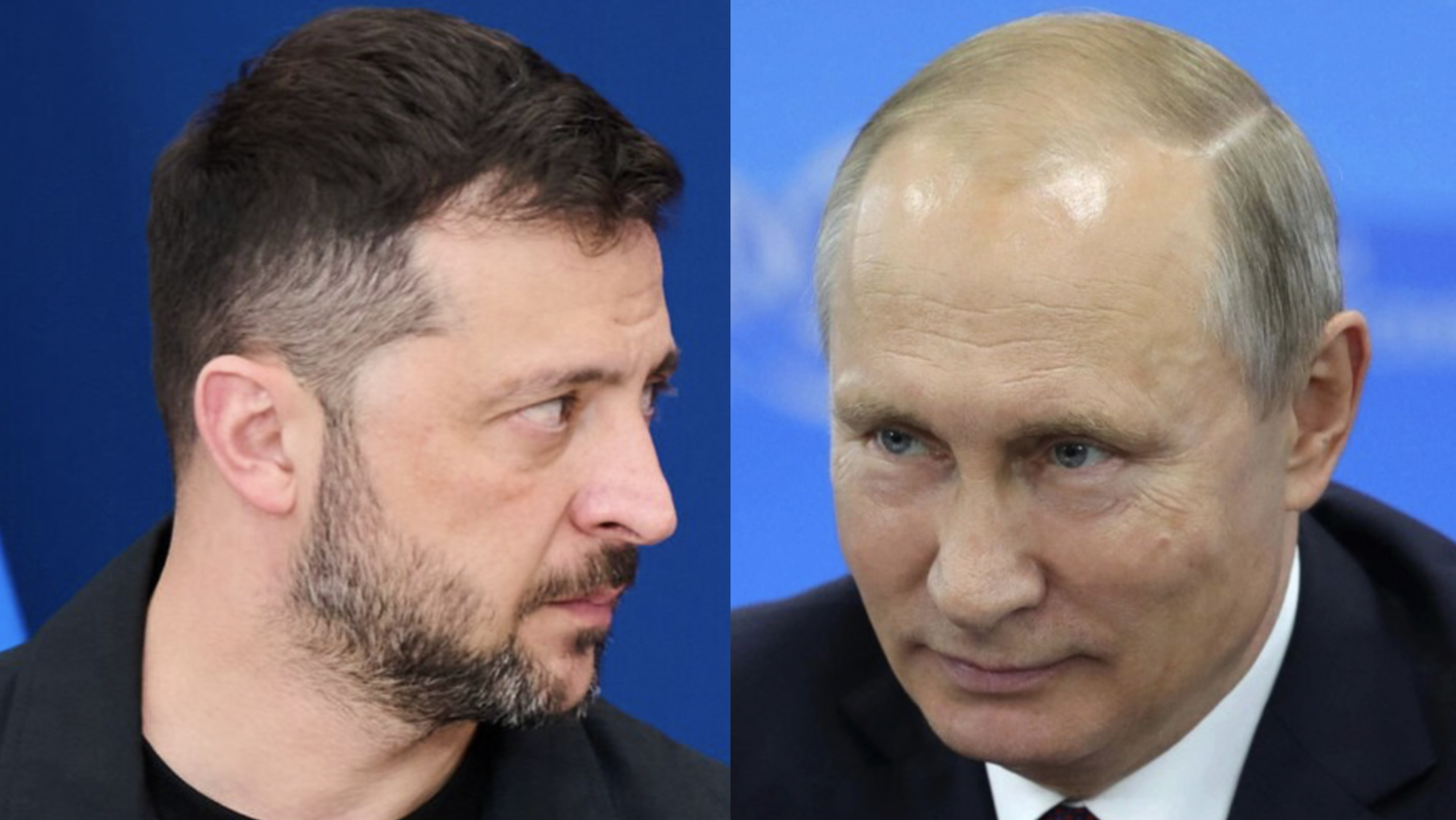
Ukrainian President Volodymyr Zelenskyy said Monday that Russian President Vladimir Putin is preparing a new mobilization wave that could draft between 300,000 and 500,000 people, warning that the influx of poorly trained conscripts would translate into heavy Russian casualties on the battlefield. The remarks, drawn from an interview with Sky News and posted to Zelenskyy’s official X account, mark the most specific figures Ukraine’s leader has given to date on the scale of Moscow’s anticipated recruitment drive.
“Putin is not ready to stop this war,” Zelenskyy wrote, citing intelligence assessments. “Our intelligence reports that he is preparing for mobilization. He wants to do it after his elections to the Duma on September 21. He wants to increase mobilization. Not openly, because he is afraid of his society, but he will do it at the beginning of October, if we don’t cause him problems with logistics, weapons, petrol, diesel, and if our partners don’t impose total sanctions for his aggression.”
Zelenskyy said the timing is tied directly to Russia’s State Duma elections, scheduled for September 21, and that Putin intends to hold off on any formal announcement until early October to avoid domestic backlash ahead of the vote. “It will be a big problem because he will aim to mobilize from 300,000 to 500,000 people,” Zelenskyy said. “It’s not that difficult for him to mobilize this number. He will have internal questions about it, because his society is – and I saw the polls – against mobilization. A significant percentage is also against the war, but still they support Putin.”
The Ukrainian president went further, laying out what he described as the practical consequences of a mobilization at that scale. “He won’t be able to train these people quickly,” Zelenskyy said. “It means, again, that he will throw poorly trained people on the battlefield. This, in turn, means a lot of losses.” The comments were published as the first installment of a three-part excerpt from the Sky News interview.
Ukraine’s Leverage: Sanctions and Logistics
Zelenskyy’s framing of the mobilization threat carried a clear conditional element. He tied the scale and timing of any Russian call-up directly to Western sanctions policy and to Ukraine’s own campaign against Russian military logistics, fuel supply, and weapons production. By his account, a mobilization of the scale Russia is reportedly planning is not a certainty but a contingency — one that depends on whether Ukraine can continue disrupting Russian supply chains and whether allied governments follow through on tougher sanctions.
This linkage is consistent with recent statements from Zelenskyy tying Ukraine’s long-range strike campaign to pressure on the Kremlin. He has argued that strikes deep inside Russian territory are making Russia feel the escalating consequences of the war, raising concern within Russian leadership over growing domestic discontent. He has also said the strikes are driving financial and energy losses for Russia, particularly through disruptions to energy exports and a shift toward importing energy resources instead.
A Pattern of Warnings on Russian Manpower
Monday’s remarks build on a string of statements Zelenskyy has made in recent days regarding Russian manpower and recruitment. Just two days earlier, on July 25, Zelenskyy said in his nightly address that Russia is preparing to bring in an additional 30,000 troops from North Korea, with preparations underway since June in Russia’s Voronezh region, which borders Ukraine. He said North Korea is also preparing to transfer additional launchers for ballistic missiles to Russia, and warned that the arrangement represents a threat not only to Ukraine.
In that same address, Zelenskyy disclosed casualty figures he attributed to Ukrainian intelligence assessments of Russian forces. He said that in just under seven months of this year, 221,000 people have joined the ranks of the Russian armed forces, while Russian losses over the same period have amounted to nearly 225,500, including 131,000 killed and almost 93,000 wounded. He added that a significant number of those injuries are severe due to what he described as extremely poor frontline medical care within the Russian military. Zelenskyy said Ukrainian intelligence reports on Russia’s plans for the fall show no indication of an approaching peace, stating that Putin is laying the groundwork for an expansion of mobilization.
Diplomatic Backdrop
The mobilization warning also came in the context of a broader Sky News interview in which Zelenskyy addressed recent diplomatic contacts between Washington and Moscow. Referencing a conversation between U.S. Secretary of State Marco Rubio and Russian Foreign Minister Sergey Lavrov, Zelenskyy used the moment to reiterate his central argument: that Putin has shown no genuine willingness to end the war regardless of diplomatic overtures from Washington. In the same interview, Zelenskyy also addressed Ukraine’s evolving air defense posture and long-range strike capabilities, and discussed challenges facing Ukraine’s mobilization system on the Ukrainian side, including the need for closer coordination between the Ministry of Defense and military command.
Russia’s Recruitment History Since 2022
Monday’s warning is not the first time Zelenskyy has raised alarms over Russian mobilization. Moscow’s first mobilization order came in September 2022, when Putin announced a partial call-up that officials said could draw in as many as 300,000 reservists — a move that triggered an exodus of Russian men fleeing the country and sparked scattered protests that led to hundreds of arrests. Zelenskyy told the United Nations General Assembly at the time that the mobilization order was evidence Moscow was not serious about ending the war, saying Ukraine could reclaim its territory by force but needed time to do so.
The figures Zelenskyy cited on Monday — 300,000 to 500,000 — would represent a substantially larger call-up than the 2022 mobilization, potentially the largest single Russian recruitment effort since the start of the full-scale invasion. Unlike the 2022 order, which was announced publicly via presidential decree, Zelenskyy said the coming wave is being planned discreetly, timed specifically to avoid public backlash before the Duma elections.
What Comes Next
Zelenskyy’s Monday post was explicitly labeled as the first of a three-part release from the Sky News interview, suggesting additional excerpts addressing the mobilization threat, Russian casualties, or related diplomatic and battlefield developments may follow. Neither the Kremlin nor Russian state media have publicly confirmed plans for a fall mobilization wave of the scale Zelenskyy described, and Russian officials have not responded directly to the claims as of Monday.
The warning comes as Ukraine continues to press Western partners for expanded sanctions and tighter enforcement on Russian energy exports, arguments Zelenskyy has repeatedly tied to his broader case that sustained economic and logistical pressure — not diplomacy alone — remains the most direct lever available to disrupt Russian war planning.