
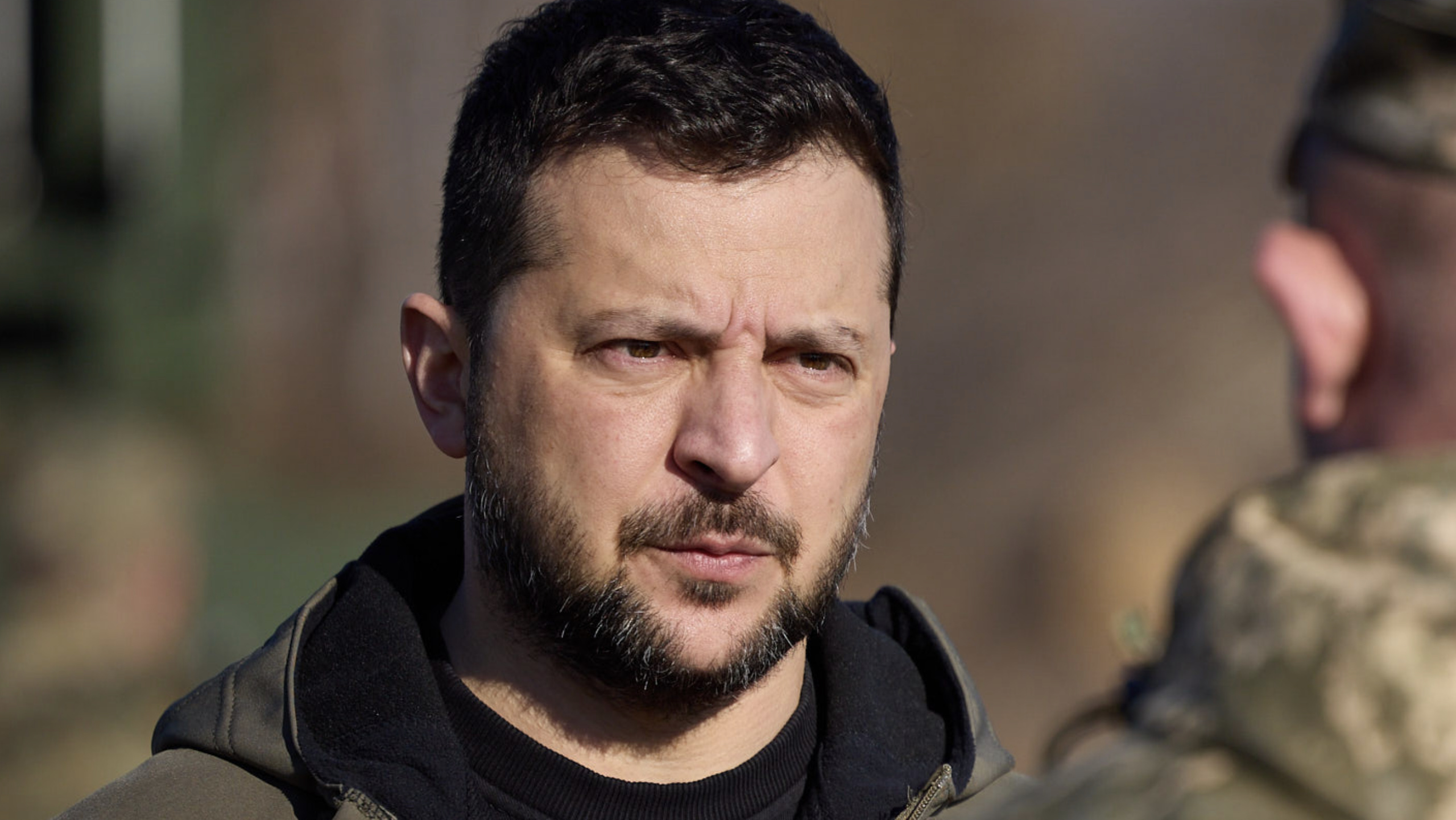
KYIV, May 31, 2026 — Ukrainian President Volodymyr Zelenskyy revealed Sunday that Russia has kidnapped at least 20,000 identified Ukrainian children since the start of the full-scale invasion, that only 2,200 have been returned — approximately 10 percent — and that some of those children have since been placed in Russian military units and sent to fight against Ukraine, warning that lifting U.S. sanctions on Russia is indirectly helping fund the program.
“We know about 20,000, we know the names,” Zelenskyy told CBS News anchor Margaret Brennan on Face the Nation. “And we could bring back 2,200. It’s 10 percent of the number of children what we know. But I think thousands of children we didn’t identify until now, so this is a big problem.”
Children Sent to Fight Against Ukraine
The most alarming detail Zelenskyy shared was evidence that some kidnapped Ukrainian children have been trained by Russia and subsequently deployed to the battlefield against their own country. “They teach these children to hate their native country, to hate native people,” he said. “And Ukrainians — can you imagine — such young Ukrainians, young boys, come to the battlefield and kill Ukrainians.”
When Brennan asked whether Ukraine had evidence of this, Zelenskyy confirmed: “Yes, we have evidence of it.” The claim is consistent with findings by Yale University’s Humanitarian Research Lab, which has documented the forced militarization of abducted Ukrainian children at over 210 facilities across Russia and Russian-occupied territory, including combat training, paratrooper instruction, and drone assembly — the first confirmed case of abducted children being used in military equipment production.
The Scale of the Program
Yale’s Humanitarian Research Lab has been tracking the abductions since Russia’s full-scale invasion began in February 2022. Its September 2025 report identified 210 separate facilities to which Ukrainian children have been taken, with over half used for re-education and 18 percent for militarization, according to the Yale School of Public Health. The program has been described as a state-driven system aimed at “Russifying” children through re-education, military training, and long-term detention — in clear violation of international law.
Yale’s estimate of total abducted children is higher than Zelenskyy’s 20,000 figure. The lab has estimated over 35,000 abducted Ukrainian children are being held by Russia, according to Senate President Pro Tempore Chuck Grassley’s floor remarks citing the Yale research. Ukraine’s state-run “Bring Kids Back” program, launched by Zelenskyy’s office, has identified approximately 19,500 abducted children since the invasion began.
In March 2023, the International Criminal Court issued an arrest warrant for Putin for “the war crime of unlawful deportation of population (children) and that of unlawful transfer of population (children) from occupied areas of Ukraine to the Russian Federation.” Russia has not complied with the warrant.
Children Divided From Siblings, Names Changed
Zelenskyy described the deliberate separation of siblings as one of the cruelest elements of the program. “There is one of the rules — how they divide families,” he said. “They divide families — the brother, they moved brother and sister, for example, boy and girl, they divide them and move to different families.”
The Yale research corroborates this. Russian authorities have changed the names, nationalities, and family placements of abducted children — with some placed in the homes of Russian politicians. One documented case involves Russian politician Sergei Mironov, who took a 10-month-old Ukrainian girl from Kherson under the pretense of medical rehabilitation and subsequently changed her name and citizenship, according to the Yale report.
The Sanctions Question
Zelenskyy directly challenged the Trump administration’s decision to lift some Russian oil sanctions, arguing that easing economic pressure on Moscow helps fund the Russian war machine — and indirectly the children kidnapping program. “Lifting sanctions is a help for the soldiers of Russia. It’s very helpful for their defense industry,” he said. “After lifting sanctions, we didn’t see some low prices with the oil or with petrol or diesel in Europe or somewhere. We didn’t see it.”
Treasury Secretary Scott Bessent had previously justified the sanctions relief by saying some of the world’s poorest countries asked for it to reduce global energy costs. Zelenskyy disputed the premise. He said Russia’s oil accounts for approximately 5 percent of the global supply — too small a share to significantly move market prices — and argued the sanctions relief achieved little economic benefit while materially helping Russia continue its war.
“I hope that Congress will find the possibility again to put sanctions on Russians because of the children,” Zelenskyy said. “We spoke with congressmen, we spoke so many times about it. I hope that they will make this step.”
Russia’s Own Acknowledgment
Zelenskyy noted a telling detail that he described as Russia’s implicit admission of guilt. Moscow proposed exchanging the kidnapped children for Russian prisoners of war. “They proposed us to exchange children with soldiers,” he said. “Can you imagine how we can exchange our children? We can’t — first of all, it’s out of the law. We can’t exchange civilians.” He said the fact that Russia framed children as a negotiating chip is itself proof that the abductions were deliberate. “The fact that Russia proposed to exchange children, this is the answer that they stolen children.”
“We need to bring them back as quickly as possible,” Zelenskyy said. “We need thousands of children — to get them back. You know that we lose time. Because there are such very bad examples — when these children grow up and they push these boys to the battlefield.”